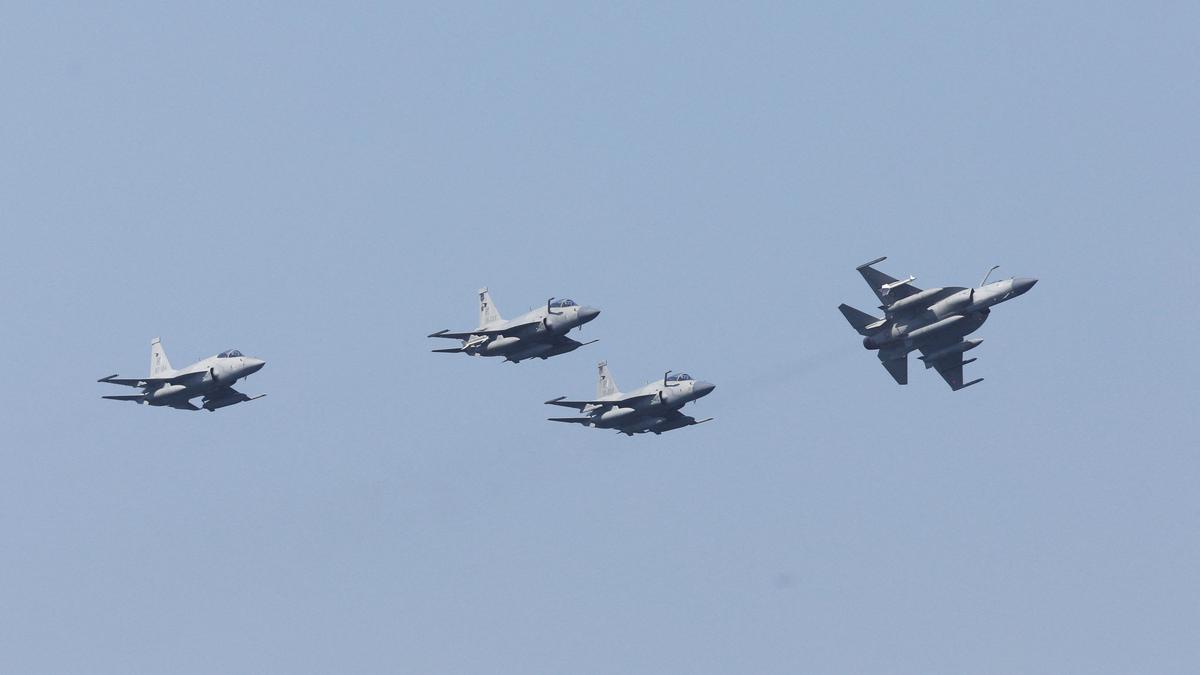
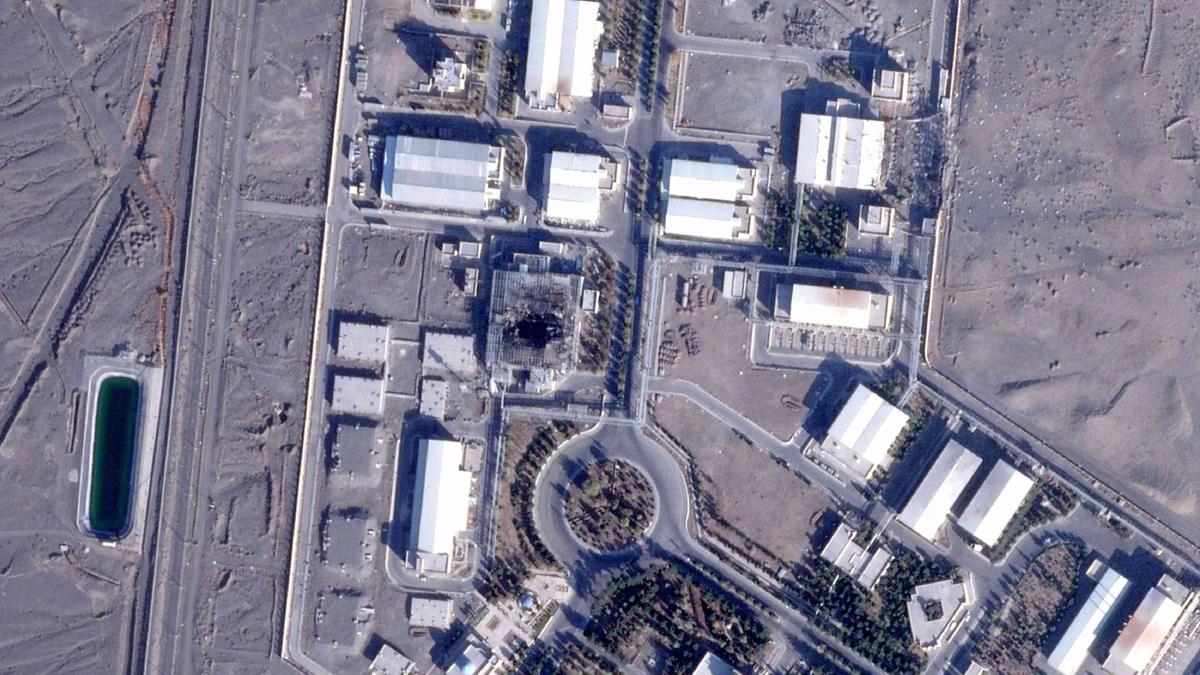
The headlines read like a copy-and-paste job from a decade-old playbook. "American forces kill at least 20 ISIS militants in fresh airstrikes in northeast Nigeria." The mainstream media swallows the press release whole. The public nods, convinced that another microscopic victory has been won in the global war on terror.
It is a comforting illusion. It is also completely wrong.
Dropping millions of dollars of precision-guided munitions on a handful of low-level fighters in the Lake Chad basin is not a victory. It is an expensive admission of strategic bankruptcy. For twenty years, Western military interventions have operated under the flawed premise that you can decapitate a decentralized insurgency from 30,000 feet. You cannot.
The lazy consensus insists that counter-terrorism is a numbers game. Kill enough militants, deplete their ranks, and the organization collapses. This math fails every single time it is applied to Africa’s Sahel and Lake Chad regions.
The reality is far more brutal. These airstrikes do not weaken Islamic State West Africa Province (ISWAP) or Boko Haram. They stabilize them. They validate their narrative, streamline their recruitment, and mask the systemic local failures that allow these groups to exist in the first place.
The Body Count Fallacy
Since the days of the Vietnam War, military bureaucracies have obsessed over body counts because they are easy to measure. It is simple to tell a senator or a parliamentary committee that twenty enemy combatants were neutralized. It is much harder to admit that while you were clearing that patch of scrubland, the structural drivers of the insurgency grew stronger.
When an American drone or a Nigerian fighter jet eliminates twenty fighters, the immediate operational impact is negligible. In northeast Nigeria, local terrorist factions do not operate like conventional armies. They do not have centralized logistics hubs that can be permanently crippled by a single bombardment. They operate as a franchise model.
Consider how ISWAP actually functions on the ground. They are not an occupying army; they are a parasitic shadow government. They tax local fish markets, regulate cattle trade, and provide a twisted form of swift judicial arbitration in areas where the Nigerian state has not provided a functioning court in thirty years.
When Western forces intervene with kinetic strikes, they look at the target through a soda straw. They see armed men. What they miss is the socio-economic ecosystem. If you kill twenty fighters but leave the predatory local policing, the corrupt distribution of aid, and the total absence of economic viability untouched, those twenty men will be replaced by the end of the week. The supply of desperate, marginalized young men willing to carry an AK-47 for a steady wage is effectively infinite.
The Sovereign Illusion
The primary argument for foreign kinetic intervention in Nigeria is the defense of national sovereignty and the protection of borders. But you cannot defend a border that exists only on a map.
The frontier between Nigeria, Niger, Chad, and Cameroon is a geographic abstraction. The local populations do not recognize it. The insurgents cross it effortlessly. More importantly, the Nigerian government’s presence in the far north is often non-existent or purely predatory.
Imagine a scenario where a local farmer in Borno State has his cattle stolen by a rival clan. If he goes to the official authorities, he faces extortion, indifference, or months of bureaucratic stagnation. If he goes to ISWAP, the cattle are returned within forty-eight hours, and the thief is punished under a strict interpretation of Sharia law. To the academic analyst in Washington, ISWAP is a terrorist organization. To the farmer, they are the only entity offering predictable rules of the game.
When foreign airstrikes disrupt this ecosystem without replacing the governance structure, they create a vacuum within a vacuum. The result is not peace. The result is a chaotic scramble for power among smaller, more radical splinter factions that are even harder to track and negotiate with. The air campaign operates on the assumption that the state will move in to fill the void left by the bombs. The state rarely does.
Tactical Success as Strategic Defeat
The heavy hitters in security studies have pointed this out for years, though their findings are routinely ignored by defense contractors and politicians looking for quick wins. Scholars like Stephen Walt have repeatedly demonstrated that offshore balancing and air-centric counter-terrorism strategies yield diminishing returns.
In fact, the downside of the contrarian view—the argument for complete non-intervention—is that it forces a brutal acceptance of localized instability in the short term. It requires accepting that Western nations cannot fix these regions. That is a hard pill for policymakers to swallow, but the alternative is worse: a perpetual, multi-billion-dollar game of whack-a-mole that achieves nothing but the enrichment of defense firms.
Let us look at the mechanics of an airstrike's aftermath. Every explosion in a rural village or remote camp carries an intelligence risk. Collateral damage is rarely reported accurately in real-time. When a strike hits a civilian or destroys a vital water source, it serves as the ultimate marketing tool for insurgent recruiters.
ISWAP does not need a sophisticated propaganda machine when foreign militaries provide them with raw footage of destruction. The narrative writes itself: The distant government and their foreign allies care nothing for your lives; they only bring fire from the sky.
Dismantling the "People Also Ask" Assumptions
To understand why the current approach is failing, we have to dismantle the very questions the public asks about this conflict.
- Does killing terrorist leaders stop the insurgency? No. It accelerates decentralization. When you kill an experienced, pragmatic commander who understands local compromises, you usually pave the way for a younger, more radical successor who feels the need to prove his credentials through spectacular acts of violence.
- Why is the US military involved in Nigeria? The official line is global security and partnership building. The cynical, more accurate take is that it allows Western militaries to maintain operational readiness, test drone capabilities in permissive airspace, and check a box on a counter-terrorism spreadsheet without committing ground troops.
- Can the Nigerian military solve this alone? Not under its current structural configuration. The military apparatus in Nigeria suffers from systemic funding diversion, poor equipment maintenance, and a deep institutional disconnect from the populations it is tasked to protect. Throwing foreign air support at a broken ground force is like putting a high-performance engine into a car with no wheels.
The Real Economy of the Lake Chad Basin
If you want to understand the insurgency, look at the economy, not the ideology. The religious rhetoric used by ISWAP is a recruitment veneer. The underlying driver is economic survival.
The drying of Lake Chad has decimated traditional livelihoods. Farming and fishing are high-risk, low-reward endeavors. Joining an armed faction provides a salary, a weapon, social status, and a sense of security.
Airstrikes do absolutely nothing to alter this economic reality. A bomb cannot create a job. A drone cannot restore a degraded ecosystem. By focusing exclusively on kinetic solutions, international partners are treating the sneeze while the patient dies of tuberculosis.
The real failure of the competitor's reporting—and the broader media coverage of Africa's conflicts—is the refusal to challenge the efficacy of the actions described. They report the deployment of force as if it is inherently virtuous and effective. They treat twenty dead militants as a metric of progress rather than a symptom of a permanent, self-sustaining conflict loop.
Stop celebrating the airstrikes. Stop believing that security can be delivered via a payload dropped from a drone. Until the structural reality of governance, economic survival, and state predation in northeast Nigeria is addressed, those twenty dead fighters are just a line item in an endless war that the West is funding but has no intention of actually winning.