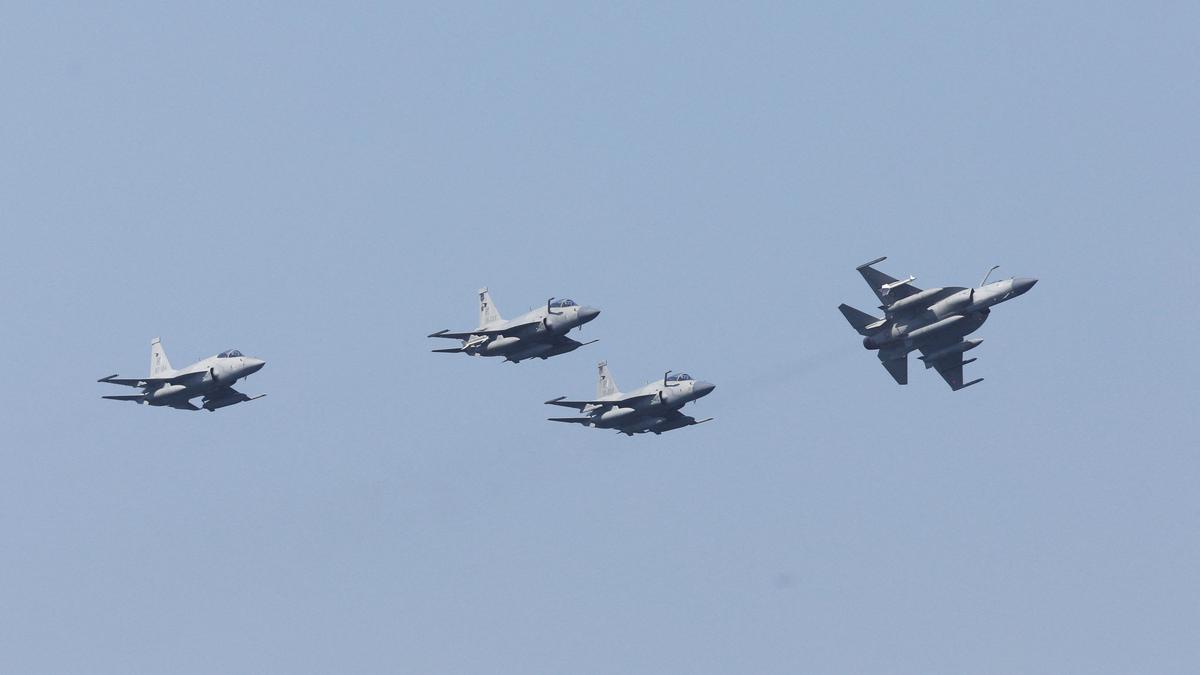
The mainstream media is hyperventilating again. Headlines are screaming about Pakistan sending a fighter jet squadron and thousands of ground troops to Saudi Arabia. The lazy consensus among defense analysts is already locked in: Riyadh and Islamabad are bracing for an imminent, apocalyptic clash with Iran. They look at troop movements, draw straight lines on a map, and scream that the Middle East is on the brink of a systemic explosion.
They are reading the chessboard completely wrong. For a closer look into this area, we recommend: this related article.
This deployment has almost nothing to do with fighting a war against Iran. In fact, if you understand the brutal, transactional reality of Riyadh’s defense architecture, you realize this move is about domestic preservation, financial survival, and institutional muscle memory. It is a defensive hedge and a banking transaction disguised as a military alliance.
The Phantom Menace of an Indo-Pakistani Style Border War
Western pundits love to view the Middle East through the lens of Cold War proxy conflicts or conventional state-on-state invasions. They see Pakistani boots on Saudi soil and assume these soldiers will be manning trenches along the Persian Gulf, waiting for an amphibious Iranian assault. For further context on this development, extensive analysis can be read on NBC News.
This ignores the fundamental mechanics of modern Gulf security.
Saudi Arabia does not lack hardware, nor does it lack defensive depth from foreign superpowers. What Riyadh lacks, and has historically struggled with, is internal security cohesion and tactical flexibility in asymmetrical environments.
Look at the historical precedent. When Pakistan sent over 15,000 troops to Saudi Arabia in the 1980s during the Iran-Iraq War, they were not sent to the front lines to trade artillery fire with Tehran. They were stationed internally to secure critical infrastructure and protect the House of Saud itself during a period of intense regional subversion.
The Historical Reality Check: Pakistani troops in the Kingdom operate under a strict, long-standing mandate. They are there for internal security, training, and defense of the holy sites. Islamabad has repeatedly, explicitly stated it will not deploy its forces outside the borders of Saudi Arabia to engage in offensive regional campaigns.
To suggest these troops are an expeditionary force aimed at Tehran is to misunderstand Pakistan’s constitutional and political constraints. Pakistan shares a volatile, 900-kilometer border with Iran. Islamabad is currently dealing with a catastrophic economic crisis, domestic political instability, and a perennial security threat on its eastern border with India. The absolute last thing the Pakistani military establishment wants is to open a hot combat front with Iran on behalf of a foreign patron.
Follow the Money, Not the Munitions
If this deployment isn't a war prep, what is it? It is an economic lifeline wrapped in a camouflage uniform.
Pakistan is drowning in debt. The country has spent the last few years scrambling for International Monetary Fund (IMF) bailouts, rolling over billions in loans from friendly Gulf nations, and trying to stave off a sovereign default.
Saudi Arabia, conversely, is executing Vision 2030. While Riyadh has trillions in assets, it faces a structural deficit in disciplined, low-cost, highly professional military manpower.
This is a classic macroeconomic trade-off:
- Pakistan exports security expertise: It provides highly trained, disciplined military personnel who speak the language of institutional defense.
- Saudi Arabia exports capital: It provides central bank deposits, deferred oil payment facilities, and direct investments.
I have watched defense ministries execute these bilateral agreements for decades. When a Gulf state requests a troop deployment from a South Asian partner, the public press release talks about "regional synergy" and "shared security landscapes"—phrases that mean absolutely nothing. The actual contracts signed behind closed doors are line-item budgets detailing financial compensation, subsidized energy imports, and central bank liquidity injections.
This deployment is a sophisticated balance-of-payments strategy. To analyze it as purely an aggressive military posturing move is spectacularly naive.
Dismantling the People Also Ask Nonsense
Whenever these deployments happen, the internet fills with fundamentally flawed questions. Let's dismantle the two biggest premises driving the current media narrative.
Is Pakistan legally obligated to fight Saudi Arabia’s wars?
Absolutely not. The 1982 bilateral defense cooperation agreement between Islamabad and Riyadh is strictly defensive and domestic. In 2015, when Saudi Arabia explicitly asked Pakistan to join the military coalition against the Houthis in Yemen, the Pakistani Parliament voted unanimously to remain neutral.
Think about that. At the height of Saudi pressure, when Riyadh was practically begging for Pakistani kinetic support in an active conflict zone right on its border, Pakistan said no. They chose neutrality to avoid a sectarian blowout at home and a diplomatic war with Iran. If Pakistan would not cross into Yemen for Saudi Arabia in 2015, they are certainly not going to march toward Tehran now.
Will this deployment trigger an Iranian retaliation against Islamabad?
Tehran knows how to read the room. Iranian intelligence understands the transactional nature of Pakistani-Saudi relations far better than Western journalists do. Iran knows that a Pakistani soldier sitting in a garrison near Riyadh is a soldier who is not actively targeting Iranian interests.
As long as those forces remain within Saudi borders and do not participate in cross-border strikes or intelligence gathering for external actors, Iran will maintain its pragmatic diplomatic channel with Islamabad. The two nations have too much mutual vulnerability regarding Balochistan border security to let a routine Saudi training deployment spark a hot war.
The Core Vulnerability of the Contrarian View
To be completely fair and transparent, looking at this strictly as an economic and internal security play has one major vulnerability: miscalculation under stress.
While the intent of the deployment is defensive and financial, placing thousands of foreign troops and advanced fighter jets into a highly volatile geopolitical zone increases the statistical probability of an accident.
Imagine a scenario where a rogue drone strike hits a Saudi base housing Pakistani personnel. Even if Islamabad intends to stay out of the fight, casualties change the political calculus overnight. Domestic pressure inside Pakistan could force a kinetic response, dragging Islamabad into a conflict it spent decades trying to avoid.
That is the real danger here—not a planned invasion, but a logistical accident turning into a geopolitical tripwire.
Stop Looking for World War III in Every Troop Movement
The competitor article wants you to believe we are watching the opening salvos of a multinational Middle Eastern war. They want the clicks that come with apocalyptic anxiety.
The reality is far more mundane, cynical, and grounded in realpolitik.
Saudi Arabia is buying premium internal security insurance and tactical training from a nuclear-armed state. Pakistan is leasing out its military surplus to keep its economy from collapsing into default. This is an exercise in institutional preservation for both regimes.
The next time you see a headline about Pakistani jets landing in the Kingdom, ignore the warmongering pundits. Look at the central bank reserves instead. That is where the real battle is being fought, and won.

(mh=KgLaxJRnEgOLlOqF)3.jpg)