The fragile ceasefire holding the Middle East together is on the verge of collapse. Over the weekend, Donald Trump made it clear that Washington’s patience with Tehran has expired, declaring on social media that the clock is ticking and warning that if a peace deal is not reached quickly, there won’t be anything left of Iran. The primary driver of this sudden escalation is a fundamental deadlock in Islamabad-mediated negotiations, where the White House is demanding severe nuclear concessions and the immediate reopening of the Strait of Hormuz, while Iran refuses to capitulate without sanctions relief and war reparations.
Behind the bluster lies a highly volatile reality. The conflict, which erupted on February 28 with massive US-Israeli airstrikes under the banner of Operation Epic Fury, has evolved from a rapid decapitation strike into a grueling strategic stalemate. The current truce, established on April 8, has failed to yield a diplomatic breakthrough. Instead, it has provided both sides with a window to dig in, rearm, and calculate the cost of a catastrophic second phase of total war.
The Illusion of the Islamabad Ceasefire
For six weeks, the guns have been mostly silent, but the diplomatic arena has been a theater of mutual non-compliance. Pakistan has worked feverishly to broker a permanent settlement, yet the core demands of the two belligerents are fundamentally irreconcilable.
The White House recently presented Tehran with a rigid five-point framework. According to internal regional diplomatic sources, the US demands that Iran dismantle its nuclear enrichment infrastructure, consolidate all remaining activities into a single heavily monitored facility, and transfer its entire stockpile of highly enriched uranium directly to US forces or Russia. Furthermore, Washington insists on an immediate, unconditional reopening of the Strait of Hormuz without lifting the sweeping naval blockade that has paralyzed Iranian oil exports.
Tehran’s counter-proposal, which Trump promptly labeled a piece of garbage, presents a radically different vision for the region. The Iranian negotiating team is holding out for an immediate cessation of all US-Israeli military operations, including the devastating campaign in Lebanon. They are also demanding the full unfreezing of billions of dollars in overseas assets, formal guarantees against future American aggression, and structural reparations for the immense infrastructure damage inflicted since February.
The state department has taken a maximalist approach, attempting to extract via diplomacy what it did not fully achieve during the initial six-week bombardment. Iran view these terms as a demand for unconditional surrender. Consequently, negotiations have ground to a complete halt, leaving the truce functioning as little more than a tactical pause.
The Hidden Fractures in the Anti Iran Coalition
While the administration projects absolute unity and overwhelming strength, the domestic and international coalitions supporting this war are beginning to splinter. The economic blowback of a prolonged conflict in the Persian Gulf is generating significant friction inside Washington.
An unexpected domestic challenge has emerged from the populist wing of the Republican party. Former Congresswoman Marjorie Taylor Greene issued a sharp public warning, stating that any attempt by the administration to deploy American ground troops into Iran would trigger a political revolution at home. This pushback highlights a growing anxiety among lawmakers who are looking toward the 2026 midterm elections. Voters are expressing deep concern over soaring fuel prices and a volatile stock market, prioritizing domestic inflation over an open-ended military campaign in South Asia.
When questioned recently about the financial strain ordinary Americans are facing due to the conflict, Trump was characteristically blunt, stating that his sole focus is preventing Iran from obtaining a nuclear weapon, regardless of the broader financial landscape.
The international picture is equally complicated.
- The Gulf States: A recent drone strike that ignited a fire near the Barakah nuclear power plant in Abu Dhabi underscores the extreme vulnerability of US allies in the region. The UAE has attributed the attack to Iranian proxies, proving that even during a ceasefire, asymmetric warfare remains a potent threat.
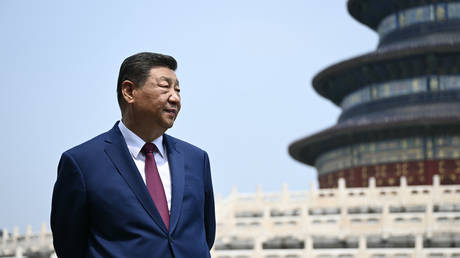
- China: Following a high-stakes state visit to Beijing, the administration secured a joint statement with President Xi Jinping agreeing that Iran must not possess nuclear weapons and that international shipping lanes must be reopened. However, Beijing has stopped short of endorsing a resumption of US military strikes, wary of the systemic shock a total collapse of Persian Gulf oil production would inflict on the global economy.
- The US Military: The structural strain on American global strategy is becoming apparent. General Smith, the Commandant of the Marine Corps, recently informed lawmakers that the deployment of an Expeditionary Unit and three major warships from Okinawa to the Middle East has left a critical, unfilled gap in the Indo-Pacific theater, weakening the American deterrence posture against China.
The High Stakes of Resuming Epic Fury
If the diplomatic deadlock cannot be broken by Tuesday’s scheduled meeting between the president and his national security team, a return to active hostilities appears inevitable. Israeli media reports indicate that the Israeli Defense Forces are already preparing for a resumption of high-intensity airstrikes targeting not just Iranian military infrastructure, but the remaining elements of the state’s economic apparatus.
The economic consequences of a renewed war would be felt globally almost instantly. Iran currently controls the operational levers of the Strait of Hormuz, a chokepoint responsible for the transit of roughly 20 percent of the world's petroleum. Iranian Foreign Minister Abbas Araghchi warned over the weekend that a return to war would push the global economy past a simple fuel price hike. Tehran calculates that the real damage will manifest when the conflict forces US debt and mortgage rates to spike, dragging the Western financial system into uncharted waters.
The administration’s legal justification for this conflict has also come under intense scrutiny from international legal scholars. The state department recently issued a legal assessment abandoning the initial justification of eliminating an imminent threat. Instead, the document argues that the strikes initiated on February 28 are simply the continuation of an ongoing, long-term international armed conflict dating back to previous encounters in 2025. This shift in legal rationale suggests that Washington intends to maintain a permanent state of belligerence until the current regime in Tehran is thoroughly neutralized or replaced.
This strategy carries immense risk. By demanding total capitulation without offering meaningful sanctions relief or a viable economic exit ramp for the Iranian state, the administration has left the leadership in Tehran with very little to lose. When a state is backed into a corner with no diplomatic alternative, its survival strategy often shifts from calculated deterrence to desperate, maximum escalation. The clock is indeed ticking, but the explosion may damage Washington just as severely as it destroys Tehran.