The desert does not keep secrets; it merely buries them until the wind shifts.
If you stand in the western reaches of Iraq’s Anbar province at twilight, the horizon looks like an infinite canvas of nothingness. The air tastes of grit and ancient heat. To the untrained eye, this is empty space—a desolate buffer between warring ideologies. But look closer at the tire tracks that vanish into the limestone ridges. Listen to the high-altitude drone that cuts out just before dawn.
Geopolitics is often covered from sterile briefing rooms in Washington, Jerusalem, or Tehran, illustrated with neat PowerPoint slides and color-coded arrows. That is a mistake. To understand the terrifying friction of the modern Middle East, you have to put your boots in the sand. You have to understand what it means to build something where you are absolutely forbidden to exist.
Recent intelligence reports have shattered the fragile illusion of Iraqi sovereignty with a startling revelation: Israel has reportedly constructed two covert military bases deep within the Iraqi desert. Their purpose? To serve as forward staging grounds for potential strikes against Iran.
This is not just a standard escalation. It is a radical rewriting of the map.
The Ghost Stations of Anbar
Imagine a young Iraqi shepherd named Bilal. He is a hypothetical composite, but his reality is shared by hundreds of bedouins and locals who navigate the jagged terrain of western Iraq. Bilal knows every outcrop, every dry wadi. For generations, his family watched the skies for rain. Now, they watch for shadows.
A few months ago, Bilal noticed a change. Certain valleys, long abandoned since the chaotic peak of the counter-ISIS campaigns, suddenly went dark. Not dark in the literal sense—the desert is always dark at night—but dark to the world. Razor wire appeared without explanation. High-frequency antennas, disguised as civilian communication towers, began sprouting from the basalt hills.
These are the ghost stations.
According to regional security analysts, these two covert installations are strategically placed to solve a brutal mathematical equation that has haunted Israeli military planners for a decade: distance.
Tel Aviv to Tehran is roughly one thousand miles. For an F-35 Lightning II or a heavily laden strike aircraft, that distance is a gauntlet. Flying through international airspace requires refueling, exposes pilots to hostile radar, and demands flawless precision. By establishing a physical footprint inside Iraq—right under the nose of Baghdad and the myriad of pro-Iranian militias roaming the country—the operational calculus changes.
Suddenly, the distance is halved. The reaction time shrinks to minutes.
The Mechanics of an Invisible Footprint
How do you build a military base in an enemy’s backyard without anyone noticing? You don't use concrete mixers and massive convoys. You use the shadows.
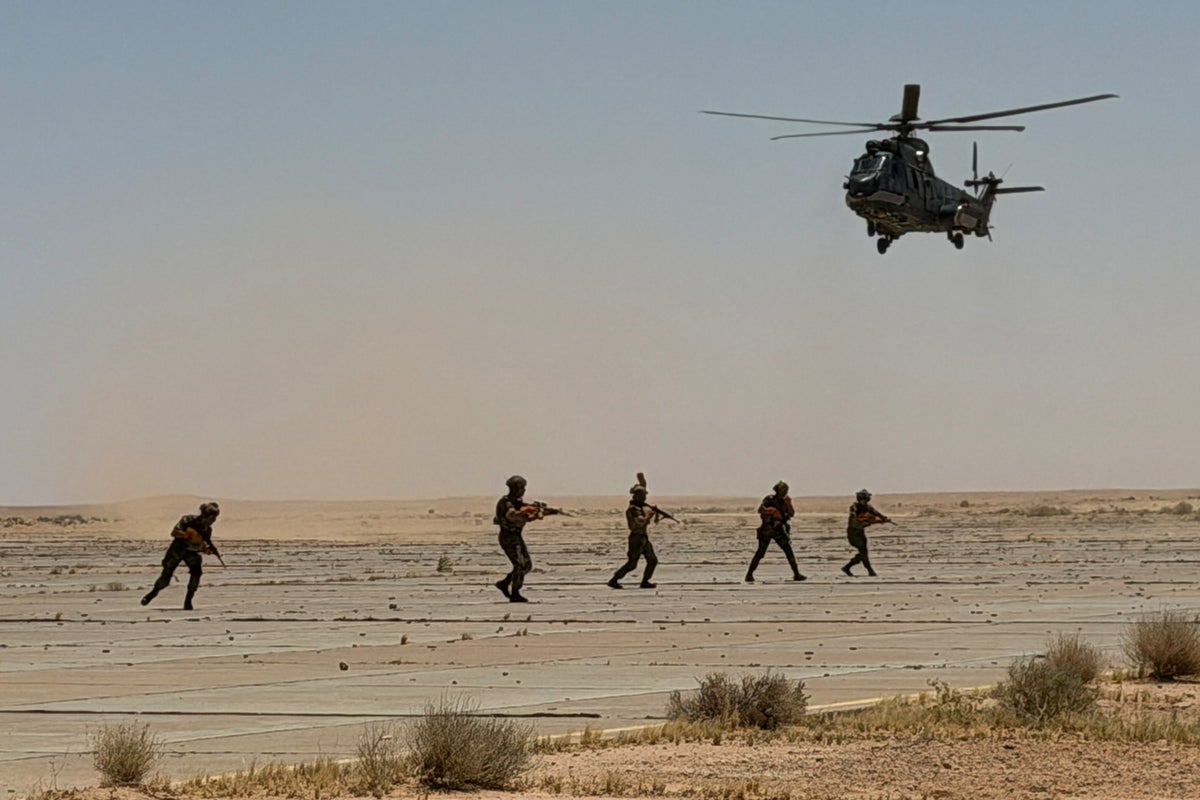
The construction of these sites relies on advanced modular engineering and extreme operational security. Think of it as a military jigsaw puzzle. Components are brought in under the guise of commercial logistics or counter-terrorism operations. Helicopters flying below radar thresholds drop off specialized equipment in the dead of night.
The first base, located near the Syrian border, reportedly focuses on electronic warfare and surveillance. It is an ear to the ground. Its sensors intercept internal Iranian communications, track missile movements across the border, and jam early-warning radars. It is the invisible shield that blinds the enemy before a single shot is fired.
The second base, tucked deeper into the rugged interior of Anbar, is designed for kinetic support. It houses advanced refueling systems, drone launch pads, and emergency landing strips. If an Israeli jet takes damage during a run over Iranian airspace, it no longer faces a catastrophic trek back across the Mediterranean. It has a sanctuary. A hidden pit stop in the heart of hostile territory.
The sheer audacity of this strategy is breathtaking. It requires an incredible level of technological sophistication. We are talking about satellite-linked camouflage netting that distorts thermal signatures, and water-recycling systems that allow small teams of elite operators to survive for months without a single supply truck tipping off local herdsmen.
The Invisible Stakes
To understand why this matters, we must look at the psychological tightrope the region walks every single day.
For the average Iraqi citizen, the news of these bases is a nightmare scenario. Iraq has spent the last two decades trying to claw its way out of the ashes of invasion, civil war, and sectarian bloodshed. The streets of Baghdad are finally buzzing with life again; cafes are full, and foreign investment is trickling back.
But this development turns Iraq into a geopolitical chessboard where the players sit in foreign capitals. Baghdad is caught in a vice. On one side, the United States presses for regional stability and counter-terrorism cooperation. On the other, Iran wields massive influence through local paramilitary groups like Kata'ib Hezbollah, who view any Israeli presence as an existential declaration of war.
If Iran decides to retaliate against these secret installations, they won't just fire missiles at the coordinate points in the desert. They will strike at the heart of the Iraqi state. They will activate their proxies, plunge the government into chaos, and turn the country back into a battlefield.
The true cost of these bases isn't measured in the millions of dollars spent on stealth technology. It is measured in the sleep lost by families in Ramadi and Fallujah, who hear the low rumble of jet engines at 3:00 AM and wonder if the war they thought they escaped has finally returned to claim them.
A Game of High-Stakes Blindman's Buff
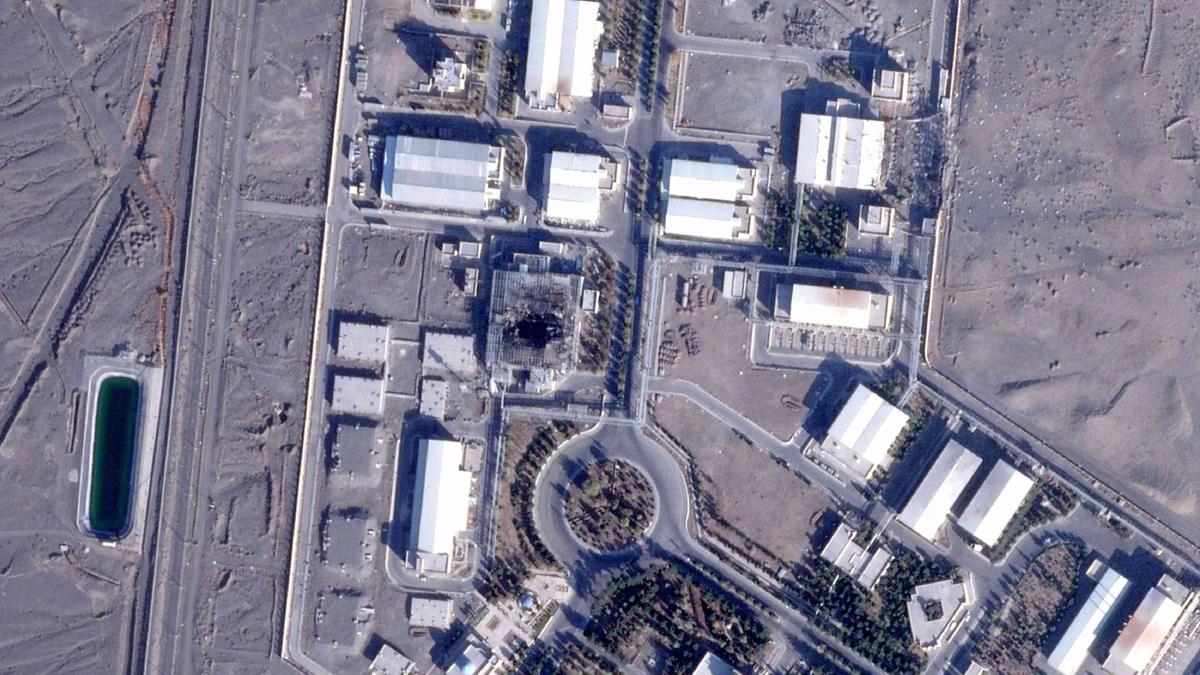
There is a profound vulnerability in admitting how little we actually know about the current state of shadow warfare. As observers, we are forced to piece together truth from leaked satellite imagery, whispered intelligence briefs, and the occasional frantic report from local tribesmen.
It is a terrifying way to understand the world.
The traditional rules of engagement are gone. In the past, nations mobilized armies on borders. You could see the threat coming. Today, the threat is a line of code, a cloaked drone, or a hidden base disguised as a crumbling hill in a forgotten desert.
Israel’s reported move into Anbar shows a willingness to take unprecedented risks. It signals that the leadership in Jerusalem views the Iranian nuclear and missile threat not as a distant problem to be managed through diplomacy, but as an imminent crisis requiring immediate, physical proximity. They are willing to violate the airspace and sovereignty of a sovereign nation to position their daggers at Iran's throat.
Iran, conversely, is trapped in a loop of paranoia. They know the bases are there, but finding them—and destroying them without triggering a massive, regional war that could topple their own regime—is a logistical nightmare.
So, the tension builds. Quietly. relentlessly.
The Dust Settles
The sun goes down over Anbar, painting the sky in bruised shades of purple and orange. The wind picks up, sweeping across the plains, erasing the footprints of the day.
In the distance, a generator hums, buried deep beneath a camouflage canopy that mimics the exact texture of the surrounding limestone. A handful of operators sit in a climate-controlled bunker, staring at green screens, monitoring the skies over Tehran.
They are miles from home, surrounded by people who would kill them if they discovered their location, relying entirely on the silence of the desert to keep them alive.
We often think of peace as the absence of war. But in the modern Middle East, peace is merely the sound of a secret being kept. The moment the wind shifts, the moment one of these bases is exposed to the light of day, the illusion shatters. Until then, the region holds its breath, waiting for the spark that will turn the silent sand into an inferno.