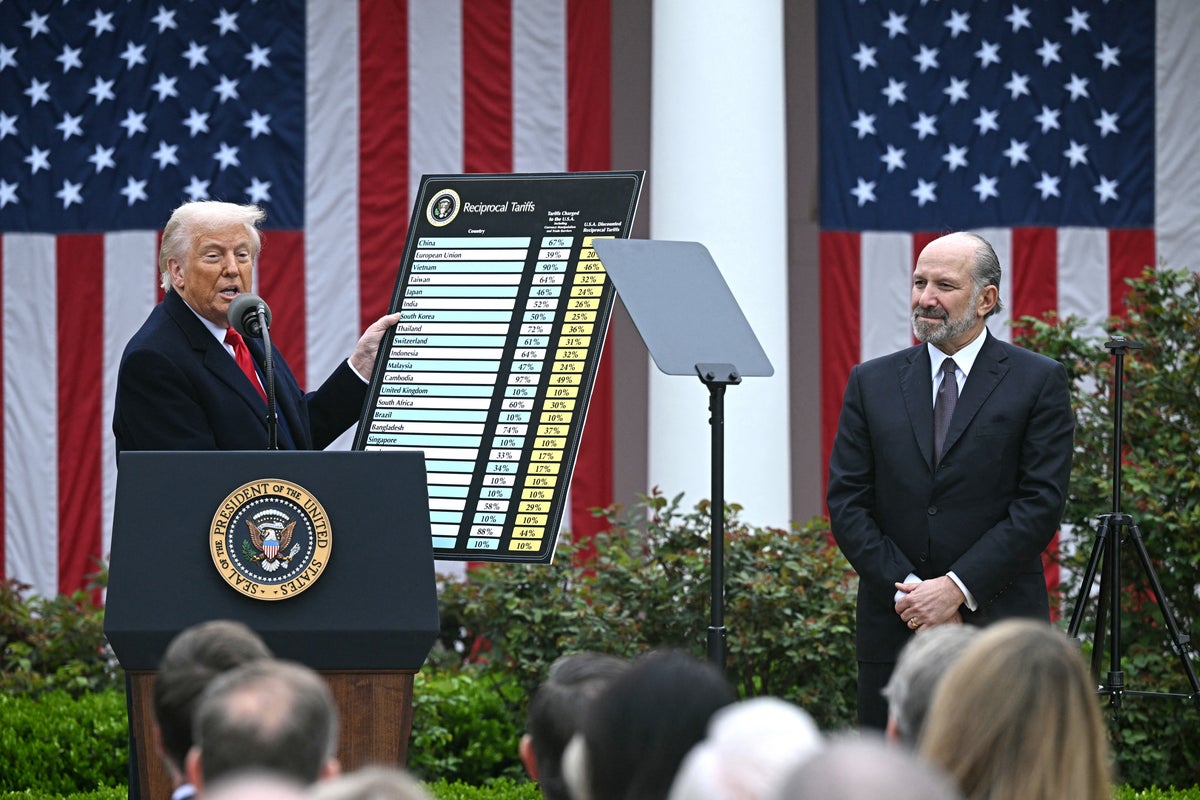
Donald Trump is furious that he had to give the money back. The media is obsessed with the spectacle of his grievance. Both sides are fundamentally blind to how trade law actually works in the United States.
The political circus is currently fixated on a familiar script. The former president rails against a Supreme Court tariff ruling, complaining that his administration was forced to refund billions to companies he claims "hate America." Meanwhile, mainstream pundits paint this as a simple story of executive overreach met by judicial correction. Don't miss our previous coverage on this related article.
They are all missing the real story. This is not a debate about patriotism or political grudges. It is a structural autopsy of how modern protectionism collides with the nondelegation doctrine and the U.S. Constitution.
The lazy consensus says tariffs are a weapon used at the absolute discretion of the executive branch to punish foreign adversaries and protect domestic industries. The reality? Tariffs are taxes. Under Article I, Section 8 of the Constitution, the power to tax belongs exclusively to Congress. When an administration treats tariff policy like a personal piggy bank or an ideological loyalty test, it does not just distort the market—it triggers a constitutional immune response that forces the treasury to write massive refund checks. To read more about the background of this, Reuters offers an informative summary.
The Revenue Clause and the Illusion of Executive Autonomy
To understand why the federal government ended up refunding billions of dollars to importers, you have to look past the political theater and examine the statutory machinery.
For decades, Congress has slowly chipped away at its own authority, delegating broad trade powers to the president through vehicles like Section 232 of the Trade Expansion Act of 1962 and Section 301 of the Trade Act of 1974. These statutes allow the executive branch to impose duties under specific conditions: to protect national security or to combat unfair foreign trade practices.
But "broad power" is not "infinite power."
The executive branch routinely treats these statutes as a blank check. When an administration expands the scope of tariffs far beyond the original statutory investigation—or extends them indefinitely without proper administrative procedures—it violates the Administrative Procedure Act (APA) and exceeds its delegated authority.
When a court orders a tariff refund, it is not taking sides in a trade war. It is enforcing the boundary lines of delegated power. The Court of International Trade and the Supreme Court do not care about a company's level of patriotism. They care whether the Executive followed the rules laid down by the Legislative. When the government loses these cases, the law requires that the illegally collected duties be returned to the importers, with interest.
The Economic Mirage of the Foreign-Paid Tariff
There is a persistent, mathematically illiterate myth that foreign nations pay for U.S. tariffs. They do not.
A tariff is an import tax collected by U.S. Customs and Border Protection at the port of entry. The entity writing the check to the U.S. government is the domestic importer of record—American companies bringing in components, raw materials, or consumer goods.
Consider the mechanics of a standard supply chain. An American manufacturer relies on imported industrial components to build machinery in Ohio. If the government slaps a 25% tariff on those components, the Ohio manufacturer faces an immediate cash-flow crunch. They have three choices:
- Absorb the cost and watch their profit margins evaporate.
- Cut domestic capital expenditure and freeze hiring.
- Pass the cost directly down to the American consumer.
Usually, they do a combination of all three.
When an administration rails against refunding these taxes to companies that "hate America," they are attacking American businesses that were forced to overpay an unconstitutional tax. The refund does not go to Beijing, Tokyo, or Berlin. It goes back into the bank accounts of companies operating within the United States, employing American workers, and trying to navigate a chaotic regulatory environment.
Why Judicial Review is the Only Thing Saving the Supply Chain
Corporate boardrooms across the country spend millions of dollars trying to hedge against political volatility. When trade policy changes based on a late-night social media post or an off-the-cuff remark at a campaign rally, long-term industrial planning becomes impossible.
The judiciary is the only institutional brake on this instability.
Importers filed thousands of lawsuits challenging the expansion of List 3 and List 4A tariffs under Section 301, arguing the administration failed to respond to public comments and rushed the implementation process in violation of the APA. The legal battleground is dense, technical, and dry—the exact opposite of the sensationalized headlines dominating the news cycle.
If the courts do not step in to police the boundaries of these trade statutes, the executive branch effectively gains the power to pick winners and losers across the entire domestic economy by decree. A manufacturing plant in Pennsylvania could be wiped out overnight by an arbitrary duty on steel, while a competitor is granted an opaque exclusion.
The threat of court-ordered refunds is the only mechanism that forces federal agencies to maintain even a baseline level of procedural rigor. Without it, trade policy degenerates into pure economic unpredictability.
The Hidden Cost of Retaliation and Opaque Exclusions
The true damage of arbitrary tariff policy extends far beyond the initial tax collected at the border. It triggers a secondary wave of economic friction through retaliatory duties and rent-seeking exclusion processes.
When the United States imposes sweeping tariffs outside the bounds of international trade frameworks, targeted nations do not simply accept the cost. They retaliate with precision, targeting politically sensitive American sectors—most notably agriculture.
To offset the damage done to domestic farmers by these retaliatory tariffs, the government frequently has to issue multi-billion-dollar bailouts. This creates a bizarre, self-inflicted cycle: the government taxes American industrial importers, hurts American agricultural exporters, and then uses taxpayer money to subsidize the farmers harmed by the initial trade policy.
Simultaneously, the administration must create a bureaucratic mechanism to handle "tariff exclusions" for domestic companies that cannot find alternative suppliers. This process quickly becomes a playground for corporate lobbying. Larger corporations with deep pockets and Washington connections successfully secure exclusions, while smaller businesses without legal teams are forced to pay the full duty until they face bankruptcy.
When the judiciary steps in and rules that the administration overstepped its bounds, it is a structural correction to a system that had devolved into executive overreach and bureaucratic chaos.
Dismantling the Patriotism Narrative in Corporate Trade
The political rhetoric surrounding trade law loves to divide the business world into patriots and traitors. This is a false dichotomy designed to distract from bad policy.
Multitiered global supply chains are not built on ideological whims; they are engineered over decades based on infrastructure, labor specialization, and logistics. An American technology firm or automotive manufacturer cannot instantly move a factory from Asia to Ohio because of a newly imposed duty. Doing so requires billions in capital expenditure and years of development.
When these companies sue the government over illegal tariff implementation, they are exercising a core constitutional right to challenge unlawful taxation. Labeling these businesses as anti-American for demanding their money back after a court ruled the tax was improperly levied is a rejection of the rule of law.
If the government can ignore statutory limits, collect billions in unauthorized taxes, and then refuse to issue refunds on the grounds that the victims lack patriotism, the fundamental protections of the Fifth Amendment's Due Process Clause are effectively dead.
Stop listening to the political shouting match over who "hates" or "loves" the country. Look at the balance sheets, read the statutory text of the Trade Acts, and recognize that court-ordered tariff refunds are not a political failure. They are proof that the separation of powers still works, even when the executive branch refuses to acknowledge its limits.