The nitrogen in your blood behaves differently at thirty meters down. It doesn’t scream. It whispers. It slows your thoughts into a warm, heavy blanket of absolute calm, a phenomenon divers call the rapture of the deep. In that quiet place, the surface world—with its flight schedules, hotel reservations, and everyday anxieties—evaporates. There is only the rhythmic hiss of your regulator, the distortion of light through salt water, and the immense, shifting blue of the Indian Ocean.
Five Italian travelers went looking for that peace in the pristine waters of the Maldives.
They found it. But they never came back.
Recreational scuba diving is often marketed as the ultimate luxury leisure activity, a weightless safari through coral gardens. We look at the glossy brochures of the Maldives and see an idyllic paradise of turquoise lagoons and overwater bungalows. We forget that these islands are merely the tips of colossal underwater mountains rising from the abyssal plain. Where the shallow reefs drop off into the open ocean, the environment changes from a sunlit playground to a frontier of fluid, unpredictable violence.
The tragedy that unfolded near Vaavu Atoll reminds us of the fragile margin between an unforgettable adventure and an irreversible catastrophe.
The Pull of the Channel
To understand what happened to the five Italian divers, you have to understand the geography of a Maldivian atoll. An atoll is a ring of coral that encloses a central lagoon. The only way water can move in and out of that lagoon with the rising and falling of the tides is through narrow gaps in the reef. Divers call these gaps channels.
Channels are where the magic happens.
Because the entire volume of the tide is forced through these constricted spaces, they become high-speed underwater rivers. This rush of nutrient-rich water attracts the ocean’s apex predators. If you want to hook your arm onto a reef with a metal reef-hook and watch fifty grey reef sharks, eagle rays, and schooling barracuda dance in the current ahead of you, you dive a Maldivian channel. It is an adrenaline rush unlike anything else on Earth.
But currents are fickle beasts. They do not just blow horizontally like wind. They twist. They down-well.
A down-current is a diver’s worst nightmare. It occurs when a powerful horizontal current hits a vertical reef wall and is forced downward into the depths. It is invisible. You cannot see it coming until the bubbles from your exhaust valve, which should be floating toward the sunlight, begin rushing past your face toward the dark ocean floor.
When a group fails to return from a channel dive, the ocean community holds its breath. We know the math. A standard aluminum tank holds enough air for about an hour at shallow depths, but at forty or fifty meters, that air is consumed at four to five times the normal rate. Time becomes a cruel, rapidly diminishing currency.
The Search in the Blue
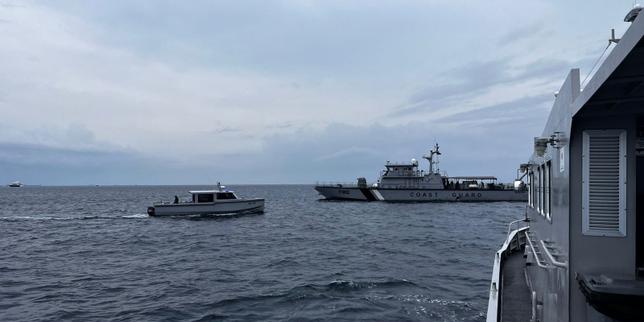
The alarm was raised on a Thursday. One body was located floating on the surface, a stark, solitary marker against the vast expanse of the sea. The discovery triggered an immediate, desperate mobilization of local authorities, the Maldivian coast guard, and local dive operators who abandoned their tourist itineraries to search for the remaining four.
Searching for lost divers in the open ocean is an exercise in heartbreak. From the deck of a boat, a human head clad in a dark neoprene hood looks identical to a piece of driftwood, a floating coconut, or the crest of a breaking wave. If the divers are swept away from the reef by an outgoing current, they enter the oceanic blue—a featureless, multi-directional desert where the coast guard must calculate complex drift patterns based on wind, surface currents, and tides.
For three days, the search continued under the burning tropical sun. Families in Italy waited for news, suspended in that horrific limbo where no information is both a curse and a fragile thread of hope.
Then, the ocean gave up its secrets.
The coast guard vessels, navigating the waters around the atoll, located the remaining four bodies. They were found floating, miles from where they had originally giant-stroked off the back of their dive boat. The search was over. The recovery began.
The Anatomy of an Underwater Emergency
What happens in those final, desperate minutes underwater? To those who have never strapped on a life-support system, it seems incomprehensible that five certified divers could perish together. Surely, someone could have helped. Surely, they could have swum to the surface.
The reality of dive physics is unyielding.
+-------------------------------------------------------------+
|               THE PARADOX OF DEPTH & AIR                   |
+-------------------------------------------------------------+
| Surface (1 Atm)     : [████████████████████] 60 Mins of Air |
| 10 Meters (2 Atm)   : [██████████]           30 Mins of Air |
| 30 Meters (4 Atm)   : [█████]                15 Mins of Air |
| 40 Meters (5 Atm)   : [████]                 12 Mins of Air |
+-------------------------------------------------------------+
Consider a hypothetical scenario rooted in standard dive incident analysis. A group enters the channel. The current is stronger than anticipated. They fight against it, their heart rates skyrocket, and their breathing becomes shallow and rapid. This causes a buildup of carbon dioxide in the lungs, triggering an overwhelming physical sensation of suffocation.
Panic enters the water.
Panic is the true killer in scuba diving; the water merely fills the space panic leaves behind. When one diver panics and bolts for the surface or sinks into the depths, the human instinct to assist kicks in. A buddy reaches out. Another follows. If they are caught in a downward washing current, their buoyancy compensator jackets cannot inflate fast enough to counteract the downward force of the water.
Within minutes, their depth gauges spin past safe limits. Air supplies dwindle to nothing. When the regulators finally breathe dry, the human body is forced to make a choice that the conscious mind knows is fatal. It inhales.
The Permanent Scars of Paradise
This tragedy will be analyzed in dive shops from Milan to Male. Experts will debate nitrox mixes, surface marker buoys, current checks, and crew-to-diver ratios. The bureaucratic machinery of international tourism and maritime safety will grind on, producing reports and updated safety protocols.
But for the families of those five Italians, the Maldives will never be a collection of luxury resorts or a bucket-list destination. It will be the place that kept their loved ones.
Every year, millions of people plunge beneath the surface of the ocean to witness a world of unimaginable beauty. We return to our boats, rinse our gear, and drink cocktails at sunset, completely oblivious to how closely we flirted with the abyss. The ocean does not hate us. It does not love us either. It is simply vast, heavy, and utterly indifferent to our presence.
The sun still sets over Vaavu Atoll, painting the sky in bruises of purple and gold, while the currents continue their silent, eternal rush through the dark channels below.