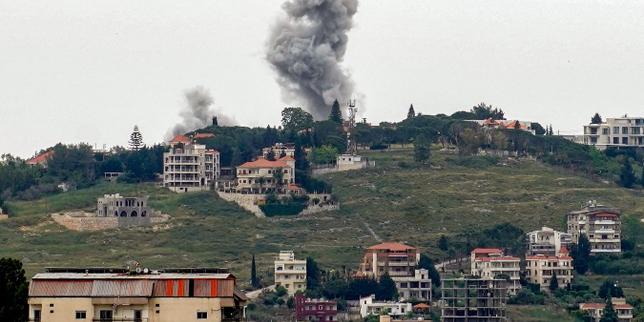
The announcement of cumulative casualty figures in geopolitical conflicts frequently serves as a lagging indicator of a deeper, structural shift in military doctrine and operational objectives. When public reporting notes that Israeli bombardments in Lebanon have resulted in over 3,000 fatalities since March 2, standard media analyses treat this figure as a static metric of tragedy. A rigorous strategic assessment, however, requires deconstructing this data point into its component operational vectors. This casualty threshold is not an arbitrary milestone; it is the mathematical output of a deliberate, high-velocity campaign designed to degrade an asymmetric adversary's command structure, logistical depth, and territorial control.
Understanding the reality of this conflict requires moving past raw numbers to analyze the structural mechanics of modern asymmetric warfare. The current escalation operates across three distinct operational pillars: the systematic destruction of nested command networks, the enforcement of a geographic denial-of-service framework, and the exploitation of asymmetric resource depletion. By examining these pillars, we can map the cause-and-effect relationships driving the region's security architecture.
The Tri-Border Operational Framework
To understand why casualty and strike metrics accelerated sharply after March 2, the conflict must be viewed through a structured three-pillar model. Asymmetric campaigns by state actors against non-state embedded actors do not seek territorial occupation as a primary objective. Instead, they operate on a framework of systemic dismantlement.
                  [ Tri-Border Operational Framework ]
                                   │
         ┌─────────────────────────┼─────────────────────────┐
         ▼                         ▼                         ▼
[ Pillar 1: Network        [ Pillar 2: Geographic    [ Pillar 3: Depletion
  Decapitation ]             Denial-of-Service ]       Asymmetry ]
         │                         │                         │
  • Targeting of C2 nodes   • Interdiction lines      • Kinetic expenditure vs.
  • Kinetic elimination     • Depopulation of zones     reconstitution rate
  • Signal disruption       • Sub-surface destruction • Economic strain
Pillar 1: Network Decapitation and C2 Degradation
The primary vector of the kinetic campaign is the targeting of Command and Control (C2) nodes. Non-state military architectures rely heavily on decentralized, highly specialized leadership cadres to manage dispersed rocket-launching teams and localized defensive cells.
When kinetic strikes eliminate mid-level and senior commanders within a compressed timeframe, the adversary's network experiences structural paralysis. The loss of a commander breaks the chain of tactical communication, forcing subordinate units to operate in isolation. This isolation prevents coordinated counter-offensives and leaves localized cells vulnerable to sequential neutralization.
Pillar 2: Geographic Denial-of-Service
The second pillar focuses on the creation of a physical and tactical buffer zone, primarily concentrated south of the Litani River but extending structurally across Lebanon's logistical corridors. This operation functions as a geographic denial-of-service (GDoS) mechanism. By utilizing high-payload precision munitions, the campaign aims to achieve two specific outcomes:
- Sub-surface Architecture Destruction: Neutralizing tunnels, underground ammunition depots, and reinforced launch positions built into civilian and rural topography over decades.
- Logistical Interdiction: Cutting off the ground transportation routes used to move hardware, personnel, and supplies from entry points along the Syrian border down to the active southern front.
This GDoS strategy creates a compounding friction point for the defender. As transport networks break down, the ability to replenish expended munitions or rotate fatigued personnel drops toward zero.
Pillar 3: Depletion Asymmetry
The third pillar governs the economic and material math of the conflict. In an asymmetric war of attrition, a state military possesses a deeper, state-backed industrial base, international supply alliances, and advanced air superiority. The non-state actor relies on fixed stockpiles and complex, covert smuggling routes.
The kinetic output since March 2 demonstrates an intentional push to force the adversary into a negative replacement ratio. When the rate of munitions destruction and personnel loss outpaces the adversary's reconstitution rate, the defensive network faces structural collapse, regardless of its initial stockpile size.
The Attrition Function and Data Limitations
Evaluating the true state of the conflict requires addressing a fundamental flaw in wartime data collection: the reliance on aggregate casualty numbers without categorization. Public data pools routinely merge combatant and noncombatant figures into a single metric. This lack of granularity obscures the true kinetic efficiency of the campaign.
To analyze the structural impact of these strikes, analysts must evaluate the campaign through a standard military cost function, defined by three variables:
- The Kinetic Conversion Rate: The ratio of precision-guided munitions expended to verified high-value targets neutralized.
- The Collateral Friction Coefficient: The political, diplomatic, and tactical blowback generated by noncombatant casualties, which acts as a drag on the attacking state's operational timeline.
- The Resiliency Factor: The adversary's capacity to absorb structural losses and re-establish a functional, decentralized chain of command via pre-planned succession protocols.
The accelerated casualty rate since early March indicates a shift in the kinetic conversion rate. This change points to an intelligence-gathering breakthrough, likely achieved by combining cyber-interception, signals intelligence (SIGINT), and human intelligence (HUMINT) networks. This enhanced targeting matrix allowed the attacking force to identify and strike deeply embedded targets with unprecedented speed.
However, this high-velocity targeting methodology carries clear operational trade-offs. Operating at this speed shortens the verification window for intelligence, which naturally increases the collateral friction coefficient. As noncombatant casualties rise, international diplomatic pressure builds, creating a hard ceiling on the campaign's available timeline before external political interventions force a halt.
Logistical Bottlenecks and Border Interdiction
A critical factor missed by surface-level news reporting is the direct relationship between air operations in southern Lebanon and interdiction strikes along the northern and eastern borders. A defensive network cannot survive without continuous supply lines. The escalation of strikes in the Beqaa Valley and near border crossings serves a specific purpose: isolating the theater of operations.
This isolation strategy exploits a severe logistical bottleneck. The geography of Lebanon limits heavy transport to a few key highways and mountain passes. By systematically targeting bridges, highway intersections, and border checkpoints, the air campaign splits the country into isolated tactical zones.
The second limitation for the defender is the specialized nature of modern anti-tank guided missiles (ATGMs) and rocket components. Unlike small arms ammunition, these sophisticated systems cannot be manufactured in makeshift local workshops; they must be imported intact. When border interdiction successfully stops these shipments, the southern defensive cells are forced to ration their remaining supplies. This rationing reduces their firing rates, allowing ground forces to maneuver with significantly less risk.
Tactical Adaptation vs. Structural Degradation
A key question for strategic planners is whether the observed attrition translates to permanent structural degradation or if it simply triggers a tactical adaptation from the adversary. Non-state armed groups are designed to survive high levels of attrition by utilizing a hydra-like organizational model. When a node is destroyed, a secondary node is programmed to assume its responsibilities.
However, this adaptation model breaks down under continuous, multi-vector pressure. The transition from a centralized command structure to fully autonomous local cells introduces three critical vulnerabilities:
- Loss of Strategic Synchronization: Autonomous cells can execute localized ambushes or short-range rocket strikes, but they cannot coordinate large-scale, multi-axis counter-offensives to reclaim lost ground.
- Information Starvation: Without centralized intelligence sharing, local cells operate blindly, making them highly vulnerable to electronic warfare, deception, and localized encirclement.
- Fratricide and Security Breaches: The breakdown of secure communication channels increases confusion on the battlefield, leading to potential friendly-fire incidents and a higher susceptibility to counter-intelligence penetration.
Consequently, while the adversary may remain capable of launching sporadic, asymmetric attacks, their ability to function as a cohesive, strategic military force diminishes significantly once a critical mass of mid-level commanders is removed.
Strategic Playbook and Forecast
The operational data and structural realities on the ground indicate that this conflict is approaching a critical transition phase. The current high-velocity kinetic campaign cannot be sustained indefinitely due to the diplomatic costs of collateral friction and the high economic expense of precision munitions.
The campaign is moving toward a clear endgame: maximizing structural degradation to enforce a highly favorable diplomatic settlement. The operational goal is not an outright, unconditional surrender—an unrealistic outcome in asymmetric warfare—but rather the complete neutralization of the adversary's offensive capability south of the Litani River.
For corporate security operations, supply chain managers, and geopolitical risk assessors, strategic planning should be based on the following trajectory:
- Air-to-Ground Transition: Expect kinetic air strikes to shift from broad targeting to highly localized close-air support as ground forces advance to clear remaining sub-surface infrastructure in the border zones.
- Logistical Hardening: The interdiction campaign along the Syrian-Lebanese border will likely intensify, evolving into a permanent containment zone managed by long-range drone surveillance and rapid-response strike packages.
- Asymmetric Desperation Retaliation: As the adversary's primary command networks degrade further, expect remaining autonomous cells to deploy uncoordinated, long-range ballistic or drone assets targeting economic infrastructure and population centers. These desperate measures aim to create psychological leverage for negotiations.
The conflict will not be resolved by a sudden drop in hostility, but rather by enforcing a material reality where the non-state actor no longer possesses the logistical infrastructure or command structure required to launch sustained operations. Victory in this framework is defined by structural denial, turning the border region into an unusable space for the adversary.