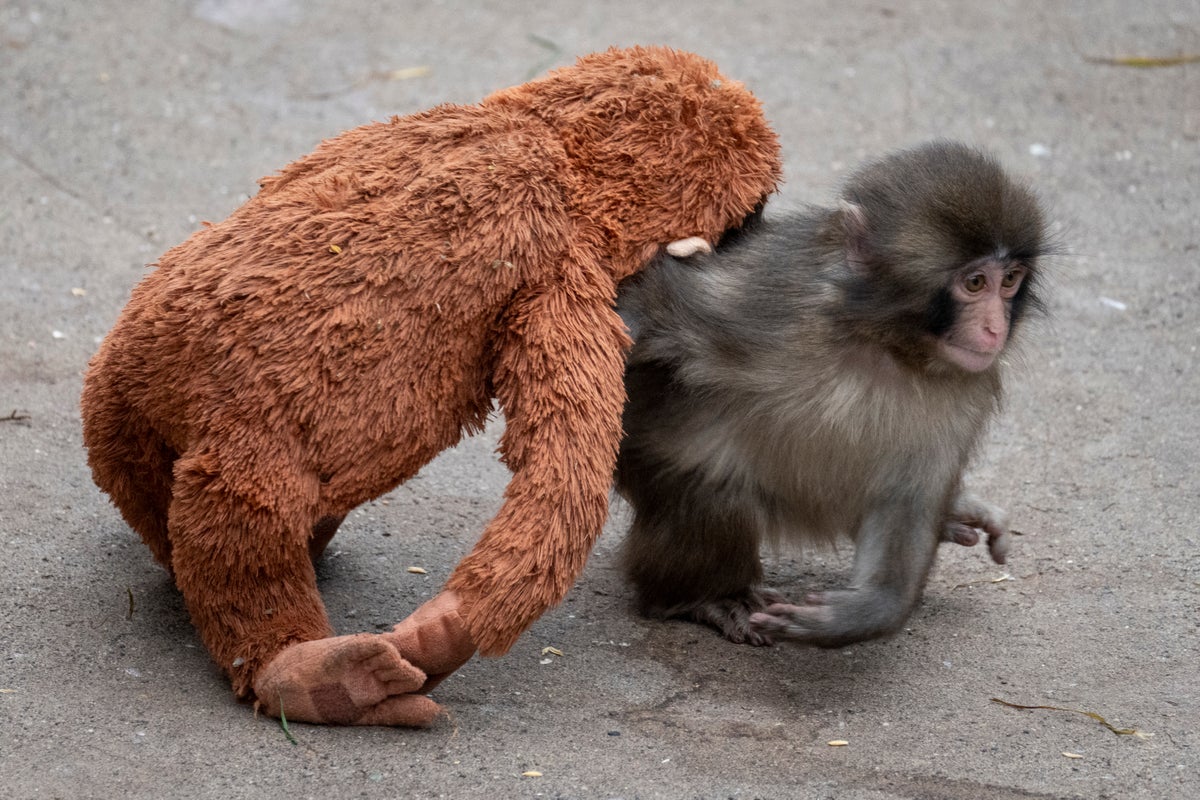
A drunk tourist jumps a fence at a foreign zoo, tries to wrestle a primate, and ends up in handcuffs. The internet reacts on cue. The comments section fills with predictable outrage about "entitled foreigners," the "sanctity of animal welfare," and calls for harsher prison sentences. The media frames it as a simple story of individual stupidity breaking a flawless system.
They are missing the entire point. In similar updates, we also covered: The Rotterdam Hantavirus Panic Reveals Why Media Outbreaks Are Mathematically Flawed.
The recent arrest of American citizens after an intrusion into a monkey enclosure in Japan isn’t an isolated incident of bad behavior. It is the inevitable result of a sanitized, highly artificial tourism industry that tricks people into believing nature carries a reset button. We have spent decades building environments that blur the line between domestic entertainment and wild reality, and then we act shocked when coddled modern humans treat a wildlife sanctuary like a theme park.
The lazy consensus blames the individual entirely. The nuanced truth is much more uncomfortable: the modern zoo format itself creates the very behavior it condemns. NPR has provided coverage on this critical topic in extensive detail.
The Illusion of Safety Breeds the Reality of Chaos
Go to any modern zoological park. You are greeted by manicured lawns, cartoonish signage, and plexiglass barriers designed to make 500-pound apex predators look like living living-room art. This design language sends a subconscious message to the human brain: You are safe, and everything inside this bubble is controlled.
When you remove the visible element of danger, you remove the natural human instinct of self-preservation.
Consider the mechanics of risk perception. In a truly wild environment—say, a remote trail in Hokkaido—a hiker is hyper-aware. The lack of barriers forces a state of respect and alertness. Place that same person behind a chest-high wooden fence in an urban center, and their brain registers the environment as a playground. The barrier doesn't just keep the animal in; it locks the human’s critical thinking out.
I have spent years analyzing how public spaces dictate human behavior. When you build infrastructure that prioritizes aesthetics over stark, sobering reality, you invite boundary testing. The person who climbs into a primate habitat didn't suddenly lose their mind; they were lulled into a false sense of security by an environment engineered to look harmless.
The Myth of the "Harmless" Captive Primate
Media reports love to focus on the absurdity of the act—"man climbs into Punch the monkey’s enclosure." The naming of zoo animals itself is part of the corporate sanitization process. Naming a wild animal "Punch" or "Barnaby" strips away its biological identity and replaces it with a plush-toy persona.
Let's correct the biology immediately. A captive macaque or chimpanzee is not a pet. It is a highly stressed, incredibly dense mass of muscle and sharp teeth possessing a social hierarchy built on dominance and violence.
| Animal Type | Average Human Strength Ratio | Primary Defense Mechanism |
|---|---|---|
| Captive Macaque | 4:1 (Relative to size) | Canines, pack swarming |
| Common Chimpanzee | 1.5:1 to 2:1 (Absolute) | Tearing, biting |
| Domesticated Dog | Variable | Linear biting |
When a human breaches that space, they aren't entering a room; they are dropping into a high-tension territorial war zone. The animal doesn't see a "visitor." It sees a rival or an existential threat. The fact that more of these incidents don't end in fatal maulings is a testament to the restraint of the animals, not the security of the parks.
The Flawed Premise of International Tourism Policing
Whenever an international incident like this breaks, the standard response is a frantic scramble to answer basic logistical questions. People want to know: What are the local laws? How long will they stay in jail? Will they be deported?
These questions look at the wrong end of the problem. Punishing the offender after the fact does absolutely nothing to prevent the next bored influencer or intoxicated traveler from doing the same thing.
The legal systems of countries like Japan are notoriously rigid, boasting conviction rates over 99%. An American citizen entering that system faces a grueling, isolating process that treats property destruction and public endangerment with extreme severity. But fear of foreign legal systems isn't a deterrent because the type of person who jumps a zoo fence isn't calculating the legal penal code of the country they are visiting. They are operating on pure adrenaline and a complete detachment from consequence.
Relying on the legal system to fix a cultural and architectural failure is a losing strategy.
Stop Fixing the Visitors, Fix the Infrastructure
The conventional wisdom says we need more security guards, higher fines, and bigger warning signs. This is a fundamentally flawed approach that has failed every single time it has been deployed in public safety.
Signs don't work. If a person is intoxicated or suffering from a severe case of main-character syndrome, a bilingual "Do Not Enter" sign is invisible background noise. More guards just create a cat-and-mouse dynamic that some thrill-seekers find even more appealing.
If you want to stop people from entering wild animal spaces, you have two choices: accept the risk as a cost of doing business, or change the architecture to reflect actual danger.
Imagine a scenario where zoo enclosures stopped using polite, manicured hedges and instead used raw, brutalist design elements that visually communicated threat. What if the barriers looked like barriers, rather than garden fences? The moment a space looks punishing, the human brain snaps back into reality.
The Dark Side of Architectural Realism
There is a major downside to this approach, and it’s the reason zoo executives refuse to implement it. If you make the barriers look dangerous, you ruin the fantasy.
The entire economic model of the modern zoo relies on selling a comfortable lie. Parents pay premium ticket prices because they want to eat ice cream while staring at an elephant from ten feet away without feeling like they are in a prison camp or a dangerous wilderness. If you install razor-sharp topological barriers or deep, imposing concrete chasms that scream danger, you break the magic spell. You remind the consumer that they are looking at captive wildlife.
So, the industry chooses the middle ground. They keep the barriers low, the aesthetics pretty, and the security minimal. They accept the statistical certainty that a certain percentage of the population will break the rules, and then they sacrifice those individuals to the media gods when things go wrong, feigning shock and horror every single time.
The Hard Truth About Travel Accountability
We live in an era of unprecedented global mobility paired with unprecedented cultural illiteracy. Travelers pack their bags with the expectation that the rest of the world is merely an extension of their digital feed—a backdrop for personal narrative.
When you travel, you do not possess an invisible shield of diplomatic immunity, nor do you possess a pass to treat foreign infrastructure as a personal stage. The individuals arrested in Japan are discovering this reality in a cold, concrete cell.
But don't look at them as an anomaly. Look at them as the logical conclusion of a system that commodifies the wild, packages it for mass consumption, and then acts surprised when the consumers treat it like garbage.
Stop asking how we can better educate tourists. Start asking why we built a world where a grown adult looks at a wild animal habitat and sees a stage.