A court injunction doesn't actually solve homelessness. It just moves people down the street.
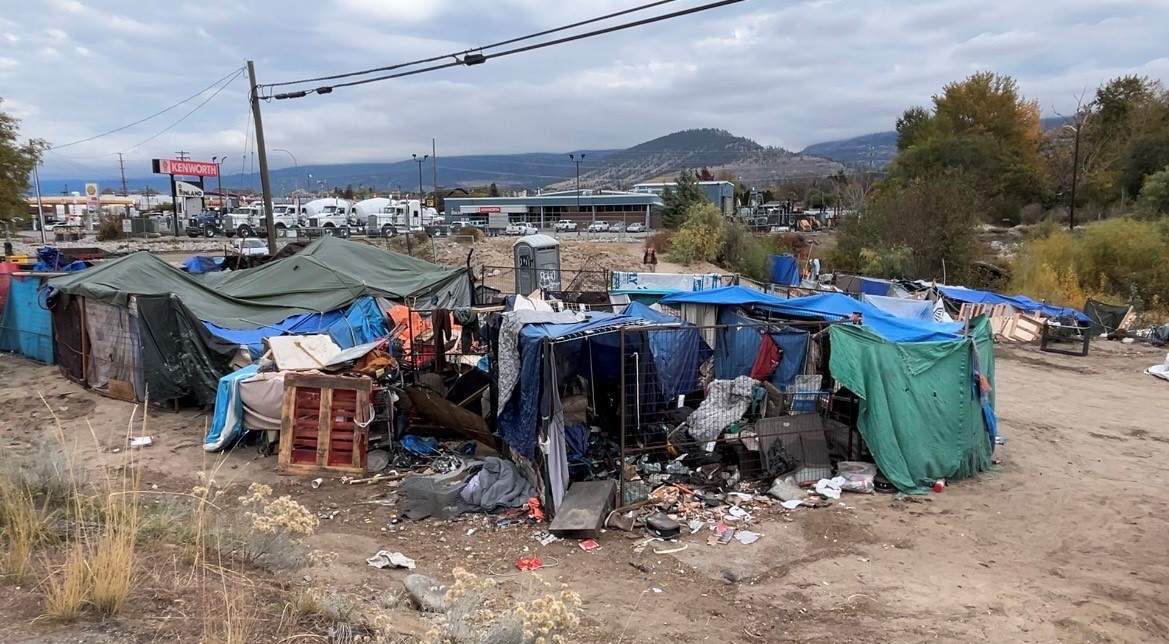
When news broke that Penticton homeless encampment residents face eviction after a court granted an injunction, the reaction across the Okanagan split right down the middle. Some local business owners breathed a sigh of relief, hoping the downtown core and river channels would finally clear out. Meanwhile, housing advocates pointed out the obvious flaw in the legal victory. If you clear a camp without building affordable housing or expanding low-barrier shelter beds, where exactly are dozens of human beings supposed to go by Tuesday morning?
I've spent years covering municipal housing policy and watching British Columbia cities wrestle with this exact legal loop. You see the same script play out in Victoria, Vancouver, Kelowna, and now Penticton. A municipality or provincial agency goes to the BC Supreme Court, argues that an encampment poses fire hazards or blocks public infrastructure, and walks away with a judge's signature. On paper, it looks like decisive action. On the ground, it's usually the start of a much messier, more expensive game of musical chairs.
Why the Court Granted the Injunction
To understand why a judge signed off on clearing the Penticton encampment, you have to look at how Canadian courts weigh Charter rights against public safety.
In British Columbia, legal precedent established by cases like Victoria (City) v. Adams protects the right of unhoused people to erect temporary overnight shelter on public land when indoor shelter spaces are unavailable. Courts have repeatedly ruled that you can't simply ban someone from sleeping outside if they have nowhere else to go. That's a basic constitutional protection under Section 7 of the Canadian Charter of Rights and Freedoms.
So how did the injunction in Penticton succeed?
Courts draw a hard line between overnight sheltering and entrenched, permanent encampments that create acute safety risks. When municipal lawyers or provincial authorities apply for an injunction, they rarely argue that homelessness itself is illegal. Instead, they bring thick binders of evidence from fire chiefs, bylaw officers, and RCMP detachments. They focus on specific, documented hazards. Propane tanks stored inside nylon tents. Open flames near dry brush along the Okanagan River channel. Blocked emergency vehicle access. Biohazards and accumulating debris that prevent routine maintenance on public land or provincial highways.
Once the evidence shows an immediate threat to life and safety—both for the people living inside the tents and the surrounding neighborhood—judges almost always side with public safety. They grant the injunction, giving authorities the legal backing to dismantle structures and clear the site.
The Shelter Bed Math Never Adds Up
Here's the part that frustrates anyone who has actually worked on the front lines of outreach in the South Okanagan. Winning an injunction in court requires proving that enforcement is reasonable, which usually brings up the question of alternative shelter. Yet anyone tracking local capacity in Penticton knows the numbers rarely match the reality on the street.
Even when BC Housing and local non-profits like Ooknakane Friendship Centre or Burrowing Owl operate seasonal or year-round shelters, those beds fill up fast. And "available beds" on a spreadsheet don't always translate to accessible beds in real life.
Think about why someone living in an encampment might turn down a standard shelter spot, even when facing an eviction notice:
- Couples get separated. Most traditional congregate shelters divide dorms by gender, forcing long-term partners to split up at the door.
- Pets aren't allowed. For many people living rough, a dog is their only source of warmth, security, and emotional stability. They won't surrender an animal for a single night on a cot.
- Possessions get left behind. When you own everything you can fit into a shopping cart or two duffel bags, walking into a shelter with strict storage limits means losing your winter coat, your identification, and your tent.
- Curfews and sobriety rules. Strict intake hours or abstinence-only policies lock out people who work late shifts, struggle with severe substance use disorder, or experience claustrophobia and trauma in crowded rooms.
When outreach workers show up ahead of an injunction enforcement deadline, they aren't usually handing out keys to bachelor apartments. They're offering referrals to congregate mats, temporary storage bins, or bus tickets to neighboring communities. It's a band-aid applied to a structural fracture.
What Happens on Eviction Day
People who haven't watched an encampment decampment in person often picture a neat, orderly transition. Crews arrive, tents come down, vans transport residents to warm beds, and the park returns to normal.
It never goes like that.
In reality, the days leading up to a court-ordered eviction are chaotic and deeply destabilizing. Rumors fly through the camp about when bylaw and RCMP will arrive. Some residents pack up early and scatter into the surrounding hills, industrial alleys, or behind retail strip malls along Main Street and Skaha Lake Road. Others stay until the last possible hour because they literally don't have the physical strength or transportation to move heavy gear.
When the heavy machinery and dump trucks roll in, valuable survival gear inevitably gets lost. Even when cities promise to store personal belongings for 30 days, wet blankets, damaged tents, and loose clothing often end up classified as "soiled debris" and tossed straight into compactors. Losing a sleeping bag in the Okanagan isn't a minor inconvenience. It's a life-threatening emergency once temperatures drop below freezing.
Worse, dispersion breaks the fragile tether between vulnerable residents and the healthcare workers who keep them alive. Outreach nurses, mental health clinicians, and harm reduction teams rely on predictable locations to check wounds, distribute naloxone, and deliver daily medications. Scatter thirty people across ten hidden ravines, and overdose deaths spike. Every public health authority in BC—from Interior Health to the BC Centre for Disease Control—has documented this exact pattern after major camp clearances.
The Hidden Cost to Penticton Taxpayers
There's a persistent myth among frustrated residents that clearing an encampment saves the city money. It feels intuitive. Less visible disorder should mean lower policing and cleanup costs, right?
Wrong. Enforcement-first strategies are wildly expensive.
Consider what goes into executing a single court-ordered eviction in a mid-sized city like Penticton. First, you have tens of thousands of dollars in legal fees just to draft affidavits, file motions, and argue the injunction in court. Then comes the enforcement operation itself: overtime pay for RCMP officers, bylaw enforcement deployment, private security contracts to patrol the cleared perimeter afterward, heavy equipment rentals, hazardous waste disposal fees, and fencing installation.
And what happens two weeks later? The exact same people set up smaller, hidden camps half a kilometer away, triggering a brand-new cycle of neighbor complaints, fire calls, and bylaw investigations. You aren't eliminating the municipal expense. You're paying a premium to relocate the exact same crisis from one postal code to another.
Why Penticton Keeps Hitting This Wall
Penticton sits at a unique geographic and economic crossroads in the Southern Interior. Unlike larger urban centers with sprawling industrial zones, Penticton is hemmed in by two lakes, steep valley walls, and agricultural land. There simply isn't much hidden space. When housing becomes unaffordable, visible poverty lands right in the middle of tourist corridors, waterfront parks, and highway right-of-ways.
Over the last several years, rental vacancy rates in Penticton have hovered near historic lows while average rents surged far beyond what someone on provincial disability assistance ($1,483.50 per month in BC) or basic income assistance can afford. You cannot math your way into a $1,500 one-bedroom apartment on a $1,060 monthly cheque. That gap between provincial assistance rates and private market rents is the real engine filling Penticton's riverbanks with tents.
Local council and BC Housing have clashed repeatedly over supportive housing projects in the city—most famously during the prolonged political battle over the Victory Church shelter site on Winnipeg Street. Every delay in approving supportive housing or complex care beds guarantees that encampments will keep growing. You can't vote away gravity, and you can't litigate away a housing deficit.
What Actually Works Instead of Endless Injunctions
If court injunctions only buy a few weeks of quiet before tents pop up somewhere else, what does a real exit ramp look like? Cities across North America that have actually reduced street encampments rely on three unglamorous, data-backed strategies.
1. Sanctioned, Managed Encampment Zones
Instead of playing whack-a-mole across parks and river channels, some municipalities designate a specific, serviced parcel of land where camping is permitted under clear rules. They bring in portable toilets, handwashing stations, sharps containers, and bear-proof dumpsters. Fire lanes are marked out with painted lines, and propane heaters are swapped for safer alternatives. It costs a fraction of constant police sweeps and gives outreach teams one centralized place to connect residents with housing applications.
2. Rapid Re-Housing With Flexible Rent Supplements
Supportive housing buildings take years to permit, fund, and construct. Rent supplements work next week. By pairing private market landlords with direct, guaranteed rent top-ups and mobile case workers who check in weekly, cities can move people straight from tents into existing apartments without waiting for concrete to pour.
3. Low-Barrier Tiny Home Villages
Communities like Duncan and Kelowna have demonstrated how quickly modular "tiny home" villages—like Kelowna's STEP Place—can empty dangerous encampments. Each resident gets a locking door, heat, electricity, and storage for their belongings, alongside 24/7 on-site staff and meals. Because residents have privacy and autonomy, acceptance rates soar compared to crowded gym-floor shelters.
How Penticton Residents Can Push for Real Solutions
Watching your neighborhood struggle with street disorder, discarded needles, and fire risks is exhausting. Wanting safe parks and clean sidewalks doesn't make you heartless. At the same time, cheering for a court injunction as if it's a finish line sets the whole community up for disappointment when the tents reappear next month.
If you live in Penticton and want this cycle to actually stop, focus your pressure where it counts:
- Show up to public hearings for supportive housing. Usually, the loudest voices at city hall are opponents worried about property values. Council needs to hear from residents who understand that blocking housing projects guarantees more street camping.
- Demand transparent shelter metrics. Ask municipal leaders and BC Housing not just how many beds exist, but how many are low-barrier, pet-friendly, and open to couples.
- Support local frontline outreach groups. Organizations working directly along the river channel and downtown alleys need cold-weather gear, socks, non-perishable food, and consistent community backing to keep people alive during enforcement transitions.
The court granted the injunction, the notices are posted, and the cleanup crews will clear the site. Just don't mistake an empty lot for a solved problem.