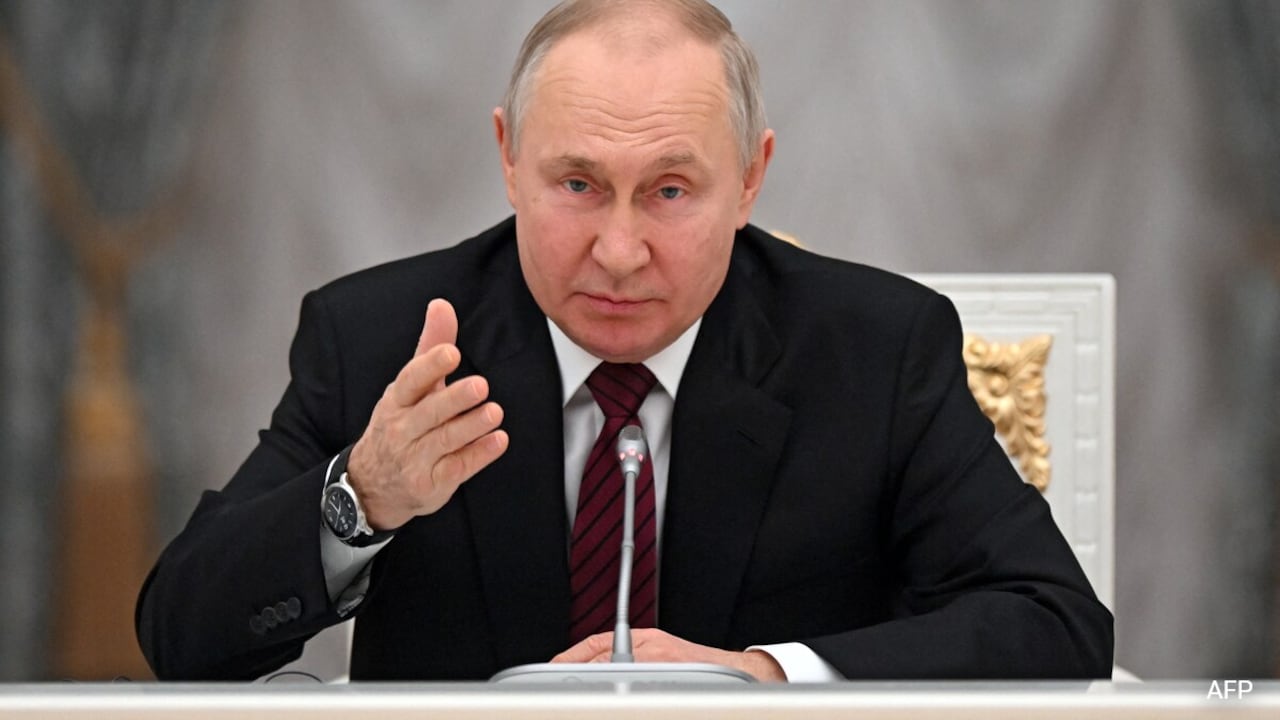
When Finnish and Norwegian leaders pick up the phone to speak with Russian President Vladimir Putin, the official readouts almost always use the exact same diplomatic euphemism to describe the conversation. They call it "frank." In the sterile, carefully calibrated vocabulary of international statecraft, a frank exchange does not mean an open-minded brainstorming session. It means the two sides fundamentally disagree, neither budged an inch, and the conversation was tense enough to strip away standard diplomatic pleasantries.
For decades, the Nordic states—particularly Finland—operated as the primary Western interlocutors with the Kremlin. They maintained open backchannels when Washington, London, and Brussels froze Moscow out. Today, with Finland and Sweden inside NATO and Norway standing as Europe’s largest supplier of natural gas, those phone calls carry an entirely different weight. They are no longer exercises in Cold War-era neutral mediation. Instead, they represent high-stakes crisis management along a heavily militarized frontier where a single miscalculation could trigger a direct confrontation between nuclear-armed alliances. If you enjoyed this piece, you might want to check out: this related article.
Decoding the Diplomatic Theater
To understand why Helsinki and Oslo still engage with Moscow at the highest levels, you have to look past the surface-level outrage that usually greets any Western contact with the Kremlin. Whenever a European leader speaks to Putin, critics inevitably cry appeasement. They argue that talking legitimizes aggression and fractures Western unity.
That argument misunderstands how coercive diplomacy actually works. You do not call an adversary because you expect them to suddenly experience a moral awakening and withdraw their troops. You call to deliver an unambiguous warning directly to the only person in Russia whose opinion matters. For another angle on this story, check out the recent update from NBC News.
In authoritarian systems like the Russian Federation, information flows upward through a thick filter of fear and sycophancy. Lower-level intelligence officers and diplomats routinely tell the Kremlin what it wants to hear, downplaying Western resolve or exaggerating divisions within NATO. A direct phone call from a Nordic head of state bypasses that entire bureaucratic apparatus. When Finnish President Alexander Stubb—or his predecessor Sauli Niinistö, who famously maintained regular contact with Putin—or Norwegian Prime Minister Jonas Gahr Støre gets on the line, they are delivering an unfiltered message straight to the top of the Russian command chain.
The word "frank" serves a dual purpose in the subsequent press releases. First, it signals to domestic audiences and allies in Kyiv and Washington that the Nordic leader did not go soft. It confirms that they condemned the invasion of Ukraine, demanded a ceasefire, and rejected Moscow's territorial claims. Second, it signals to the Kremlin that the lines of communication remain functional for emergency de-escalation, even while political relations remain in a deep freeze.
The Geography of Necessity
Geography dictates foreign policy far more reliably than ideology. Finland shares an 830-mile border with Russia. That is longer than the entire eastern flank of the rest of NATO combined prior to 2023. Norway shares a shorter, 123-mile land border in the High North, plus a massive, strategically vital maritime boundary in the Barents Sea.
You cannot simply ignore a neighbor of that size, no matter how belligerent they become.
During the Cold War, Finland survived by practicing a policy of strict neutrality, which critics derisively called Finlandization. Helsinki stayed out of Western military alliances and maintained cordial trade ties with Moscow in exchange for keeping its democratic institutions and market economy intact. Norway, a founding member of NATO since 1949, took a different path, balancing deterrence with reassurance. Oslo banned foreign bases and nuclear weapons on its soil during peacetime to avoid provoking the Soviet Union, while maintaining close cooperation with Moscow on Arctic fisheries and search-and-rescue operations.
Russia’s full-scale invasion of Ukraine shattered both models overnight. Finland abandoned decades of military non-alignment and joined NATO in April 2023. Norway abandoned its cautious restraint and became one of Ukraine’s most generous per-capita backers, supplying advanced air defense systems, artillery, and billions of dollars in financial aid.
Yet the border remains. The proximity remains. And the shared operational risks in the Arctic and the Baltic Sea have only multiplied. When Russian jets violate Finnish airspace, or when GPS jamming disrupts commercial aviation across northern Norway and eastern Finland, the risk of an accidental clash spikes. Direct leader-to-leader communication acts as a circuit breaker. It ensures that if a border incident occurs, Helsinki and Oslo have an established mechanism to verify intent before a local skirmish spirals out of control.
The Arctic Choke Point and the Kola Peninsula
While global media attention focuses on the grinding trench warfare in eastern Ukraine, Nordic leaders spend a massive amount of their strategic bandwidth worrying about the Kola Peninsula. Located just across the border from Norway and Finland, this barren stretch of Arctic tundra houses the headquarters of Russia’s Northern Fleet and the bulk of its sea-based nuclear deterrent.
For Moscow, the Kola Peninsula is the ultimate crown jewel of national security. Russia’s strategic nuclear submarines—the vessels designed to survive a first strike and retaliate—operate out of bases along the Barents Sea coast. Because of Finland’s entry into NATO, those bases are now sitting just a few dozen miles from alliance territory.
This geographic reality makes Moscow profoundly paranoid. The Kremlin views any military activity in northern Norway or Finnish Lapland as a direct threat to its nuclear second-strike capability. Consequently, Russia has responded with a sustained campaign of hybrid warfare across the Nordic region.
This campaign takes several concrete forms:
- Weaponized migration: Russian border guards have systematically funneled undocumented migrants from the Middle East and Africa to remote border crossings in Finland and Norway, attempting to overwhelm local asylum systems and sow political chaos.
- Electronic warfare: Powerful jamming stations on the Kola Peninsula routinely blot out satellite navigation signals across northern Scandinavia, forcing commercial airlines to abort landings and endangering maritime traffic.
- Subsea infrastructure threats: Russian intelligence vessels, often disguised as oceanographic research ships or fishing trawlers, have been repeatedly tracked mapping undersea power cables, internet fiber-optic lines, and gas pipelines in the North and Baltic Seas.
When Nordic leaders hold frank discussions with Putin, these asymmetric attacks are high on the agenda. Norway is now the single most important supplier of natural gas to the European Union, having replaced Russia after the sabotage of the Nord Stream pipelines. A successful Russian strike on Norwegian offshore platforms or subsea pipelines would trigger an immediate energy crisis across continental Europe. Oslo needs Moscow to understand, without a shred of ambiguity, that any attack on its energy infrastructure would be treated as an armed attack on NATO, triggering a collective military response.
The Myth of the Nordic Mediator
There is a persistent, romanticized notion in international diplomacy that small, wealthy, consensus-driven Nordic nations are uniquely suited to broker peace in intractable conflicts. Historically, there is some truth to this. Norway famously facilitated the Oslo Accords between Israel and the PLO in the 1990s and played a central role in the Colombian peace process. Finland hosted the 1975 Helsinki Accords, which helped stabilize Cold War Europe.
Applying that historical template to the current war in Ukraine is a mistake.
Neither Finland nor Norway can serve as a neutral mediator today because neither country is neutral. Both nations have explicitly chosen a side. They are actively arming Ukrainian forces that are killing Russian soldiers. Moscow does not view Helsinki or Oslo as honest brokers; it views them as hostile states integrated into an adversary military bloc.
During the early weeks of the 2022 invasion, Finnish President Sauli Niinistö spoke with Putin several times, attempting to gauge whether there was any off-ramp for a ceasefire or humanitarian corridors. Those calls yielded nothing. Putin remained locked into his maximalist demands, insisting on the demilitarization of Ukraine and the recognition of Russian territorial annexations.
The realization that Putin was impervious to diplomatic persuasion fundamentally altered the Nordic approach. Subsequent calls have shifted away from mediation and toward deterrence messaging. The goal is no longer to find a compromise that satisfies Moscow. The goal is to convince Putin that his theory of victory—outlasting Western support for Ukraine—is mathematically impossible.
The Internal Debate Within the Western Alliance
Talking to Putin remains deeply controversial inside NATO and the European Union. The alliance is divided between two distinct schools of thought regarding diplomatic engagement with Moscow.
On one side are the Baltic states—Estonia, Latvia, and Lithuania—along with Poland. Having endured decades of brutal Soviet occupation, these nations argue that any high-level phone call to the Kremlin is a catastrophic error. In their view, Putin interprets Western outreach not as a sign of strength or responsible statecraft, but as a symptom of fatigue and weakness. They contend that isolation must be total until Russian forces withdraw from every inch of Ukrainian territory.
On the other side are countries like France, Germany, and, to a more cautious extent, the Nordic states. They argue that absolute diplomatic silence is strategically dangerous. French President Emmanuel Macron has frequently defended keeping lines open, arguing that Europe cannot leave the management of its own continental security entirely in the hands of Washington or Beijing.
The Nordic position sits somewhere in the middle, rooted in cold pragmatism rather than grand European ambition. Finnish and Norwegian leaders rarely initiate calls just to "take the temperature" in Moscow, a habit that previously drew sharp criticism when Macron or German Chancellor Olaf Scholz did it. Instead, Nordic engagement tends to be strictly transactional, tied to specific bilateral crises, border management, or coordinated messaging aligned closely with Washington and Kyiv.
What Actually Happens on the Line
A leader-to-leader phone call with the Kremlin is a heavily choreographed affair, entirely devoid of spontaneity. Days before the call takes place, diplomats at the foreign ministries in Helsinki or Oslo exchange talking points with their counterparts in Moscow. Both sides know the exact parameters of the conversation before the receiver is ever lifted.
The calls typically last between forty-five minutes and an hour, though much of that time is consumed by consecutive translation. Putin speaks Russian, even though he is fluent in German and understands basic English, insisting on the formal protocol of an interpreter to buy himself thinking time and maintain strict control over the nuances of his statements.
According to diplomatic accounts of previous sessions, Putin rarely engages in genuine give-and-take. He often opens with a lengthy, grievance-filled monologue recounting his version of post-Cold War history—blaming NATO expansion, accusing the West of orchestrating a coup in Kyiv in 2014, and dismissing Ukrainian sovereignty as an artificial construct.
Nordic leaders have learned that interrupting these historical lectures is counterproductive. The standard tactic is to let Putin finish his scripted preamble, then pivot sharply to concrete, immediate realities. They lay out the economic costs of sanctions, the steady expansion of European defense manufacturing, and the specific red lines regarding Nordic borders and Arctic security.
There are no breakthroughs on these calls. Nobody hangs up the phone thinking they have altered the trajectory of the war. Putin ends the call believing that Western democracies are weak-willed and will eventually fracture under economic pressure. The Nordic leader ends the call convinced that the Russian president is completely detached from battlefield realities and immune to rational cost-benefit analysis.
The Dangerous Illusion of Status Quo Management
The primary risk of these periodic, frank conversations is that they can create a false sense of security. When diplomats maintain routine crisis-management channels, policymakers can easily slip into the mindset that the conflict is predictable, contained, and governed by understood rules.
History shows that deterrence relies on credibility, not phone calls. Telling Putin in a frank conversation that NATO will defend every inch of its territory means very little if European ammunition factories are struggling to meet production targets or if political gridlock in Western capitals delays critical aid packages to Ukraine. The Kremlin does not measure Western resolve by the firmness of a prime minister's tone on a secure telephone line. It measures resolve by weapons deliveries, defense budgets, and troop deployments.
Furthermore, maintaining bilateral channels carries the constant risk of Kremlin manipulation. Russian state media routinely weaponizes any contact with Western leaders to project an image of strength to its domestic audience. A routine phone call initiated by Oslo to discuss border security or Arctic search-and-rescue protocols is inevitably spun by Moscow’s propaganda apparatus as proof that the West is begging to normalize relations and that Russia’s diplomatic isolation is crumbling.
Nordic leaders have to weigh that propaganda cost every time they pick up the phone. So far, they have calculated that the operational necessity of avoiding an accidental clash along their shared borders outweighs the domestic and international political blowback.
The Long Shadow Over Northern Europe
The era of the cooperative, low-tension Arctic is dead, and no amount of frank diplomacy is going to revive it. Finland and Norway are now permanently positioned on the front lines of a generational confrontation between Russia and the West.
Over the next decade, the strategic reality in northern Europe will be defined by heavy militarization. NATO is actively integrating Finnish, Swedish, and Norwegian armed forces into a unified northern command structure. Joint air force operations—combining over two hundred advanced fighter jets across the Nordic countries—now function as a single, formidable deterrent force patrolling the edge of Russian airspace.
In this new environment, the phone calls to Moscow will likely become even rarer, colder, and more strictly utilitarian. They will not be calls about trade, cultural exchanges, or climate cooperation in the Arctic Council. They will be stark, clinical exchanges focused entirely on preventing an accidental war over a stray drone, a jammed GPS signal, or a severed undersea cable.
Diplomacy with an aggressive, revisionist power is never clean, and it rarely produces satisfying headlines. When Nordic leaders describe their conversations with Vladimir Putin as "frank," they are offering the public a polite translation of a grim reality: the two sides are staring at each other across a hardening iron curtain, talking just enough to keep the guns from firing across the border, while knowing full well that the underlying conflict has no diplomatic solution in sight.