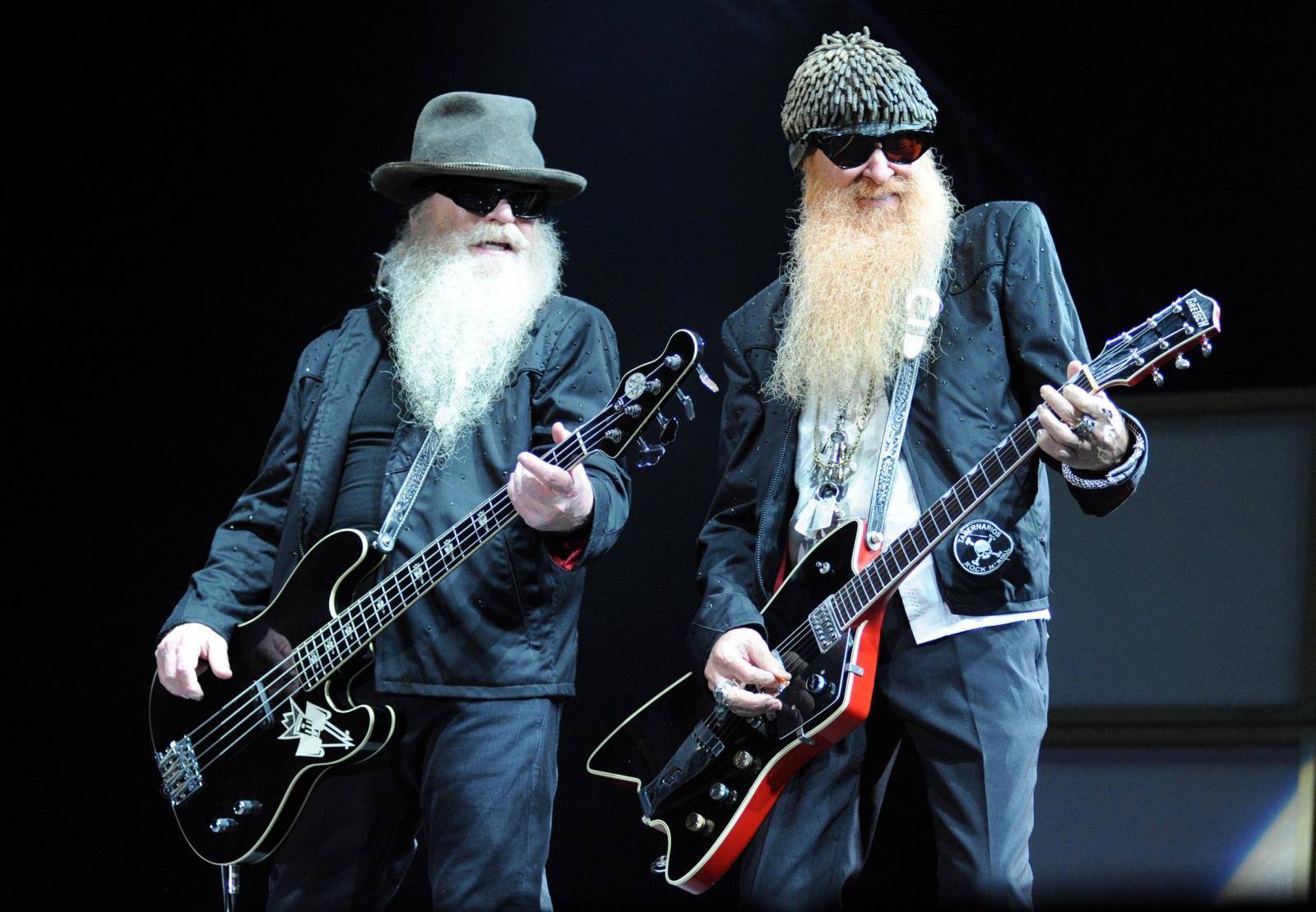
Rock and roll is usually a young man's game, or at least it's supposed to be. Most bands burn out, blow up, or just fade into the background of a state fair circuit before they hit their tenth anniversary. Then you have ZZ Top.
They didn’t just survive. They stayed remarkably consistent for over half a century with the exact same lineup—Billy Gibbons, Dusty Hill, and Frank Beard—until Dusty passed away in 2021. That kind of longevity is basically unheard of in the music business. Honestly, it's a statistical anomaly. Most people know them for the beards and the fuzzy guitars, but if you look past the MTV-era tropes, there’s a level of technical precision and blues-soaked history that most modern rock bands can't even touch.
The Early Days and the Texas Shuffle
Before they were global icons, ZZ Top was just a trio of guys trying to figure out how to make a lot of noise with very little equipment. Billy Gibbons had already gained a bit of a reputation. Even Jimi Hendrix supposedly called him one of the best young guitarists in America. That’s not just PR fluff; it’s a piece of rock lore that has followed Gibbons for decades.
The sound they cultivated early on wasn't the slick, synth-heavy rock of the 80s. It was raw. If you listen to ZZ Top’s First Album or Rio Grande Mud, you hear the dirt. It’s the sound of Texas heat and cheap beer. They were pulling from Lightnin' Hopkins and Freddie King, but they were cranking it through high-gain amps.
One thing people often miss about the "Texas Shuffle" is the timing. It’s not just a beat. It’s a feel. Frank Beard, the ironically named drummer who (for the longest time) didn’t have a beard, provided a pocket that was so deep you could get lost in it. When they hit Tres Hombres in 1973, everything clicked. "La Grange" became the blueprint. It’s a song about a brothel, sure, but the guitar work? That’s a masterclass in pinch harmonics and rhythmic tension.
The Beard Evolution and the 1980s Pivot
There’s a famous story about the beards. After a long hiatus in the late 70s, Billy and Dusty showed up to a band meeting. Neither knew the other had grown out their facial hair. It wasn't a marketing gimmick at first. It was just laziness that turned into a brand.
Then came Eliminator.
This is where the purists usually start to argue. In 1983, ZZ Top did something incredibly risky: they embraced the synthesizer. They took that gritty blues foundation and layered it with sequencers and drum machines. It should have been a disaster. Instead, it turned them into the biggest band on the planet. "Gimme All Your Lovin’" and "Sharp Dressed Man" weren't just songs; they were cultural moments fueled by the early days of MTV.
The 1933 Ford Coupe—the Eliminator—became as much a member of the band as the guys themselves. They understood the visual medium better than almost any of their 70s peers. They became cartoons in the best way possible. They were the cool uncles of rock who arrived in a hot rod to save you from a boring life.
Why the 80s Sound Worked
- They didn't lose the guitar. Even with the synths, Gibbons' tone was still thick and saturated.
- The lyrics stayed grounded. They were still singing about cars, girls, and cheap sunglasses.
- The mystery. They didn't do many interviews. They just let the music and the image do the talking.
Tone, Gear, and the Gibbons Mystique
If you talk to any guitar player about ZZ Top, the conversation eventually turns to "The Pearly Gates." That’s the nickname for Billy’s 1959 Gibson Les Paul Standard. It’s one of the most famous instruments in history.
Gibbons is a gear nut. He’s known for using incredibly light strings—some say .007 gauge—which flies in the face of the "heavy strings equal heavy tone" myth. He’s also famous for using a Mexican peso as a guitar pick. It gives the notes a certain scratchiness, a metallic bite that you just can't get with plastic.
The technicality of their music is often overshadowed by the "party band" reputation. But listen to "Just Got Paid." The slide work there is terrifyingly good. It’s precise. It’s mean. It shows a deep understanding of the Delta blues, filtered through a stack of Marshall amps.
Living Through the Loss of Dusty Hill
In July 2021, the rock world took a hit when Dusty Hill passed away in his sleep. For 51 years, he had stood to the left of Billy, holding down the low end and providing those high, gravelly vocals that balanced out Billy's baritone.
A lot of bands would have packed it in. But Dusty's final wish was for the music to continue. Elwood Francis, the band’s long-time guitar tech, stepped in. It was a seamless transition, partly because Elwood had been part of the family for decades and partly because he grew a massive beard himself.
Seeing them live now is a bit bittersweet. You miss Dusty’s presence, but the soul of the band—that relentless, driving boogie—is still there. They aren't trying to reinvent the wheel anymore. They are the wheel.
Sorting Fact from Fiction
There are so many myths surrounding this band that it’s hard to keep track.
Did Gillette really offer them $1 million to shave their beards? Yes. Billy Gibbons has confirmed this multiple times. They turned it down because, as he put it, "the prospect of seeing oneself in the mirror clean-shaven is too close to a horror movie."
Is their stage setup really that complex? Sort of. While they use modern tech now, for years, they were known for having live animals on stage during the Worldwide Texas Tour in the 70s. We’re talking buffalo, rattlesnakes, and vultures. It was a logistical nightmare that cost a fortune, but it cemented their status as a band that did things their own way.
Common Misconceptions
- They are just a blues band. Wrong. They are a rock band that uses blues as a foundation, but they’ve dipped into techno, new wave, and even country.
- The beards are fake. Honestly, at this point, they’ve been around so long that if they were fake, the glue would have failed decades ago. They are 100% real.
- They don't write their own stuff. They’ve been heavily involved in every aspect of their production, especially during the transition to digital in the 80s.
The Cultural Footprint
You see their influence everywhere. From the "stoner rock" movement of the 90s (Queens of the Stone Age owes a massive debt to ZZ Top) to the modern blues-rock revival led by bands like The Black Keys.
They taught the world that you could be incredibly skilled and still not take yourself too seriously. There’s a sense of humor in ZZ Top’s music that’s missing from a lot of modern rock. They knew how to wink at the audience.
How to Actually Listen to ZZ Top
If you're just getting into them, don't just stick to the Greatest Hits. You've gotta dig a little deeper to appreciate what they're doing.
Start with Tres Hombres. It’s the quintessential Texas rock album. "Waitin' for the Bus" transitioning into "Jesus Just Left Chicago" is one of the best one-two punches in music history. The transition is so smooth most people think it’s one long song.
Next, hit Degüello. It’s a bit weirder. It has a cover of "I Thank You" that shouldn't work, but it does. It also features "Cheap Sunglasses," which has a middle-eight section that is arguably the coolest bit of music ever recorded in a Texas studio.
Then, go to Eliminator. Embrace the 80s. Don't fight it. Listen to the way the bass interacts with the sequenced tracks. It’s a masterclass in production.
Finally, check out La Futura from 2012. It was produced by Rick Rubin, and it brought back that heavy, distorted, stripped-down sound. "I Gotsta Get Paid" sounds like it was recorded in a garage, in the best way possible.
What's Next for the Band?
They are still touring. They are still recording. Billy Gibbons seems to have an infinite supply of riffs and hats.
The reality is that ZZ Top represents a specific era of American music that is slowly disappearing. They are the bridge between the old-school bluesmen of the 50s and the high-tech arena rockers of today. They are a reminder that a little bit of attitude and a whole lot of volume can take you pretty much anywhere you want to go.
Actionable Insights for the Fan and the Musician
To truly appreciate the legacy of this band, you have to look at the mechanics of their success. If you're a musician, study Billy Gibbons' economy of motion. He never plays ten notes when one perfectly placed bend will do. That's the secret to "cool" in music.
For the casual listener, pay attention to the lyrics next time you hear them on the radio. Beyond the surface-level party vibes, there’s a lot of clever wordplay and storytelling about the American South that often gets overlooked.
Next Steps to Deepen Your Knowledge:
- Listen to the "London" track on Fandango! to hear how they handled a live audience in their prime.
- Watch the documentary 'That Little Ol' Band From Texas' on Netflix or Amazon. It features candid interviews and rare footage that clears up a lot of the band's mystery.
- Track down a vinyl copy of Tres Hombres. The digital remasters often mess with the drum sound; the original analog pressing is where the real magic is.