You’ve heard it in movies. You’ve probably seen it on a tactical-looking watch ad. Maybe you even use it yourself when you're complaining about that 4:00 AM flight to Orlando. But zero dark thirty is one of those phrases that people throw around without really knowing where it came from or how it works. It sounds cool. It sounds professional. It sounds like you’re about to go do something incredibly important involving night vision goggles and a lot of caffeine.
But here's the thing. If you say it to a veteran, they might just roll their eyes.
Most people think it's a specific time. It isn't. Not exactly. It’s more of a vibe—a very early, very dark, and usually very unpleasant vibe. If you’re waking up at zero dark thirty, you aren't waking up for a fun day at the beach. You’re waking up because there is work to be done and the sun hasn't even thought about showing up yet.
Where the phrase actually comes from
Technically, the phrase is a bit of military-slang "mush." In military time, which uses the 24-hour clock, midnight is 0000. We say "zero hundred hours." So, the "zero" part refers to those early morning hours before the clock hits double digits. The "dark thirty" part is the slang. It’s a way of saying "half-past-nothing."
It’s an unofficial term. You won’t find it in a formal Army field manual as a regulated time hack. A commander isn't going to issue an operations order that says, "We move out at zero dark thirty." They’d say "zero four thirty" or "zero five hundred." Using the slang version is more of a way to describe the misery of the hour. It’s 4:30 AM. It’s pitch black. It’s cold. You’ve had three hours of sleep. That is zero dark thirty.
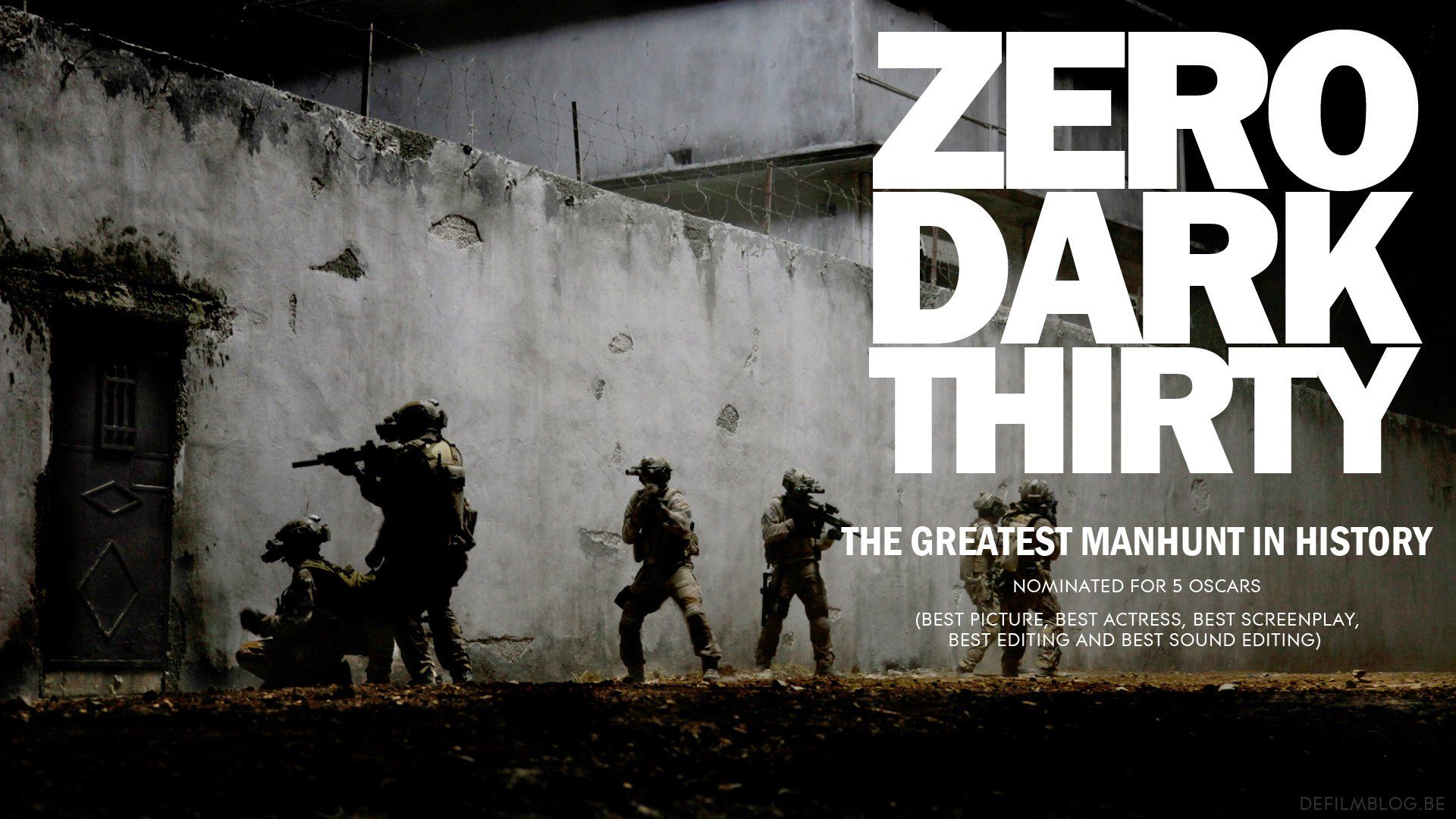
The term gained massive mainstream popularity because of the 2012 film Zero Dark Thirty, directed by Kathryn Bigelow. The movie chronicled the decade-long hunt for Osama bin Laden. In that specific context, the title referred to the exact time the Navy SEALs (DEVGRU) touched down at the compound in Abbottabad, Pakistan. It was 12:30 AM local time. Zero-zero-thirty.
The Hollywood effect and the 24-hour clock
Hollywood loves military jargon. It adds "grit." But movies often mess up the nuances. Because of the film, a lot of people started using the phrase to mean "after midnight." While that’s technically true, in actual military culture, it almost always refers to the pre-dawn hours—that window between 3:00 AM and 5:00 AM when the world feels dead.
Think about the way we talk about time. We have "o'clock." We have "military time." Then we have "tactical time."
Most civilians struggle with the 24-hour clock anyway. I’ve seen people try to calculate 1700 hours by counting on their fingers. (Pro tip: just subtract two from the second digit. 17 - 2 = 5. It’s 5:00 PM. Easy.) But zero dark thirty bypasses the math. It’s emotional. It tells the listener that the speaker is tired.
- 12:00 AM: Midnight.
- 01:00 AM: Zero one hundred.
- 04:15 AM: Zero four fifteen.
- Zero dark thirty: Way too early to be awake.
Honestly, the phrase has become a bit of a cliché in the "tacticool" world. You know the type. The guys who wear camouflage to the grocery store and have "Operator" in their Instagram bio. For them, every morning is zero dark thirty. But for the rest of us, it’s just a funny way to describe a brutal alarm clock.
The science of the "suck"
There is a reason we have a specific phrase for this time of day. It’s the period where your circadian rhythm is at its absolute lowest point. Between 2:00 AM and 4:00 AM, your core body temperature drops to its minimum. Your melatonin levels are peaking. Your cognitive function is, frankly, garbage.
Research from the Sleep Foundation and various military studies on sleep deprivation show that "sleep inertia"—that groggy, half-dead feeling—is most intense when you're ripped out of REM sleep during these hours. When a soldier or an emergency worker wakes up at zero dark thirty, they are fighting their own biology.
It’s not just a time; it’s a physiological state of stress.
Is it 0030 or 0430?
This is where the debate gets heated on Reddit forums and in VFW bars.
If we go by the movie, it’s 12:30 AM. If we go by common usage, it’s "O-dark-thirty," meaning any time before dawn.
Actually, many people drop the "zero" entirely and just say "O-dark-thirty." The "O" stands for the zero in military time. It’s faster to say. It sounds a bit more natural. If you say "Zero Dark Thirty," you’re usually referencing the movie or trying to sound cinematic. If you say "O-dark-thirty," you’re probably just a grumpy guy who’s been working the night shift for too long.
There’s also "O-dark-early." That’s the PG-rated, civilian-friendly version. It’s used by marathon runners and bakers.
Why the phrase is staying around
Language is weird. It evolves based on what we see on screens. Before 2012, if you said "zero dark thirty" to a random person at a party, they might have guessed you were talking about a math problem. Now, it’s shorthand for "high-stakes productivity" or "military precision."
Businesses have started using it. You’ll see "Zero Dark Thirty" coffee blends that are basically just extra caffeine. You’ll see fitness influencers posting "Zero Dark Thirty" workouts. It’s become a brand. It represents a "no-excuses" mentality. If you’re awake when everyone else is sleeping, you’re winning. Or at least, that’s what the marketing wants you to think.
But let's be real. Most of the time, being awake at that hour just means you have a long commute or a newborn baby that won't stop crying. There’s nothing particularly "tactical" about changing a diaper at 3:15 AM, even if you call it zero dark thirty.
How to use it without sounding like a poser
If you want to use the phrase, use it sparingly.
Don't use it for a 7:00 AM wake-up call. That’s just morning. 7:00 AM is "first cup of coffee" time. It’s not dark. The sun is up. The birds are doing their thing.
Use it when the world is silent. Use it when you can see your breath in the air and the streetlights are still the only thing lighting the road. Use it when you feel like you’re the only person alive in your neighborhood.
And remember: the "thirty" isn't literal. It doesn't have to be XX:30. It can be 04:12. It can be 03:45. The "thirty" is just there to give the phrase a rhythmic "ending." It’s linguistic flavor.
Actionable insights for the early hours
If you actually find yourself waking up at zero dark thirty—whether by choice or by a demanding boss—you need a plan. You can’t just roll out of bed and expect to be a high-performing "operator."
- Hydrate immediately. Your body is dehydrated after 6-8 hours of sleep. Drinking 16 ounces of water before you touch coffee will wake up your internal organs faster than caffeine will wake up your brain.
- Light is your friend. If the sun isn't up, you need artificial sun. Use a SAD (Seasonal Affective Disorder) lamp or just turn on every overhead light in the kitchen. It tells your brain to stop producing melatonin.
- Don't hit snooze. This is the golden rule. Snoozing at 4:00 AM puts you back into a sleep cycle that you won't finish. You’ll wake up feeling worse at 4:09 than you did at 4:00.
- Prepare the night before. If it’s truly zero dark thirty, your brain isn't working. Lay out your clothes. Pack your bag. Set the coffee maker to an automatic timer.
The goal isn't just to be awake; it's to be functional. Whether you're catching a flight, heading to a shift at the hospital, or starting a rucking session, the phrase zero dark thirty is a badge of honor. It means you’re doing what most people won’t.
Just don't expect a medal for it. Usually, the only reward for being up at that hour is a shorter line at the gas station and a head start on a very long day. It's a gritty, dark, and essential part of many people's lives. Now you know exactly what to call it.