The morning mist clings to the pine-scented slopes of Kathmandu like a forgotten promise. Down in the valley, before the city roars fully to life with the cough of motorbike engines and the clatter of copper pots, the air carries a chill that reminds every resident of the immense, silent peaks standing guard above them.
Birendra Sharma, a retired schoolteacher whose hands are permanently stained with blue ink from decades of grading essays, adjusts his woolen shawl. He sits on a weathered wooden porch, sipping black tea that scalds his tongue in the best possible way. Across the border, a thousand miles south, the sun is already beating down on the vast, restless plains of Delhi, where millions are waking up to the sounds of celebration, security sirens, and the unmistakable swell of brass bands.
August fifteenth.
For most in India, it is a day of kite strings tangling in the humid monsoon air, of tricolor flags snapping proudly against slate-gray skies, of prime ministerial addresses echoing from the ramparts of the historic Red Fort. But for Birendra, and for millions like him scattered across the porous, invisible boundaries of South Asia, the day holds a different, quieter resonance. It is a moment to look across the mountains and watch a giant neighbor pause to catch its breath.
This year marks a milestone. Eighty years of sovereign breath. Eighty years since the British lowered their Union Jack and a subcontinent fractured and bloomed into independence.
And then, the phone on Birendra’s table buzzes.
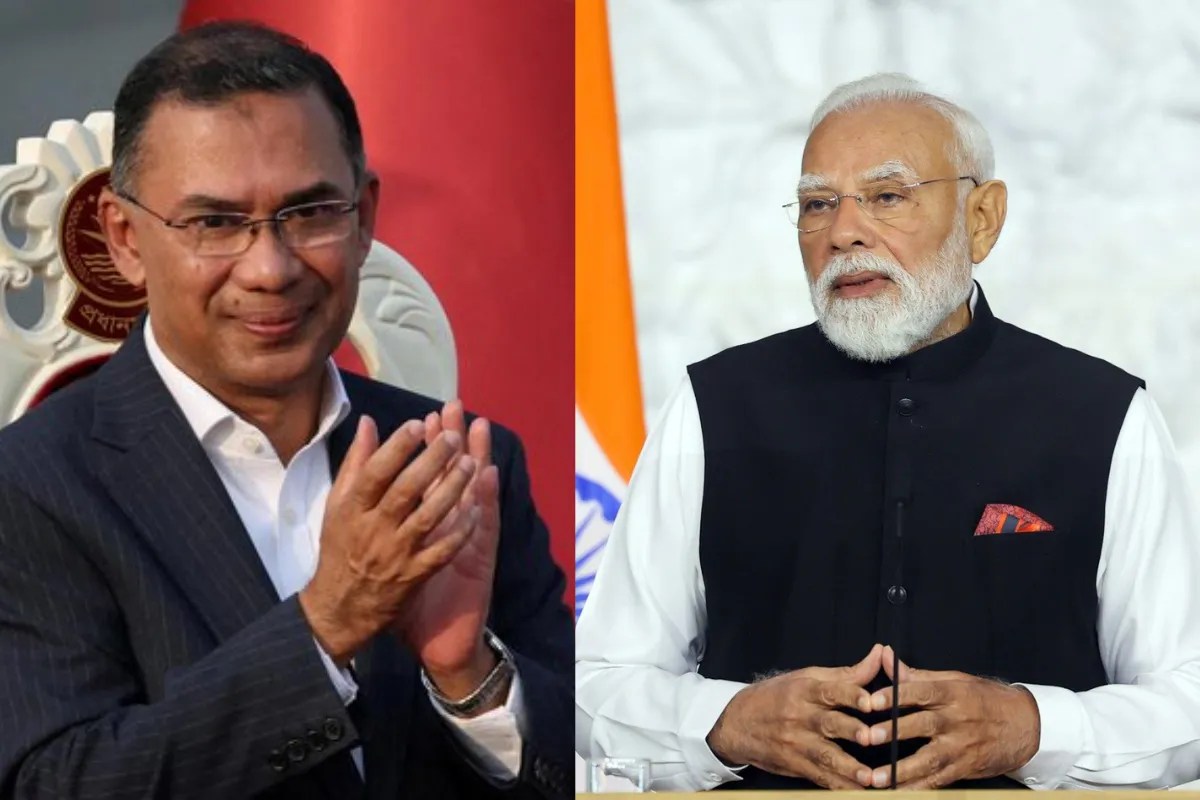
It is a news alert flashing across his cracked smartphone screen: Nepal Prime Minister KP Sharma Oli has sent a formal, warm greeting to Indian Prime Minister Narendra Modi and the people of India on the occasion of their eightieth Independence Day.
To a cynical observer in a distant Western newsroom, this is nothing more than diplomatic boilerplate. A routine exchange of digital pleasantries between two statesmen who spend half their time locked in quiet geopolitical chess matches over water rights, open borders, trade corridors, and the heavy gravitational pull of neighboring superpowers. Just words on a screen. Another day, another telegram.
(Note: When I speak of the diplomatic machinery here, I am using a metaphor for the immense weight of statecraft that often obscures the human pulse beneath it.)
Yet, spend an afternoon in the tea stalls of Bhaktapur or the bustling markets of Gorakhpur, and you realize how profoundly wrong that cynicism is.
Birendra remembers his grandfather talking about 1947. Back then, freedom wasn't just an abstract headline in a broadsheet; it was an electric current that raced up through the river valleys and mountain passes. When India fought for and won its self-determination, it didn't do so in a vacuum. The shockwaves of that liberation rippled outward, whispering to every colonized or semi-autonomous corner of the region that empires were not eternal. The British might have packed their trunks, but the deep, ancient arteries connecting the peoples of the Himalayas and the Gangetic plains remained wide open.
Consider what happens next on any given morning at the Sunauli border crossing.
Thousands of people walk across that line daily without a second thought. A young woman from Rupandehi crosses over to study medicine in Lucknow. A family from Bihar makes a weekend pilgrimage to Pashupatinath Temple. A seasonal laborer from the hills packs his meager belongings to work construction in Mumbai, sending a portion of his hard-earned wages back home to feed his younger siblings.
Borders on a map are drawn with ink and enforced with barbed wire, but human lives are lived in the messy, beautiful gray areas in between.
When Prime Minister Oli extends greetings to Prime Minister Modi on India's Independence Day, he is not merely performing a chore dictated by the protocol handbook of the Ministry of Foreign Affairs. He is acknowledging an ancient, inescapable neighborhood. You can choose your political allies, but geography is an unmovable mountain. You cannot move Delhi to the coast, and you cannot roll the Himalayas down into the sea.
History is rarely a straight line. More often, it is a knotted ball of wool.
There have been diplomatic chills, border cartography disputes, moments of public posturing, and nationalist storms whipped up by television news anchors on both sides of the border who have never walked the mountain trails or slept under the humid stars of the Terai. There are times when politicians find it politically convenient to fan the flames of rivalry, turning neighbors into caricatures.
I remember standing at the border town of Raxaul during a tense political standoff a few years back. The trade supply lines were choked. Trucks loaded with essential goods sat idle for miles, their drivers sleeping on hot asphalt, cursing the politics that kept them stranded. I watched an elderly Indian vegetable vendor share his meager afternoon meal of lentils and flatbread with a stranded Nepali truck driver whose eyes were heavy with fatigue. They didn't speak the same dialect fluently, but they shared a language of exhaustion, shared frustration, and mutual survival. They laughed about the absurdity of men in air-conditioned rooms arguing over lines on parchment while ordinary people paid the toll.
That is the hidden cost of geopolitical friction. It falls heaviest on the shoulders of those who ask for nothing more than the right to live, work, and trade in peace.
And that is why these greetings matter.
They are cracks in the armor of hostility. They are a reminder that beneath the political posturing and the strategic posturing, there is a shared cultural matrix. Millions of Indians trace their spiritual roots to Janakpur, the birthplace of Sita. Millions of Nepalis look to Varanasi or Delhi for education, healthcare, and economic opportunity. The cinema of Mumbai plays in the crowded theaters of Kathmandu. The cricket matches played in stadiums thousands of miles away spark passionate, roaring debates in mountain teahouses where the tea cools too quickly in the thin air.
Eighty years of Indian independence means eighty years of shared destiny.
When the leader of Nepal reaches out on this specific anniversary, he is speaking to the heartbeat of a billion people. He is validating the endurance of a democracy that, despite its deep fractures, inequalities, and internal contradictions, managed to keep the lights on for eight decades. It is an acknowledgment that India’s stability and prosperity directly affect the weather inside Nepal's own borders. If India catches a cold, Nepal often feels the chill. If India prospers, new markets and opportunities open up for the landlocked Himalayan nation.
Birendra finishes his tea. The dregs at the bottom of the clay cup form a dark, muddy swirl.
He looks up at the majestic, snow-capped peaks of the Annapurna range. The morning sun has finally broken through the valley mist, turning the ice into blinding gold. He thinks about his grandson, who is currently studying software engineering in Bengaluru, texting him emojis and video clips of the rainy Indian metropolis.
The world is changing. Digital cables run beneath the ocean and across the mountain passes, faster than any telegram ever could. Young people in Kathmandu and Delhi share the same memes, listen to the same independent musicians, and worry about the same uncertain economic future.
The political leaders in their capitals will continue to spar, negotiate, and maneuver. Treaties will be signed and renegotiated. Ambassadors will be summoned and dismissed.
Yet, as the shadows shorten on Birendra’s wooden porch, the fundamental truth remains untouched by the rhetoric of statecraft. Empires rise, fall, and are archived in dusty textbooks. Governments change with every election cycle, sweeping in new faces with old promises. But the people of the mountains and the plains remain bound together, tethered by rivers that refuse to respect national boundaries, by winds that sweep across the subcontinent without a passport, and by a stubborn, enduring neighborly grace that survives every diplomatic storm.
The sun climbs higher over the Himalayas, warming the stone, melting the frost, and casting a long, steady light across a shared horizon.