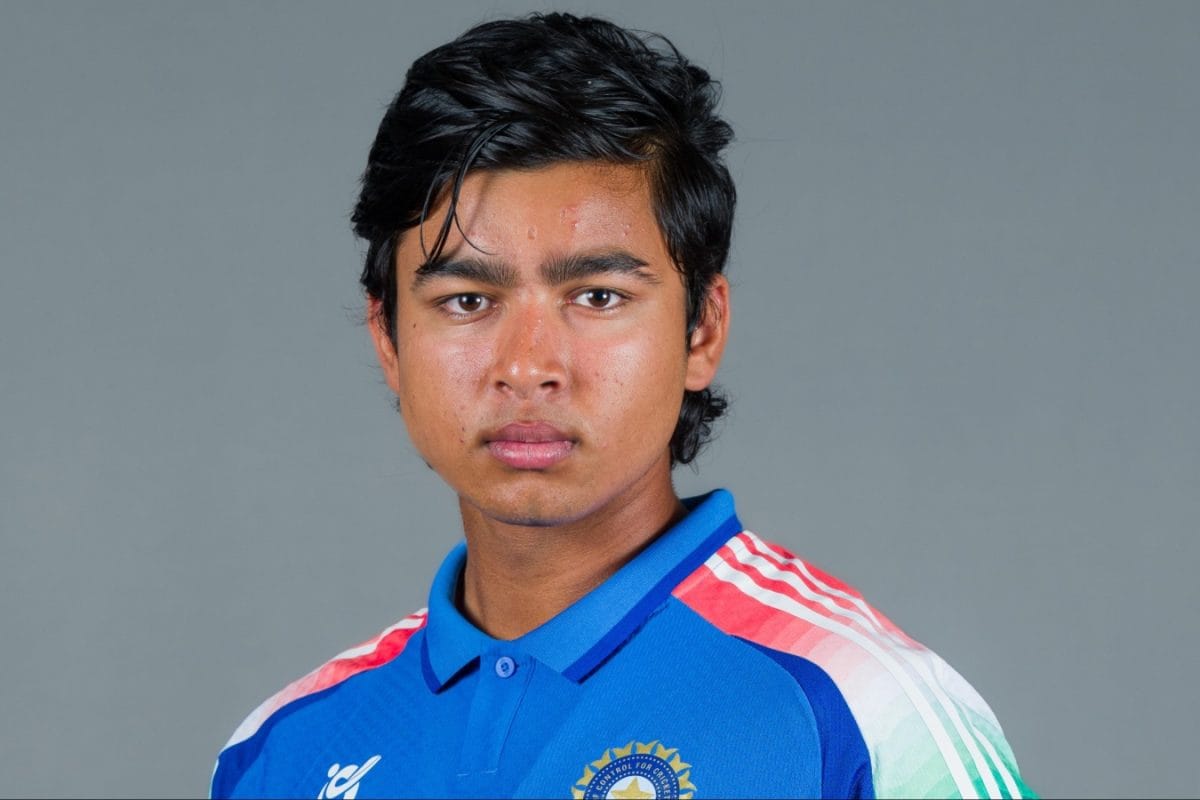
Vaibhav Sooryavanshi just shattered the glass ceiling of professional T20 cricket by smashing a 15-ball half-century for the Rajasthan Royals. At 15 years old, he is not just the youngest player to ever take the field in the Indian Premier League; he is now a statistical anomaly that has set the scouting world on fire. This wasn't a lucky slog in a backyard game. This was a calculated demolition of professional bowling on one of the world’s most pressurized stages. While the highlight reels focus on the bat speed and the audacity of his stroke play, the real story lies in the scouting infrastructure and the financial risk-taking that allowed a ninth-grader to walk into an IPL dugout and command the strike.
The Rajasthan Royals didn't stumble upon Sooryavanshi by accident. His 15-ball fifty is the culmination of a massive shift in how cricket franchises identify raw talent before it even hits the domestic circuit. By the time the world saw him clear the ropes, the Royals' analytical team had already logged thousands of data points on his bat swing trajectory and his composure under lights. Also making news in related news: The Final Inning of Danny Serafini.
The Industrialization of the Cricket Prodigy
In previous decades, a player like Sooryavanshi would have spent years laboring in the Ranji Trophy or local club matches before a national scout took a second look. That era is dead. The IPL has created an ecosystem where franchises act more like venture capital firms than traditional sports teams. They are looking for "unicorns"—players who possess physical tools that cannot be taught—and they are willing to buy in early to avoid a bidding war later.
Sooryavanshi represents the ultimate high-reward asset. At 15, his ceiling is theoretically non-existent. When he stepped out to open the innings, he wasn't playing against his peers; he was facing seasoned internationals who have spent years perfecting the art of the slower-ball bouncer and the wide yorker. He dismantled them by relying on a lack of institutional fear. Most veteran players carry the "baggage" of previous failures, leading them to overthink their shot selection. A teenager with nothing to lose plays with a biological advantage of pure instinct. More insights on this are covered by ESPN.
The technical brilliance behind a 15-ball fifty is found in the transition from backlift to impact. Sooryavanshi utilizes a high-leverage swing that maximizes his relatively light frame. He isn't muscling the ball over the fence through raw power. Instead, he uses the bowler’s pace against them, maintaining a stable base that allows him to access 360 degrees of the ground.
The Ethical and Physical Toll of Early Exposure
We have to talk about the physical reality of a child playing a man’s game. The human body is not typically finished developing at 15. Fast bowlers in the IPL can exceed 150 kph. At that speed, the reaction time required is measured in milliseconds. While Sooryavanshi’s reflexes are currently at their peak, the repetitive stress of T20 power-hitting places immense strain on the lower back and wrists of a developing athlete.
Franchises are now hiring specialized pediatric sports scientists to manage these workloads. It is no longer enough to have a batting coach. You need a kinesiologist who understands how to prevent growth plate injuries while still allowing a player to train at an elite level. The risk of burnout is not just mental; it is structural. If Sooryavanshi is pushed too hard to maintain this strike rate, the very career the Royals are trying to build could be cut short by a stress fracture before he is old enough to drive a car.
Beyond the physical, there is the psychological furnace of the IPL. One day you are a schoolboy in Bihar; the next, you are the face of a multimillion-dollar brand with millions of people dissecting your every mistake on social media. The "prodigy" tag is a heavy burden. We have seen countless "next big things" vanish into obscurity because they couldn't handle the transition from being the best in their age group to being just another player in the professional ranks.
Why the Rajasthan Royals Took the Risk
The Rajasthan Royals have built a brand identity around "Moneyball" tactics. They don't always chase the biggest, most expensive names in the auction. They look for market inefficiencies. A 15-year-old is the definition of a market inefficiency.
Before the auction, the scouting report on Sooryavanshi was whispered about in closed circles. He had already made waves in the Under-19 circuits, but many teams were hesitant to pull the trigger on someone so young. They feared the PR backlash if he failed or the logistical nightmare of managing a minor in a professional environment. The Royals saw past the birth certificate. They saw a left-handed opener with a natural ability to find gaps that others don't see.
The Financial Logic of the Teenager Contract
- Long-term Retention: By signing him now, the franchise secures his loyalty during his prime years.
- Brand Value: A homegrown prodigy creates a narrative that fans can rally behind for a decade.
- Auction Flexibility: His initial contract is likely a fraction of what a proven international star would cost, allowing the team to spend more on their bowling core.
This isn't just about cricket; it’s about asset management. If Sooryavanshi becomes even half as good as his 15-ball fifty suggests, his market value will quintuple within twenty-four months. The Royals aren't just paying for his runs; they are paying for the option on his future.
The Technical Breakdown of the 15-Ball Fifty
To understand how a 15-year-old produces that kind of strike rate, you have to look at the mechanics of his innings. He didn't just hit sixes. He manipulated the field.
Most young players struggle with the "dot ball pressure"—the anxiety that builds when you can't get off strike. Sooryavanshi stayed calm. He treated the powerplay overs as a math problem. By staying deep in his crease, he turned good-length balls into half-volleys. By moving across the stumps, he forced the bowlers to change their line, opening up the fine-leg boundary. It was a sophisticated display of batting IQ that belies his age.
There is a specific geometry to his hitting. He prefers the arc between long-on and mid-wicket, which is common for left-handers, but his ability to late-cut the ball past point shows a level of hand-eye coordination that is usually reserved for players with ten years of professional experience.
The Bihar Pipeline and the Changing Map of Indian Cricket
Sooryavanshi’s rise also signals a shift in the geography of Indian talent. For decades, the power centers were Mumbai, Delhi, and Karnataka. Now, the hinterlands are producing the most aggressive players. Bihar, often overlooked in the cricketing hierarchy due to administrative issues, is proving to be a goldmine of raw, unpolished talent.
These players aren't coming out of posh academies with perfect white kits. They are coming out of "maidans" where the wickets are uneven and the competition is cutthroat. This breeds a specific type of mental toughness. When you’ve learned to bat on a pitch where the ball might jump at your throat at any second, a flat IPL track looks like a paradise.
The infrastructure in these regions is still lagging behind, but the scouts are finally catching up. They are realizing that the "star quality" they crave is often found in the places they used to ignore. Sooryavanshi is the vanguard of a new wave of players who don't care about the traditional paths to success. They want the shortcut, and they have the talent to take it.
The Counter-Argument: Is 15 Too Young?
There are those in the cricketing establishment who argue that 15 is too young for the IPL. They claim it turns children into commodities and robs them of a normal development cycle. They worry about the "Freddy Adu effect"—the soccer prodigy who was hyped to the moon at 14 and never lived up to the impossible expectations.
It is a valid concern. The IPL is a shark tank. The pressure to perform is constant, and the criticism is brutal. However, the counter-point is simple: if you are good enough, you are old enough. Professional sports has always been a meritocracy. If a 15-year-old can out-hit a 30-year-old veteran, denying him that opportunity based on an arbitrary age limit is a disservice to the sport and the individual.
The responsibility now falls on the Rajasthan Royals to act as more than just an employer. They must be guardians. They need to ensure he completes some form of education, that his finances are managed by trustworthy professionals, and that he has a support system that doesn't just see him as a scorecard.
The Blueprint for the Future
Vaibhav Sooryavanshi has changed the scouting manual forever. From this point forward, every franchise will be looking for their own 15-year-old miracle. The age of the "reliable veteran" as a backup option is ending. Teams would rather spend that roster spot on a high-upside teenager who might change the game in 15 balls.
This shift will force national boards to reconsider their youth development programs. If the private leagues are identifying and grooming talent faster than the national systems, the power dynamic in world cricket will continue to tilt toward the franchises.
The 15-ball fifty wasn't just a great moment for a young boy; it was a warning shot to the rest of the league. The game is getting younger, faster, and more fearless. You either find your own Sooryavanshi, or you get left behind in the dust of their bat speed.
The focus now shifts to his second act. One innings makes you a headline; a season makes you a star. The world is watching to see if this was a flash in the pan or the birth of a new era in T20 batting. For Sooryavanshi, the homework can wait. The bowlers are already terrified.
Ensure the support staff manages the inevitable dip in form with the same intensity they used to celebrate this debut. The real test isn't hitting a 15-ball fifty when no one knows your name; it’s doing it when the entire world has a scouting report on you.