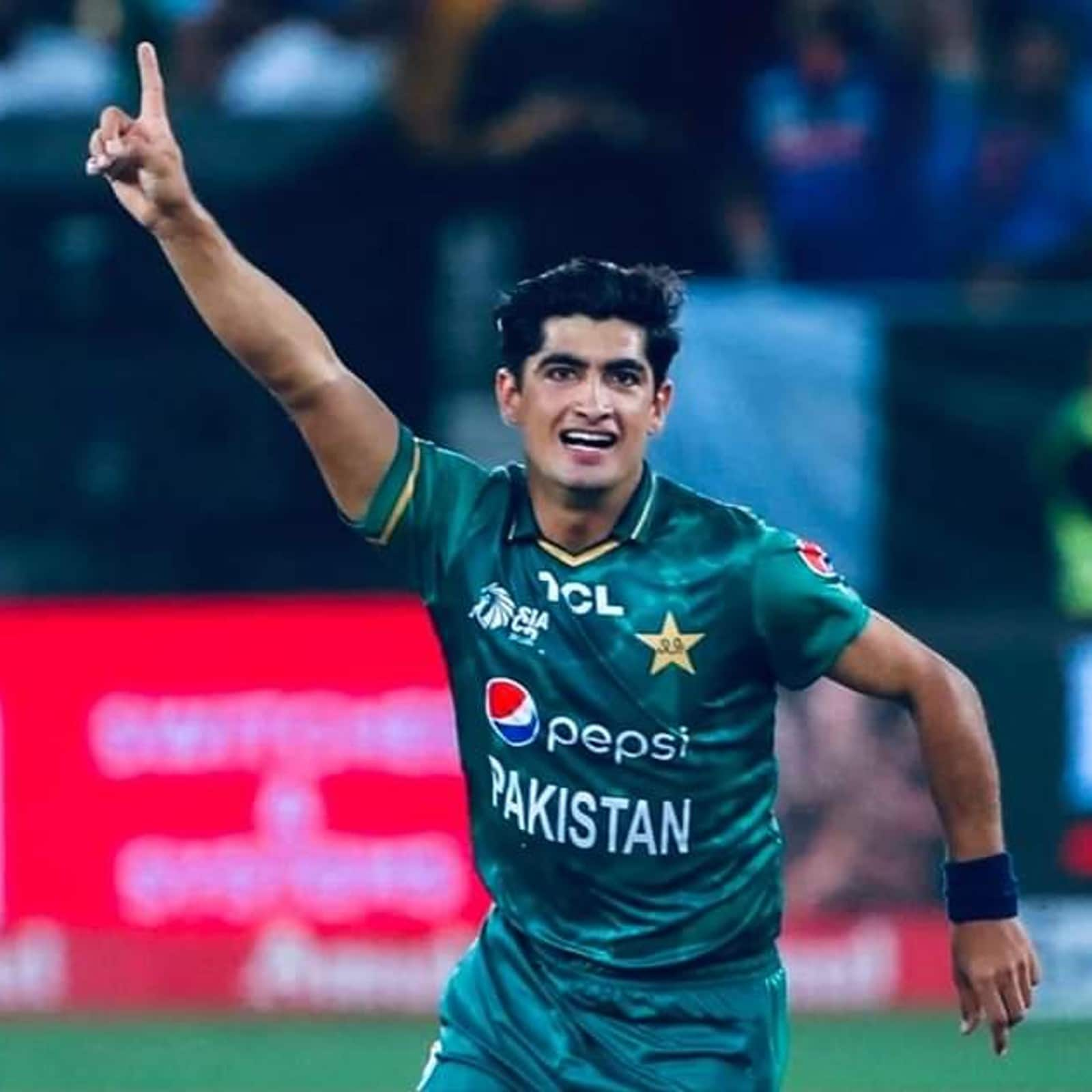
The Pakistan Cricket Board (PCB) recently handed a significant financial penalty to fast bowler Naseem Shah following a social media interaction involving Punjab Chief Minister Maryam Nawaz. While the official narrative centers on a breach of the central contract clauses regarding social media conduct, the underlying tension speaks to a much larger struggle within Pakistan’s sporting infrastructure. When a high-profile athlete deviates from the scripted neutrality expected by the board, the repercussions are swift, expensive, and designed to serve as a warning to the rest of the dressing room.
Shah’s post, which touched upon political figures during a period of intense national polarization, triggered an immediate internal review. In the world of Pakistan cricket, the boundary between sport and state has always been porous. The PCB is governed by a board often appointed by the sitting Prime Minister, who serves as the patron-in-chief. This structural reality means that any perceived slight against the ruling administration is not just a PR headache; it is treated as an act of insubordination against the hierarchy that signs the players' paychecks.
The Iron Clad Contract and the Silence It Buys
Every player under a central contract with the PCB signs away a substantial portion of their public autonomy. These documents are increasingly restrictive, containing specific language that forbids players from making "comments that may result in bringing the Board or the Government of Pakistan into disrepute." The definition of "disrepute" is intentionally vague, giving the PCB broad discretionary powers to define what constitutes an offense.
Naseem Shah is not the first player to find himself in these crosshairs, but his status as a young, marketable asset makes the fine particularly noteworthy. The board chose a heavy financial hit rather than a playing ban. This choice is tactical. A ban creates a martyr and hurts the team’s performance on the field. A fine, however, hits the player’s pocket while keeping them available for selection, maintaining the facade of "business as usual" while privately enforcing a strict code of political silence.
The optics of the fine are equally important. By penalizing Shah for a post related to Maryam Nawaz, the PCB signaled its alignment with the current political establishment. In a country where cricket is the only truly unifying national obsession, the board cannot afford for its stars to become independent political influencers. The fear is that a single tweet could ignite a firestorm among a divided fan base, leading to protests at stadiums or boycotts that threaten broadcasting revenue.
The Mechanism of Disciplinary Control
The process of fining a player of Shah’s caliber involves a specialized disciplinary committee. This is rarely a transparent affair. The player is usually summoned to the National Cricket Academy in Lahore, presented with the "evidence"—often a screenshot of a deleted tweet or an Instagram story—and asked to explain their intent.
How the PCB Enforces Content Standards
- Continuous Monitoring: The board employs dedicated digital media teams to track the accounts of all centrally contracted players, including their interactions with fans and other public figures.
- The Show Cause Notice: This is the first formal step. It requires the player to justify their actions within a window of 24 to 48 hours. Failure to provide a "satisfactory" explanation leads to immediate sentencing.
- Graduated Penalties: Fines typically range from 10% to 50% of the player's monthly retainer, though in cases involving political figures, the board often opts for the maximum possible deduction or a fixed lump sum that reaches into the millions of Pakistani Rupees.
This system creates a culture of self-censorship. Younger players, seeing a veteran or a star like Shah get penalized, quickly learn that their digital footprint is a liability. They move toward sanitized, brand-safe content—photos of training sessions, religious quotes, or generic messages of national pride. The "real" person behind the athlete disappears, replaced by a corporate-approved version that won't upset the powers that be in Islamabad or Lahore.
The Political Minefield of Punjab
The involvement of Maryam Nawaz adds a layer of complexity that transcends mere "social media guidelines." As the Chief Minister of Pakistan’s most populous province and a central figure in the PML-N, she represents the pinnacle of the current political order. For an athlete to engage with her image or name in any way that isn't strictly complimentary—or even to engage in a way that allows for "misinterpretation" by the opposition—is to walk into a buzzsaw.
The PCB’s sensitivity is heightened because the board itself is frequently reorganized based on the political winds. When the government changes, the PCB leadership usually follows. This creates a survivalist instinct within the board's management. They must prove to the current administration that they have total control over their "assets." If a player appears to be leaning toward an opposition sentiment, or even just being playful with a sensitive topic, the board views it as a failure of their own oversight.
Why the Fine Fails to Solve the Problem
Heavy-handed fines might secure short-term silence, but they do nothing to address the disconnect between the board and the players. Modern athletes are global brands. They see their peers in England, Australia, and the United States expressing political views or social concerns with relative departmental support. In Pakistan, the attempt to keep players in a vacuum is becoming increasingly difficult as digital platforms evolve.
The financial penalty also ignores the reality of the "accidental" viral moment. In Shah’s case, the speed at which the post was shared and dissected by political activists meant the damage—in the eyes of the PCB—was done within minutes. Fining him after the fact is an exercise in shutting the stable door after the horse has bolted. It satisfies the political masters, but it leaves the player feeling alienated and the fans feeling like the sport is being used as a tool for political posturing.
The Shrinking Space for Athlete Expression
We are witnessing the death of the "rugged individualist" in Pakistan cricket. The era of players like Imran Khan or Javed Miandad, who spoke their minds regardless of the political climate, is over. Today’s players are managed, monitored, and manipulated. The PCB’s handling of the Naseem Shah incident is a textbook example of how the board prioritizes political optics over player relations.
If the board continues to use financial penalties as a primary tool for "re-education," they risk creating a generation of players who are disconnected from their own public identities. The tension between being a national hero and a state employee is reaching a breaking point. Shah will pay the fine because he has no other choice if he wants to wear the green jersey, but the resentment such moves generate doesn't just disappear. It simmers in the dressing room, creating a divide between the men who play the game and the men who manage the politics.
The next time a player thinks about hitting "post," they won't be thinking about their fans or the merit of their opinion. They will be calculating the cost of their conviction against the balance of their bank account. That is a grim reality for a sport that is supposed to be about passion and bravery. The PCB has won this round, but in doing so, they have further eroded the trust of the very people who make the board relevant in the first place. Stop treating world-class athletes like wayward schoolchildren and start treating them like the partners they are. Until that shift happens, the cycle of "post, fine, delete" will continue to undermine the integrity of the game.