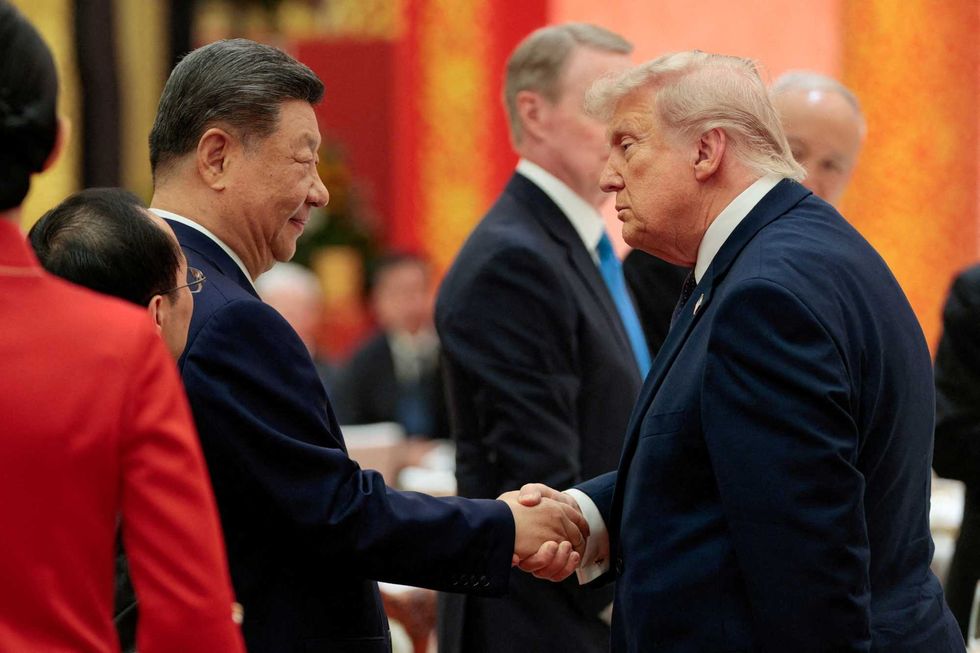
The hand-wringing in Washington over a literal red carpet rolled out for a Chinese delegation is the exact kind of suburban PTA logic that keeps failing American foreign policy. Pundits lose their minds over optics, clutching their pearls because a handshake happened in front of flashing cameras without enough scowling. They scream about appeasement. They throw tantrums over diplomatic pageantry.
They are missing the entire point.
I have spent the better last two decades watching career bureaucrats mistake symbolic finger-wagging for strategy. While diplomats spend millions drafting sternly worded communiques that end up shredded in shredders across Beijing and Washington, actual power is negotiated through calculated leverage and cold economic gravity. The conventional narrative claims that extending grand welcomes to geopolitical rivals shows weakness. History proves the exact opposite. When you roll out the red carpet, you lock your counterpart into an architectural framework of expectations, exposure, and public accountability that a closed-door slapfight never achieves.
Let us dismantle the lazy consensus.
The Myth of the Snub
The standard-issue talking head believes diplomacy is a high school cafeteria. If you ignore the rival, refuse to smile, and storm out of the summit, you win. This is how you get ignored, bypassed, and eventually blindsided by bilateral trade agreements negotiated behind your back.
Realism requires proximity. If you want to squeeze an adversary on industrial subsidies, supply chain choke points, and maritime security, you do not do it from three thousand miles away via Twitter posts. You invite them into the house, put the cameras on, and box them into a corner where every domestic audience back home watches them squirm under the glare of global scrutiny.
Imagine a scenario where a foreign minister arrives to a chilly reception, zero fanfare, and immediate hostility. What happens next? They retreat into their state-controlled media bubbles, declare economic independence, accelerate semiconductor decoupling, and double down on domestic nationalism. Zero ground gained.
Now look at the alternative. Bring them to the table. Treat the visit like a state occasion. The moment you elevate the stakes of the relationship, you raise the political cost of them walking away empty-handed. That is not weakness. That is an apex predator handing the weaker player a heavily weighted rope and watching them tie knots in it.
The Architecture of Leverage
Economists love to talk about decoupling as if it is a light switch. You flip it off, factories instantly materialize in Ohio, and everything is fine. Anyone who has ever managed a multi-tier tier-one automotive supply chain knows that is a fairy tale.
The industrial base of the West was welded to Asian manufacturing for forty years. You do not untangle that web by acting tough in front of microphones. You do it by exploiting the exact structural vulnerabilities your adversary tries to hide.
Beijing’s real anxiety right now is not American aircraft carriers in the Taiwan Strait. It is domestic economic stagnation, youth unemployment that they refuse to publish metrics on, and a property market that resembles a Jenga tower built on quicksand. When you roll out the red carpet, you are not celebrating their rise. You are reminding them of their absolute reliance on Western consumption to keep their furnace burning.
Let us look at the data that the cable news anchors conveniently ignore. China runs massive structural trade surpluses because they overproduce while their domestic consumer base sits on its hands, terrified of medical debt and retirement costs. They need American markets just as much as American hardware stores need Chinese aluminum extrusions. Ignoring them doesn't fix that imbalance. Engaging them on high-stakes terms forces them to trade structural concessions for optical wins.
Why the Critics Hate It
The foreign policy establishment hates this approach because it lacks the bureaucratic safety of failure. If you send a junior undersecretary to deliver a polite lecture on human rights, and nothing changes, you keep your job. You wrote the memo. You checked the box. You failed, but you failed politely.
When a leader bypasses the middle management and makes high-stakes, transactional engagement the primary tool of statecraft, accountability shifts back to the top. There is nowhere to hide. Either concrete trade barriers come down, intellectual property theft halts, and currency manipulation stops, or the failure is entirely on the leadership.
This introduces immense risk. I will admit the glaring downside of transactional realism: it relies on competent execution. If the negotiator across the table reads you as desperate rather than strategic, the pageantry backfires. If you roll out the red carpet and walk away with nothing more than a commemorative photo op, you look like a sucker.
That is why the execution matters infinitely more than the velvet. The red carpet is just the stage. What happens under the lights is where the game is won or lost.
Stop Asking the Wrong Questions
The media asks: "Does this welcome signal a softening of resolve?"
Wrong question.
The right question is: "What industrial concessions did we extract behind closed doors while the cameras were busy filming the handshake?"
If your metric for foreign policy success is how many times a politician scowled at a podium, stick to reality television. If your metric is shifting global supply chains, protecting domestic manufacturing, and keeping the peace through calculated economic strangulation, then stop hyperventilating over upholstery.
The adults are in the room. Let them work.