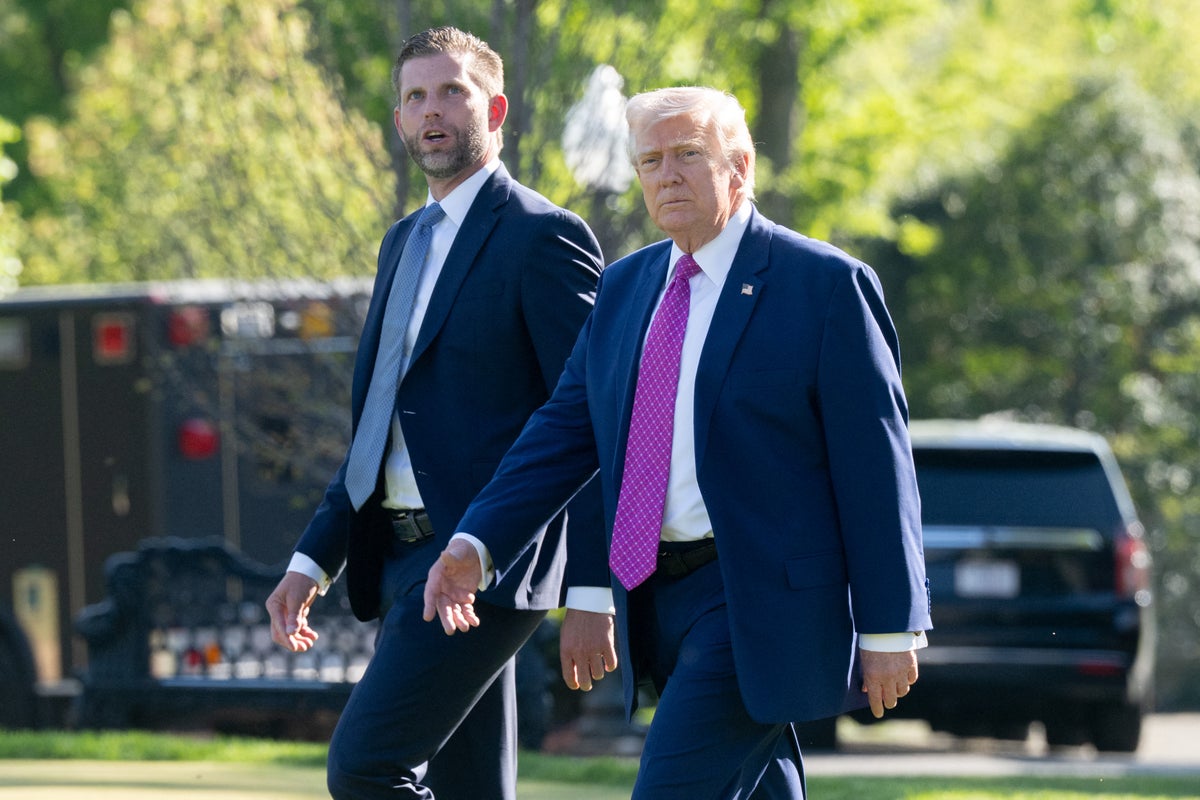
Donald Trump just walked away from his $10 billion lawsuit against the Internal Revenue Service. On Monday, his legal team filed a notice of voluntary dismissal in a Florida federal court. Case closed.
But he didn't leave empty-handed.
While Trump didn't get a direct multi-billion-dollar check cut to his personal account, the Department of Justice simultaneously announced something entirely unprecedented. It's creating a $1.776 billion "Anti-Weaponization Fund." The money comes straight from the taxpayer-financed Treasury Judgment Fund.
If this sounds like a complex bureaucratic shuffle, that's because it is. Trump dropped his personal legal fight, and in return, his own administration set up a massive pool of cash designed to compensate people who claim they were targeted by federal law enforcement for political reasons.
The Legal Trap Trump Had to Evade
Trump, his sons Don Jr. and Eric, and the Trump Organization originally filed the massive lawsuit in January. They alleged the IRS failed to safeguard their private financial data, letting former contractor Charles Littlejohn leak years of Trump's tax returns to media outlets like the New York Times and ProPublica. Littlejohn went to prison for it, but Trump wanted financial retribution.
There was just one glaring, unavoidable problem. Trump is the president. The IRS and the Treasury Department report to him.
You can't easily sue yourself in federal court. U.S. District Judge Kathleen Williams, an Obama appointee, saw the absurdity immediately. She ordered both sides to explain why the case shouldn't be thrown out for a lack of genuine legal adversity. The court wanted to know how a sitting president could have a legitimate legal conflict with agencies he actively commands.
The deadline to answer that uncomfortable question was May 20. Trump’s lawyers beat the clock by dropping the suit on May 18. By filing a voluntary dismissal "with prejudice," they killed the case before the judge could issue an embarrassing ruling that labeled the whole thing a sham. His attorneys openly stated in filings that because the dismissal was voluntary, "no judicial analysis is appropriate." They shut the door and locked it before the court could look inside.
Inside the One Point Seven Billion Dollar Anti Weaponization Fund
The creation of the Anti-Weaponization Fund is where this story shifts from a dropped lawsuit to a major political flashpoint. The Department of Justice, led by acting Attorney General Todd Blanche, framed the fund as a necessary tool for justice.
"The machinery of government should never be weaponized against any American, and it is this Department's intention to make right the wrongs that were previously done," Blanche announced.
The mechanics of this fund are highly unusual. It will be run by a five-member commission. The Attorney General appoints four of those commissioners, and Trump retains the power to fire them without cause. The fifth member is picked in consultation with congressional leadership.
Here is what you need to know about how the money moves:
- No explicit partisan filters: Technically, anyone can apply for compensation if they feel they suffered from "lawfare."
- Total liability shield: A memo from the acting Attorney General notes that once the cash is shifted into the designated account, the United States holds zero liability for fraud, misuse, or bank failures.
- The expiration date: Any taxpayer funds left unspent by December 15, 2028, will flow back into the U.S. Treasury.
The eligible pool of claimants isn't explicitly named, but the intent is obvious. The fund is positioned to offer financial payouts and formal apologies to Trump allies, conservative figures, and potentially even individuals charged in the January 6 Capitol riot who argue their prosecutions were politically motivated.
Taxpayer Slush Fund or Legitimate Redress
The backlash from Capitol Hill was instantaneous and fierce. Democrats didn't hold back, flatly calling the arrangement a corrupt racket.
Ninety-three House Democrats had already rushed an amicus brief to the court trying to block what they called "blatant self-dealing." Senator Elizabeth Warren blasted the deal online, calling it "corruption on steroids." Senator Ron Wyden targeted the speed of the agreement, arguing that rushing a settlement to secure billions in taxpayer cash before a judge could toss a "junk lawsuit" is wildly inappropriate.
Watchdog groups are equally alarmed by the total lack of transparency. The commission has the power to vote on payouts by a simple majority, and they aren't obligated to publicly disclose who gets the money or why.
Is there historical precedent? The Justice Department points to past administrative payouts, like the $760 million Keepseagle v. Vilsack settlement in 2011, which compensated Native American farmers for USDA discrimination. But critics say comparing a systemic discrimination payout to a fund controlled by a sitting president's political appointees is a massive stretch.
What Happens Next
The lawsuit is dead, but the political fallout is just beginning. Trump also agreed to drop two other massive administrative claims as part of this package deal—one regarding the 2022 FBI search of Mar-a-Lago and another involving the early Russia investigation. He clears his personal legal ledger while his administration erects a multi-billion-dollar apparatus to reward his political base.
Expect congressional oversight committees to immediately launch investigations into the Treasury's Judgment Fund allocations. Legal watchdogs are already exploring whether they can file third-party lawsuits to freeze the account before the five-member commission starts distributing checks.
If you are tracking how executive power is being redefined in 2026, this is the blueprint. Trump used a questionable personal injury claim against his own government to leverage a massive, real-world financial vehicle for his allies, completely bypassing the judicial oversight that was about to shut him down.