The air over a metropolis is never actually empty. It is crowded with invisible ribbons of light, waves of radio chatter, the silent ghosts of microwave signals bouncing between glass towers, and the rhythmic, chop-chop heartbeat of machines we have learned to ignore. We look up, if we look up at all, to check for rain or to curse the glare of a smog-softened sun. We rarely think about the weight of what is suspended above us. We rarely think about the people who sit inside those buzzing metal cabins, tethered to earth only by headsets, fuel gauges, and the fragile physics of lift.
On a quiet afternoon in Southern California, that invisible infrastructure of the sky abruptly shattered.
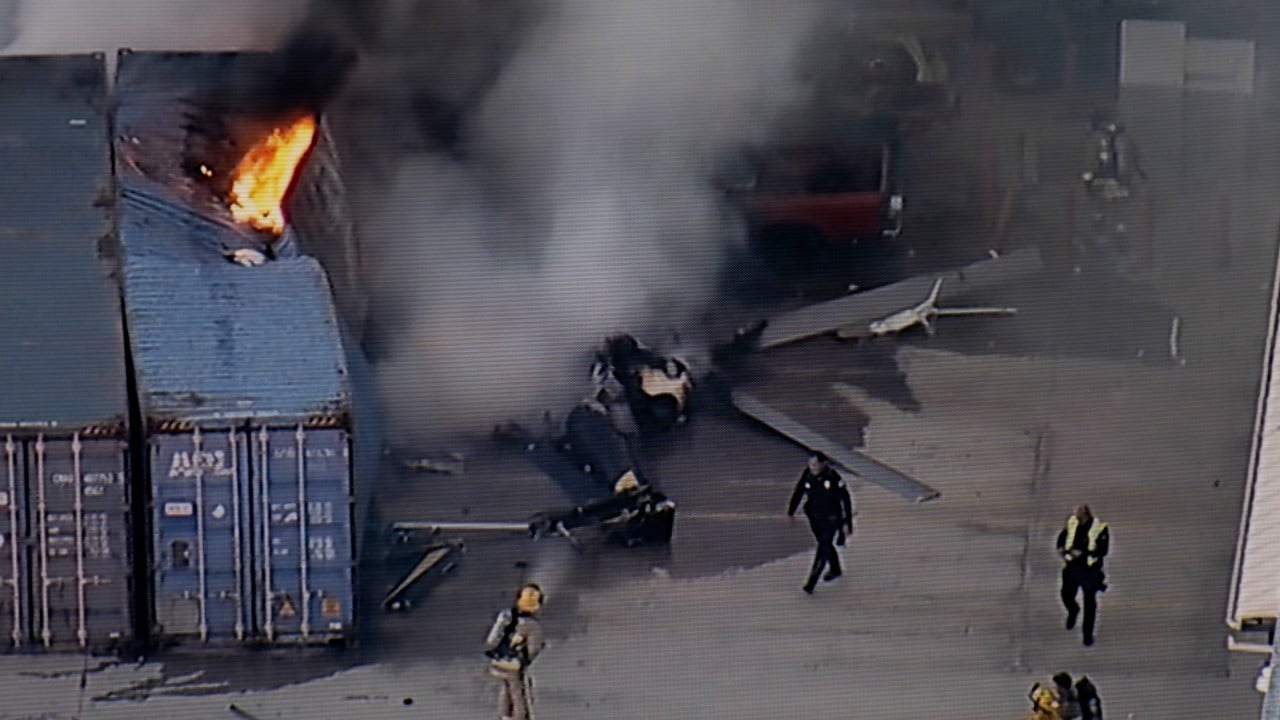
Three lives ended in a tangled flash of orange and gray over a suburban neighborhood where children were finishing homework and traffic was beginning its familiar, crawling densification. A news helicopter—a familiar fixture of the Southern California horizon, an airborne eye that brings freeway chases and brush fires straight into our living rooms—plummeted from the blue.
A news helicopter crash in Los Angeles is not merely a local tragedy. It is a violent punctuation mark in a city built around the cult of motion, the obsession with seeing everything, immediately, from every possible angle.
Consider the anatomy of an ordinary day in the Los Angeles skies. At any given hour, dozens of aircraft hum above the sprawling asphalt grid. Police cruisers of the air, tourist charters, billionaire commuters, flight-school trainees, and media birds share a crowded, fractured airspace. They are the circulatory system of a city too big to understand from the ground. When you live down below, the constant thrum overhead becomes white noise. You stop hearing the rotor blades. You stop wondering who is up there, staring down through a bubble windshield at the endless grid of the San Fernando Valley or the curves of the Sepulveda Pass.
Then comes the sudden silence of a rotor gone quiet.
In the immediate aftermath, the news cycle does what it always does. It spits out the cold metrics. Three dead. Model of the aircraft. Registration numbers. Weather conditions at the time of impact. The terse updates from federal investigators trying to piece together a wreckage field scattered across streets designed for quiet domesticity.
But numbers do not capture the texture of the loss. They do not tell you about the pilot who checked the oil before dawn, or the camera operator who spent years framing the triumphs and tragedies of a notoriously restless county. They do not capture the terrifying split-second realization inside the cockpit when the controls go slack, when gravity reclaims its absolute authority over human ambition.
A news helicopter crash forces us to confront a dark bargain we have struck with modern information. We demand eyes everywhere. We want to know where the backup is on the 405, where the smoke is rising in the foothills, where the high-speed pursuit is winding to its chaotic close. We expect real-time omniscience. And yet, the machinery required to grant us that godlike vantage point is operated by human beings sitting in cramped, vibrating boxes fueled by highly volatile jet propellant, navigating complex wind currents bouncing off concrete canyons.
There is a particular kind of vulnerability that comes with watching a city from above. Pilots often talk about the deceptive calm of the Los Angeles basin. From three thousand feet, the traffic looks like glowing beads of amber and ruby sliding along velvet ribbons. The smog softens the edges of the horizon, making the ocean blend seamlessly into the sky. It feels peaceful. It feels untouchable.
Yet, beneath that cinematic veneer lies a punishing aerodynamic reality. Heat inversions create invisible traps. Mountain drafts spill over ridges like invisible waterfalls, catching light aircraft off guard. Mechanical components, stressed by thousands of hours of high-vibration flight, demand perfection from the technicians who maintain them and the pilots who test them against the limits of physics every single day.
When a machine fails in that environment, there is no margin for hesitation. There is no shoulder to pull over onto. There is only the frantic calculation of glide ratios, the desperate scan for an empty patch of asphalt, a park, a schoolyard, anywhere that will not compound the disaster by crushing the lives unfolding below.
The neighborhood where the wreckage came to rest will bear the invisible scars long after the twisted metal is cleared away and the street is repaved. Neighbors who ran toward the smoke with fire extinguishers or prayers will carry the memory of that sudden, unnatural violence interrupting an ordinary Tuesday. They will look up at the next helicopter that buzzes overhead—because the news never stops, the traffic never clears, and the demand for aerial surveillance remains insatiable—and they will flinch. They will hear the blades and remember that the sky is not a screen. It is a physical place where gravity is unforgiving.
We consume our tragedies through screens mounted on the dashboards of our cars or glowing in the palms of our hands, often forgetting the physical toll exacted to bring us the picture. The camera is always there, recording everything except the cost of its own existence.
As the investigation grinds forward—as the National Transportation Safety Board sifts through flight data recorders, maintenance logs, and radio transcripts—the answers will eventually arrive in neat, clinical paragraphs. Probable cause. Mechanical fatigue. Environmental factors. Human factors.
None of those words will replace a voice at a dinner table. None of them will bridge the sudden, jagged chasm left in the lives of the families who woke up that morning expecting a normal goodbye and received instead a lifetime of absence.
The air over Los Angeles remains crowded. The traffic updates continue to air at the top of the hour. The rotors continue to turn, casting moving shadows across swimming pools and asphalt lots. But for those who saw the smoke billow into the afternoon sun, and for those who understand what it takes to keep an eye on a city that never stops moving, the sky has changed. It is no longer just a highway of light and information. It is a reminder of how heavily we lean on the courage of strangers who spend their working lives defying the earth, holding their breath in the thin air, looking down so we can see where we are going.