The dust in Djera does not settle. It hangs in the heavy, humid air of the northern Democratic Republic of Congo, coating the leaves of the dense rainforest and sticking to the skin of those who walk its isolated paths. If you look at a map, Djera is a smudge of green, hundreds of miles from the neon grid of Kinshasa. It is a place where the modern world arrives late, if it arrives at all.
But a virus does not care about infrastructure. It does not wait for paved roads.
When the fever first took hold of a young farmer in the province, nobody panicked. Fevers are the background noise of life in the equator. They come with malaria, with typhoid, with the exhaustion of clearing fields under a bruising sun. You drink water. You lie on a woven mat. You wait for the heat in your blood to recede.
This time, the heat did not recede. It grew. Within days, the farmer’s family watched in horror as his body turned against itself. The vomiting began, followed by the terrifying hallmark of a familiar monster—blood, seeping from the nose and eyes. By the time the local clinic realized what they were looking at, the farmer was gone. And the chain of transmission had already begun its invisible, lethal march through the village.
Today, the official ledger reads sixty-five dead.
To the bureaucrats in Geneva or the tickers running at the bottom of cable news screens, sixty-five is a statistic. It is a manageable number. It is a localized event. But if you have ever stood in a village stripped of its elders, or heard the specific, guttural wail of a mother who has lost three children in a single week, you know that numbers are a lie. Sixty-five is not a statistic. It is sixty-five empty chairs. It is sixty-five families shattered. It is an entire community paralyzed by a fear so profound that people are afraid to touch their own dying kin.
The Geography of Isolation
To understand how an outbreak happens in a place like the Congo, you have to understand the tyranny of distance.
Imagine a village where the nearest hospital is a three-day journey by motorbike over paths that dissolve into mud when the rains come. There are no charging stations. No cell towers with five bars of service. When someone falls ill with Ebola, the clock starts ticking immediately, but the news of their sickness travels at the speed of a walking man.
Consider the logistics of a response. Medical teams cannot simply drive to the epicenter. They must charter small planes to remote airstrips, then transfer to dug-out canoes, and finally trek on foot carrying heavy coolers of vaccines that must be kept at sub-zero temperatures. It is a nightmare of thermodynamics and human endurance.
The virus thrives in this isolation. Ebola is a filovirus, a microscopic thread that looks almost elegant under an electron microscope, like a shepherd’s crook.
[Image of Ebola virus structure]
Once it enters the human bloodstream, that elegance transforms into pure destruction. It targets the endothelial cells that line the inside of blood vessels. As the virus replicates, it causes these vessels to leak. The body's clotting mechanism fails completely. It is a medical catastrophe that unfolds over days, turning neighbors into vectors and homes into quarantine zones.
The tragedy of the current outbreak in this remote province is that we have the tools to stop it, yet the tyranny of distance stands in the way. We possess highly effective vaccines. We have experimental treatments that can dramatically lower the mortality rate if administered early. But a vaccine sitting in a warehouse in Europe, or even in a central hub in Kinshasa, is useless to a child burning with fever in Djera.
The Protocol of Grief
We often talk about fighting an outbreak as if it were a military campaign. We use words like frontline, deployment, and containment. But the real battlefields are not tactical; they are cultural.
When Ebola strikes, it strikes at the very heart of what makes us human: our desire to comfort the suffering and honor the dead. In many traditional Congolese communities, a funeral is not a detached, somber viewing. It is an intimate, physical farewell. Family members wash the body of their loved one. They kiss the forehead. They hold the hands.
But a body deceased from Ebola is a biological landmine. The viral load is at its absolute highest at the moment of death. Every drop of fluid is teeming with the pathogen.
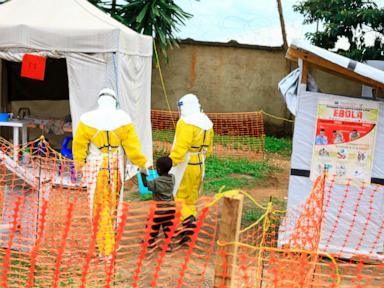
This creates a psychological horror that is difficult to overstate. To survive, people must reject their deepest instincts. A mother must stay back from her dying child. A son must watch from a distance as strangers in white, ghostly hazmat suits spray bleach on his father's corpse and slide it into a plastic body bag.
The response teams are often met with deep suspicion, and honestly, who can blame the villagers?
Imagine living in a town where the government rarely provides electricity, clean water, or decent schools. Then, suddenly, a mysterious illness appears, and twenty-four hours later, white trucks roll in filled with foreigners wearing space suits, telling you that your traditional ways of mourning are deadly. It looks like an invasion. Rumors spread faster than the virus itself. Some believe the white suits are harvesting organs. Others believe the foreigners brought the disease with them.
Trust becomes the rarest commodity in the jungle. Without it, the medical interventions fail. If the community does not trust the doctors, they hide their sick. They bury their dead at night, in secret, away from the bleach and the plastic bags. And when they do that, the sixty-five becomes seventy-five. The seventy-five becomes one hundred.
The Cost of Looking Away
There is a predictable cycle to international attention when it comes to infectious diseases in Africa.
First comes the confirmation. A wire report notes a cluster of deaths in a province most people cannot pronounce.
Then comes the mild anxiety. Health organizations issue statements. Experts are interviewed about the risk of global spread.
Finally, when it becomes clear that the outbreak is contained by geography and the heroic efforts of local health workers, the world looks away. The news cycle moves on to a political scandal or a stock market fluctuation.
But the outbreak does not stop being real just because it is no longer trending.
The sixty-five deaths recorded so far represent a massive loss of human potential. They are teachers who will no longer walk into classrooms. They are farmers whose fields will go fallow, leading to hunger in the months to come. They are older storytellers who carried the history of their people in their heads, now erased.
The true stakes of the Ebola outbreak in this remote province are not about whether the virus will catch a flight to London or New York. The stakes are about the value we place on human life in the places that are hardest to reach. If we only care about an outbreak when it threatens our own borders, we have failed a fundamental moral test.
The health workers on the ground know this. Many of them are Congolese nurses and doctors who have left their own families in the safer cities to travel into the heart of the hot zone. They work twelve-hour shifts in suits that trap the tropical heat until their boots are filled with sweat. They do this because they know that the people of Djera are not statistics.
The road ahead is long. Sixty-five is a heavy toll, and that number will likely rise before the chain of transmission is broken. The silence that follows an outbreak is the hardest part—the quiet of empty villages, the hushed tones of survivors who carry the stigma of the disease, and the profound indifference of a world that has already moved on.
A young girl sits on a wooden bench outside a clinic in the afternoon heat. Her eyes are fixed on the door of the isolation ward where her older brother is being kept. She is not allowed inside. She cannot hold his hand. She can only watch the gloved hands of the doctors moving behind a clear plastic screen, waiting to see if her family's number will stay the same, or if the ledger will claim another soul before the sun goes down.