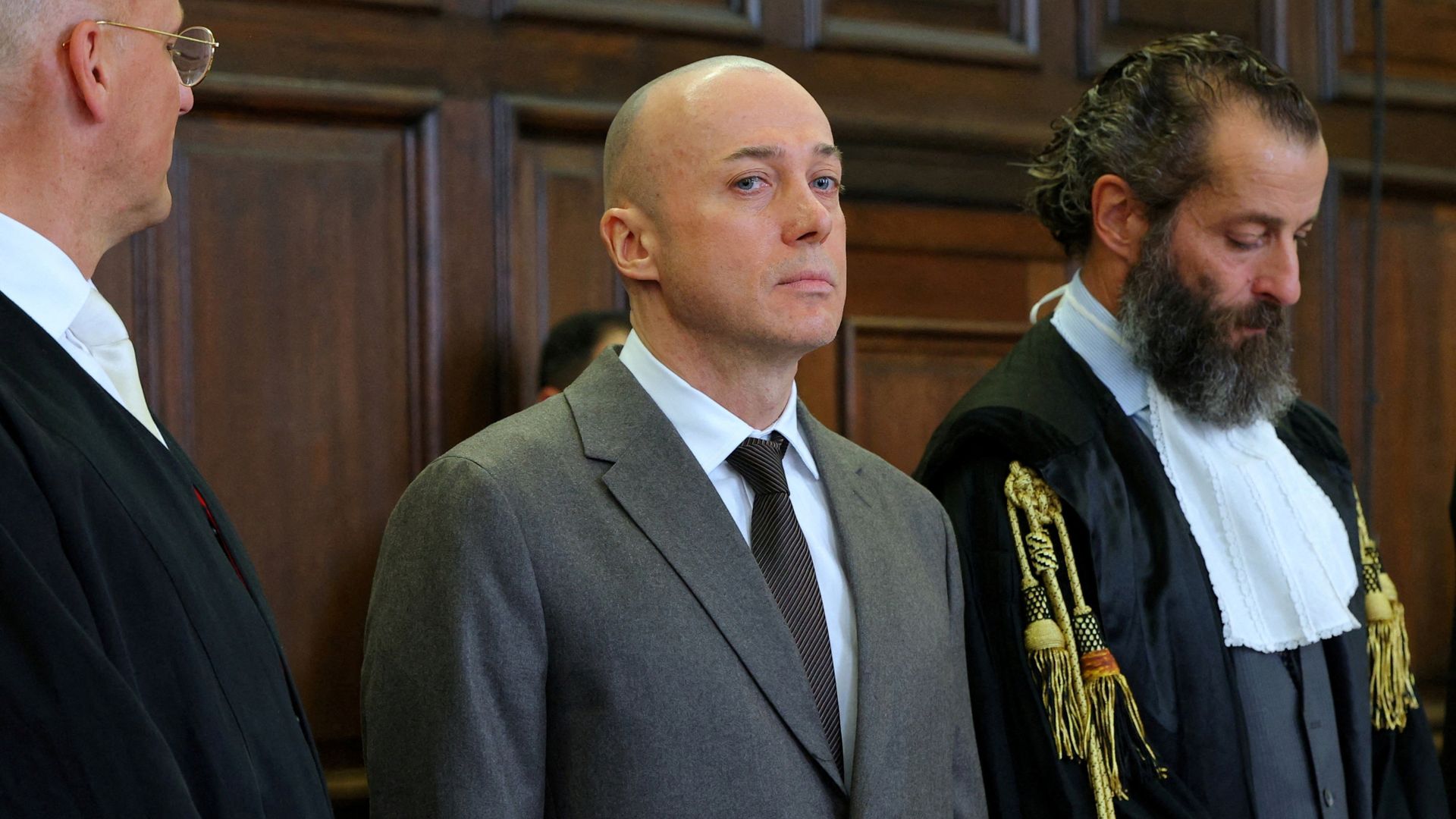
A former Ukrainian officer sits in a Hamburg courtroom over four years of investigation into the September 2022 Nord Stream blasts. Headlines frame it as a showdown between German justice and wartime sabotage.
That framing is lazy.
Conventional coverage treats the Hamburg trial as a straightforward whodunit finally reaching a verdict. Did a yacht crew with scuba gear blow up Nord Stream 1 and Nord Stream 2? Will Berlin's prosecutors embarrass Kyiv? Will this fracture Western unity?
Wrong questions. All of them.
The real story is not whether a single defendant in the dock placed charges on a Baltic seabed pipe. The real story is that European courts and insurers are now forced to untangle state-attributed warfare, undersea infrastructure vulnerability, and international humanitarian law on pipes that were already dead levers of geopolitical leverage.
The Lazy Consensus Around the Hamburg Dock
Most commentary on the trial follows a predictable script. Either it treats the prosecution of Serhii Kuznietsov as proof that Kyiv orchestrated a rogue attack on critical European energy links, or it treats the case as a political headache Berlin wishes had vanished quietly.
Both sides miss the structural mechanics at play.
First, look at the timeline. The explosions hit on September 26, 2022. Russia had already choked off major Nord Stream 1 gas flows to Germany in August 2022. Nord Stream 2 had never entered commercial operation. By late September 2022, Germany had already pivoted hard toward liquefied natural gas terminals, alternative pipeline routes, and demand cuts. Blowing the pipes severed physical metal, not an active lifeblood supply line that Berlin was still relying on to heat homes that winter.
Second, look at the legal architecture. German federal prosecutors did not just charge ordinary domestic offenses like causing an explosion or damaging structures. They attached a war crime charge under Section 11 of Germany's Code of Crimes Against International Law—alleging an attack against protected civilian objects tied to an armed conflict—while stating suspects acted on behalf of Ukrainian state authorities.
That turns a criminal dock into a proxy arena for unresolved questions of belligerent reprisal, dual-use economic targets, and jurisdiction in international waters.
Why "People Also Ask" Questions Miss the Target
Readers searching around this case keep asking the same three questions. Each one rests on a flawed premise.
"Is blowing up a gas pipeline a war crime?"
Asking that as a yes-or-no trivia question ignores how international humanitarian law actually works. Under the laws of armed conflict, protection depends heavily on whether an object serves as a military objective—meaning its nature, location, purpose, or use makes an effective contribution to military action, and its destruction offers a definite military advantage to the attacker.
A gas pipeline owned by a state-controlled energy giant like Gazprom—which funded state budgets and served as a strategic instrument of Russian statecraft—sits right on the fault line between civilian infrastructure and economic-warfare target. Even Germany's Federal Court of Justice had to distinguish domestic statutory offenses from international humanitarian law rules when reviewing the case. Calling it an automatic war crime or an automatic lawful act skips the hardest legal test in modern warfare: where economic statecraft ends and military necessity begins.
"Will this trial force Germany to cut off aid to Ukraine?"
Unlikely—and anyone betting on a clean political rupture misunderstands Berlin's calculus.
Having covered energy markets and European policy desks for years, I have watched capitals repeatedly separate judicial proceedings from strategic survival. When governments face high-stakes security threats, prosecutors and courts follow statutory mandates while ministries manage alliances behind closed doors. Even when Croatian courts weighed extradition and questioned aspects of jurisdiction or wartime context, the broader security alignment in Europe did not evaporate overnight. Courtrooms assign individual criminal liability; they do not automatically rewrite grand strategy.
"Why did it take four years to get a suspect into court?"
Because underwater sabotage in the Baltic Sea is a forensic nightmare, not a Hollywood plot.
Depth, currents, shifting seabed sediment, multiple exclusive economic zones, and competing national inquiries slowed everything down. Sweden and Denmark closed their investigations without assigning public blame, leaving Germany to carry the heaviest evidentiary load. Building a case that holds up under strict German criminal procedure—where hearsay, intelligence leaks, and circumstantial travel records face sharp scrutiny—takes years, not weeks.
What Experienced Operators Actually See in the Wreckage
I have seen energy executives and security planners blow millions chasing the wrong threat models because they focused on dramatic headlines instead of system bottlenecks. After 2022, too many teams obsessed over cinematic "frogman with a yacht" scenarios while ignoring unglamorous vulnerabilities: subsea power cables, fiber-optic interconnects, port terminals, and transformer substations.
Subsea pipelines are heavy, visible, and slow to repair, yet their strategic value depends entirely on system redundancy and market substitution. Once Europe rerouted gas flows and built alternative import capacity, the physical rupture of Nord Stream became a symbol and a legal flashpoint more than an acute operational choke point.
Where the real financial and legal shockwaves landed was elsewhere. In July 2026, London's High Court rejected a 579-million-euro insurance claim tied to the pipeline damage, applying a war exclusion clause after finding the Russo-Ukrainian war was a significant cause and state backing was behind the sabotage.
That ruling matters far more to global commerce than courtroom drama in Hamburg. It shows how war exclusions, attribution standards, and geopolitical risk are being stress-tested in real time across marine insurance and infrastructure finance.
The Downsides of Taking a Contrarian View
Every contrarian argument carries blind spots if pushed too far. Here is where my own pushback can go wrong:
- Underestimating domestic political blowback: Even if Berlin's official policy holds steady, protracted hearings in Hamburg give domestic critics and political opponents repeated news cycles to attack government messaging on war aid and energy costs.
- Treating state attribution lightly: If a court or evidentiary record firmly links a state actor to a strike on foreign-owned infrastructure in international waters, that sets a precedent other states can cite when justifying gray-zone retaliation against cables, pipelines, or satellites.
- Over-indexing on market resilience: Europe adapted faster than early doomsayers predicted, but adaptation came at real industrial cost—higher baseline energy prices for energy-intensive manufacturers and permanent shifts in trade routes.
What You Should Do Instead of Watching the Trial Like a Soap Opera
If you work in energy, risk management, defense, or policy, stop treating the Hamburg trial as a verdict on who "won" the narrative. Use it as a diagnostic checklist for your own exposure:
- Audit war and sabotage exclusions in every infrastructure contract. Read the exact wording on state attribution, armed conflict nexus, and third-party actors. Do not assume standard property or marine coverage pays out when geopolitical conflict sits anywhere near the loss.
- Map single points of failure on cables and grid nodes, not just big pipes. High-profile pipelines get cameras; undersea data cables, interconnectors, and substations carry quiet, immediate cascading risk.
- Separate criminal guilt from strategic consequence. Track evidentiary standards and legal precedents in the Hamburg proceedings, not sensationalized court sketches.
A lone defendant in a German dock cannot put the ghost of cheap Russian pipeline gas back together—and pretending this trial settles the broader geopolitical reckoning is the biggest misdirection of all.