Salt crusts on the eyelashes before dawn in the Strait of Hormuz.
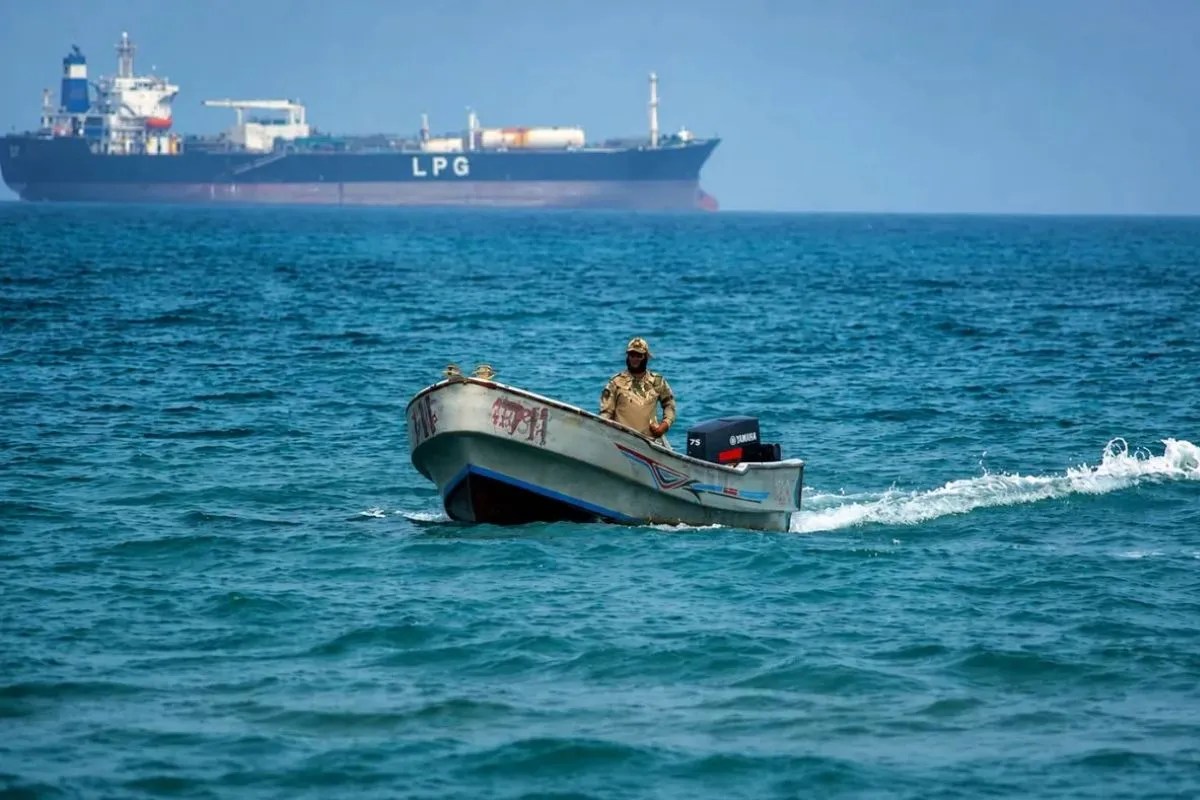
Out here, the water does not look like oil or politics. It looks like molten lead under a sky that has forgotten how to be cool. To stand on the bridge of a vessel navigating these nineteen miles of liquid choke point is to feel the weight of an entire planet breathing down the back of your neck. You are sharing space with supertankers carrying the lifeblood of modern industry, their hulls cutting through the Persian Gulf while unseen eyes track every foot of your drift. Read more on a related issue: this related article.
Then, the air tears open.
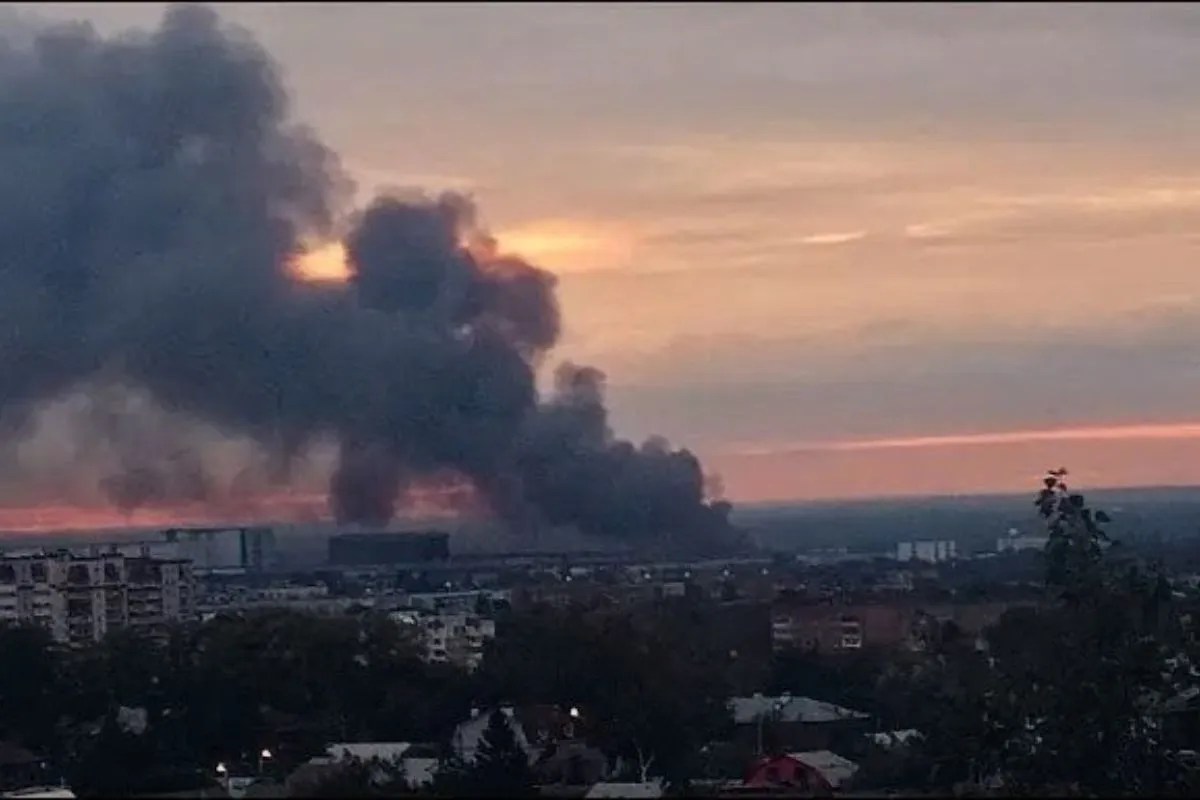
Imagine—and here we step into a hypothetical reconstruction based on the verified reports of maritime authorities—the sudden, violent concourse of shrapnel against steel. Not a distant thunder. A sharp, localized crack that vibrates through the deck plates straight up into the soles of your boots. Crew members on night watch freeze, muscles tightening into knots of pure adrenaline. Smoke. Alarms that bray like wounded animals. The realization settles in with stomach-churning clarity: someone, somewhere out in the dark, has drawn a line in the water. More journalism by NBC News delves into similar perspectives on the subject.
That line was crossed off the coast of the United Arab Emirates, where an ADNOC commercial vessel became the target of a hostile attack.
Official statements from Abu Dhabi were measured, as diplomatic language demands. They spoke of defending navigation rights, of safeguarding sovereign waters, of maintaining the unhindered flow of energy to a dependent global economy. But diplomacy rarely captures the smell of scorched insulation or the hollow terror of a captain calculating whether the next impact will breach the cargo tanks.
This is not merely a regional skirmish. It is a tremor at the fault line of international commerce.
The Geography of Vulnerability
To understand why a single vessel struck in the Strait of Hormuz sends shockwaves from Tokyo to Chicago, you have to look at a globe with the eyes of a logistics dispatcher.
Hormuz is a bottleneck. It is the maritime equivalent of a single-lane bridge holding up heavy semi-trucks, except the trucks are liquefied natural gas carriers and crude oil supertankers, and the bridge is flanked by shores with long memories and short tempers. Roughly a fifth of the world's petroleum consumption squeezes through this narrow channel every single day.
When an ADNOC vessel takes fire in these waters, the impact is instantaneous. Insurance premiums for every ship entering the Gulf spike within hours. Crews hesitate. Shipowners reevaluate routes. The invisible gears of global supply chains grind, catch, and stutter.
We forget how fragile abundance is. We turn on our kitchen lights, fill our gas tanks, power our factories, and treat energy as an infinite background hum. We assume the fuel arrives by magic. We rarely picture the Filipinx or Indian or Emirati seafarers standing watch in the blinding glare of the midday sun, sweating through heavy flame-retardant coveralls, listening to the VHF radio crackle with static and warning calls.
When those crews are threatened, the magic stops. The fragility is exposed.
The Anatomy of Deterrence
Defending navigation rights sounds abstract when printed on a press release from the Ministry of Foreign Affairs. On the water, it is an exercise in agonizing precision.
How do you protect a commercial fleet from asymmetric threats? How do you shield steel hulls from airborne drones, explosive skiffs, or coastal missile batteries deployed by actors who operate in the shadows of deniability?
Naval patrols can shadow tankers, but a warship cannot occupy every square mile of the Gulf. Radar can sweep the horizon, but it cannot read the intent of a fast-moving fiberglass boat cutting across the shipping lanes under the cover of civilian traffic. The UAE’s vow to defend its waters relies on a mix of high-tech surveillance and old-fashioned nerve. It requires air cover, rapid-response maritime units, and constant intelligence sharing with allies who have an equal stake in keeping the Strait open.
Yet deterrence is a delicate dance. Push too hard, and you risk escalating a localized incident into a regional conflagration. Pull back too softly, and you invite impunity.
Every captain operating in these waters knows this tension. They live in the gap between deterrence theory and reality. They know that a policy written in an air-conditioned boardroom in Abu Dhabi translates, out here, to a choice between turning around or steaming ahead into uncertainty.
The Human Cost Behind the Barrel
History is often written as a collision of states—empires rising, treaties signing, flags lowering. But the true texture of history is felt by individuals caught in the machinery.
Consider a chief engineer with twenty years at sea, a man who has missed birthdays, anniversaries, and first steps because his life is measured in engine rotations and fuel efficiency. He has weathered typhoons in the South China Sea and monsoons in the Indian Ocean. He respects the weather because the weather is honest; it does not bear malice.
Human malice is different.
When a projectile strikes a vessel he maintains, the violation is personal. It turns a place of work into a theater of war. The psychological toll on merchant mariners plying the Gulf does not show up on quarterly earnings reports or geopolitical risk assessments. It shows up in the quiet moments between shifts, when crew members stare out at the dark horizon, wondering if the blip on the radar is a fishing boat or a threat.
The UAE's swift condemnation and vow of defense are necessary political acts. But for the seafarer, reassurance is not found in press releases. It is found in gray-hulled patrol boats cutting through the whitecaps, in reliable communication channels, in the tangible proof that they are not sailing alone through a forgotten corridor.
The Long Shadow Over Global Markets
Markets hate ambiguity. When news of the attack broke, commodity traders did not need a complete damage assessment to react. They priced in the worst-case scenario: the nightmare of a prolonged blockade or systematic harassment of energy infrastructure in the Gulf.
Even when physical damage is contained, the psychological fallout ripples outward. Every barrel of oil that carries a risk premium adds cents to the cost of transport, manufacturing, and heating. Those cents compound. They manifest as inflation at the supermarket checkout, higher heating bills for families in winter, and tighter margins for businesses trying to recover from years of economic turbulence.
We are tethered to these waters whether we realize it or not. The prosperity of modern life rests on a fragile web of maritime routes guarded by coast guards, navies, and commercial crews who accept danger as part of the uniform.
When the UAE vows to defend navigation rights, it is making a promise not just to its own citizens, but to a globalized economy that has outsourced its survival to narrow straits thousands of miles away.
The sun dips below the horizon in the Gulf, painting the sky in violent shades of copper and violet. The water flattens out, turning the color of oxidized iron. Out in the shipping lanes, the silhouette of a supertanker glides silently forward, its navigation lights blinking a steady, stubborn rhythm against the gathering dark. The strait is quiet tonight. But everyone is watching the radar.