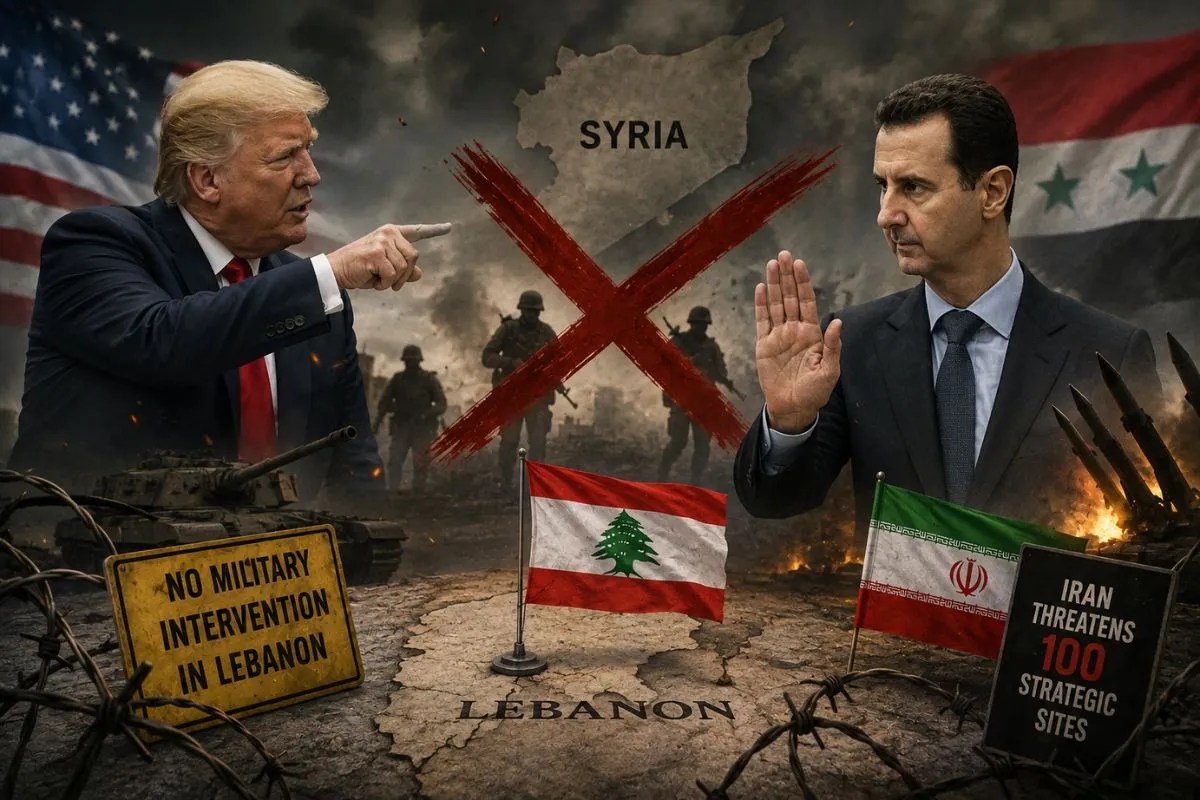
Geopolitical chess boards rarely feature straight lines, but the recent maneuverings across the Middle East reveal a stark reality. Syria just drew a hard line. Despite heavy diplomatic pressure from Washington and regional actors to launch a military operation into neighboring Lebanon, Damascus flatly refused.
You might wonder why a nation dealing with its own internal rebuilding phases would blatantly push back against high-stakes American strategies. The answer lies in a complex web of survival instincts, regional threats, and a very loud warning from Tehran.
The Untold Pressure on Damascus
Behind closed doors, foreign policy architects in Washington envisioned a scenario where Syrian forces would intervene directly in Lebanon's Bekaa Valley. The goal was simple on paper: squeeze Hezbollah, force new security frameworks, and weaken Iran's traditional supply corridors. Financial backing was supposedly lined up from regional partners like the United Arab Emirates, while other Gulf states maintained cautious stances.
Yet, executing that plan required a willing partner on the ground. Syria didn't bite.
Why? Because leaders in Damascus understand that jumping into a localized quagmire under foreign guidance is a fast track to self-destruction. Fighting proxy battles for external superpowers rarely ends well for the nation holding the rifle. Syria chose self-preservation over alignment with foreign blueprints.
Tehran Draws Red Lines Across the Map
The refusal wasn't based solely on domestic hesitation. Iran made sure the costs of compliance were crystal clear. According to regional intelligence and security sources, Tehran sent explicit warnings to Damascus warning against any aggressive military posture targeting Hezbollah positions.
The message was direct. If Syria moved against the Iran-backed group, Tehran stood ready to activate multiple pressure points within Syrian territory. We are talking about potential flashpoints near:
- The porous Syrian-Iraqi border
- The strategic central hub of Homs
- The volatile coastal corridor
- Outskirts surrounding Aleppo
Facing the prospect of internal destabilization funded or provoked from across its borders, Damascus calculated that saying no to Washington was safer than defying Tehran. Iran's network demonstrated that it holds enough leverage to make any regional government regret moving against its core allies.
What This Means for the Wider Conflict
Most mainstream commentary misses the friction points between immediate superpower demands and gritty local realities. Donald Trump's administration has tried multiple diplomatic tracks across Lebanon, Iraq, and Syria to counter Iranian influence. Direct summits and diplomatic overtures aim to reshape alliances.
However, old deterrence models still rule the Middle East. When push comes to shove, geographic proximity and immediate security threats trump distant promises of economic support or political normalization. Syria's refusal highlights the strict limits of American leverage in a neighborhood dominated by overlapping militias and regional heavyweights.
The standoff proves that you cannot easily rearrange local military dynamics simply by applying pressure from a podium in Washington. Local actors weigh survival against superpower ambitions every single day, and right now, staying out of Lebanon's crossfire was the only logical move left on the board.
Trump threatens to strike Iran over support for Hezbollah as fighting continues in Lebanon
This video provides important context on how ongoing tensions between Washington, Iran, and Hezbollah continue to shape military calculations across Lebanon and the wider region.