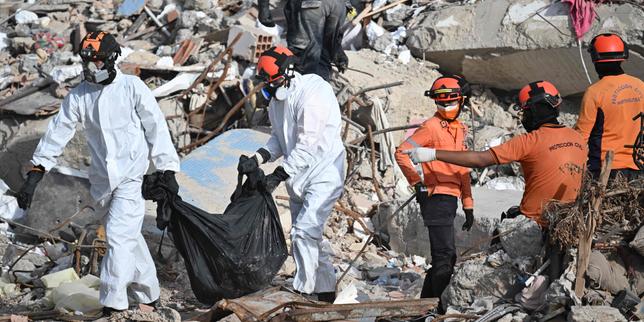
The immediate aftermath of a catastrophic seismic event exposes a critical structural vulnerability in emerging market economies: the acute mismatch between localized fiscal reserves and the immediate capital requirements for structural stabilization. Following the recent earthquake in Venezuela, which resulted in a confirmed casualty count exceeding 5,000 individuals, the International Monetary Fund (IMF) announced the allocation of $346 million in emergency financing for reconstruction efforts. This capital injection represents a standard liquidity deployment, yet evaluating its efficacy requires looking past the baseline dollar figure to analyze the structural bottlenecks, capital distribution efficiency, and the long-term macroeconomic debt architecture of the recipient nation.
When a seismic event strikes an economy already navigating severe fiscal constraints, the economic shock propagates through three distinct phases: immediate liquidity collapse, supply-chain disintermediation, and structural capital replacement costs. The IMF’s $346 million allocation targets the first phase, but the success of the entire recovery depends on how efficiently this capital interfaces with localized distribution mechanisms.
The Dual-Shock Framework: Casualty Costs and Infrastructure Deficits
To understand the scale of the reconstruction challenge, the crisis must be split into two distinct analytical components: human capital loss and physical asset degradation. The loss of more than 5,000 lives introduces a permanent contraction in localized labor supply and induces a sharp decline in regional economic productivity. This human toll creates an immediate fiscal burden on state social safety nets, distracting capital away from infrastructure restoration.
The physical damage functions as a sudden supply-side shock. In Venezuela, where public infrastructure already operated under historical maintenance deficits, the seismic shock did not merely damage buildings; it severed critical logistical nodes. The cost function of reconstruction is therefore non-linear. Replacing a bridge or a power grid component in a destabilized economy costs significantly more than standard capital expenditure projections due to escalated material scarcity, inflated local logistics premiums, and heightened security risks.
The IMF's $346 million facility cannot fund complete structural replacement. Instead, it operates as a catalytic liquidity injection. In international economics, this capital serves to stabilize the balance of payments, preventing a total currency collapse as the country ramps up imports of emergency medical supplies, heavy machinery, and construction materials. Without this initial foreign currency cushion, the sudden demand for imports would trigger severe downward pressure on the local currency, driving hyperinflation and worsening the humanitarian crisis.
Capital Deployment Efficiency and Administrative Bottlenecks
The primary risk to the current stabilization effort lies in the transmission mechanism between the IMF's central disbursement and the actual execution of civil engineering projects. Capital velocity—the speed at which allocated funds are converted into physical infrastructure and public services—is historically low in environments characterized by high administrative friction.
Three systemic bottlenecks systematically degrade the purchasing power of emergency funds:
- Procurement Lag: Standard multi-lateral lending compliance requires rigorous bidding processes to prevent corruption. In an emergency scenario, these compliance frameworks create a structural delay, pausing capital deployment while physical degradation worsens.
- Logistical Asymmetry: Capital is digital, but reconstruction is physical. If port facilities, fuel distribution networks, and transport corridors are physically compromised by the earthquake, the inflow of foreign goods stalls, creating localized inflation where cash chases non-existent materials.
- Institutional Capacity Deficits: Managing a $346 million rapid reconstruction portfolio requires thousands of hours of specialized project management, structural engineering oversight, and transparent auditing. If local municipal authorities lack these technical skill sets, funds are frequently misallocated to low-priority administrative costs rather than high-impact physical restoration.
To mitigate these leaks, the capital deployment architecture must bypass traditional bureaucratic layers. Funding should be pegged directly to verifiable milestones, utilizing third-party international engineering firms to audit structural completions before successive tranches of the $346 million are unlocked.
Macroeconomic Solvency and the Debt Trap Paradox
Emergency international assistance is rarely free of long-term economic consequences. While some disaster relief comes via non-repayable grants, structural financing from major international institutions often takes the form of rapid financing instruments or low-interest loans that must eventually be serviced. For an economy with existing debt sustainability challenges, adding $346 million to the balance sheet alters the sovereign risk profile.
This introduces the Debt Trap Paradox of disaster recovery: a nation must borrow heavily to restore its tax base (its infrastructure and productive population), but the increased debt burden raises sovereign borrowing costs, crowding out future domestic investment.
[Seismic Shock] ──> [Infrastructure Destruction] ──> [Tax Base Contraction]
       │                                                      │
       ▼                                                      ▼
[Emergency IMF Loan] ──> [Increased Debt Burden] ──> [Crowded Out Future Capex]
This structural dynamic means that the long-term economic recovery of Venezuela will not be decided by the immediate availability of cash, but by the terms of the debt architecture. If the IMF financing does not include significant grace periods or concessionary interest rates, the cost of servicing this capital will eventually cannibalize future budgets for education, healthcare, and routine infrastructure maintenance, leaving the nation more vulnerable to the next environmental shock.
Strategic Execution Plan for Post-Seismic Reconstruction
To maximize the marginal utility of the $346 million allocation, the recovery strategy must prioritize structural optimization over simple liquidity expenditure. The optimal deployment framework requires a strict hierarchical triage of capital.
First, immediate capital allocations must target logistical lifelines: deep-water ports, primary airport runways, and central arterial highways. If these nodes remain offline, all subsequent reconstruction material costs scale exponentially due to supply chain friction.
Second, the state must implement a temporary regulatory optimization framework. Standard environmental impacts, zoning permits, and import tariffs on construction equipment must be suspended within designated disaster zones. This regulatory decompression lowers the entry barrier for international private contractors and accelerates the conversion of liquid capital into physical utility.
Third, fiscal policy must adapt to prevent the Dutch Disease variant common in aid-heavy environments. The sudden influx of hundreds of millions of dollars in foreign currency can artificially overvalue the local currency or create a localized bubble in the construction sector, starving other domestic industries of labor and resources. The central bank must carefully sterilize foreign capital inflows, ensuring that liquidity is released in cadence with the physical capacity of the economy to absorb it.
The final strategic pivot requires shifting from a philosophy of "rebuilding to baseline" to "building for resilience." Reconstructing flawed, vulnerable structures using emergency funds guarantees a replication of the current casualty figures in future seismic events. Capital must be explicitly earmarked for seismic-resistant engineering standards, transforming a reactive crisis management expenditure into a proactive asset appreciation strategy.