Long-haul aviation transit with pediatric passengers fails not from a lack of parental effort, but from a systemic breakdown in resource allocation, sensory management, and operational sequencing. Most standard packing guides treat a twelve-hour flight as an endurance test managed by snacks and screen time. This approach ignores the reality of the cabin environment: low humidity, high ambient noise, disrupted circadian rhythms, and extreme spatial confinement. Managing this ecosystem requires viewing the cabin not as a conveyance, but as a closed-loop system where failure in one variable cascades across all others.
The Three Variables of Cabin Stress
Cabin pressure equivalents of six to eight thousand feet, relative humidity levels dropping below twenty percent, and a persistent background acoustic frequency of eighty-five decibels create a baseline physiological stress state. Children lack the somatic regulation to process these stressors independently, which manifests as behavioral dysregulation.
The primary variable is sensory load. The infant or toddler nervous system receives continuous inputs from jet engines, cabin lighting shifts, and tactile discomfort from synthetic seating materials. When total sensory input exceeds processing capacity, behavioral collapse occurs.
The second variable is metabolic stability. Standard travel itineraries induce erratic feeding schedules, high-glycemic snack consumption, and dehydration. Dehydration accelerates mucous membrane drying, which increases susceptibility to cabin pathogens and exacerbates ear-pressure equalization pain during descent.
The third variable is kinetic restriction. The human body is engineered for locomotion. Confining a developing musculoskeletal system to a pitch of thirty-one inches for ten hours disrupts proprioceptive feedback, leading to physical restlessness that adults misinterpret as behavioral defiance.
The Thermodynamic and Ergonomic Packing Matrix
Packing for children on long-haul routes requires a resource allocation strategy based on accessibility tiers rather than total volume. Traditional packing centralizes all items in a single overhead or under-seat storage unit, creating high retrieval friction during critical moments of need.
Tier zero items must remain on the adult's person or in a dedicated hip pack: travel documents, essential medications, pacifiers or immediate self-soothing tools, and a primary hydration source. These items require zero retrieval time.
Tier one items occupy the under-seat bag: structural changes of clothing for both child and adult, active feeding supplies, waste management units, and high-value distraction mechanics. Retrieval time must be under thirty seconds.
Tier two items occupy overhead storage: bulk clothing reserves, secondary entertainment devices, and specialized comfort items. Accessing these requires strategic timing, specifically during cabin-wide movement windows when aisle access is uninhibited.
Clothing systems must utilize a modular layering architecture. Cabin temperatures fluctuate wildly between boarding, cruising altitude, and descent. Synthetic wools and breathable cotton blends outperform heavy synthetics by maintaining thermal regulation without inducing perspiration during boarding gate congestion. Footwear must feature slip-on mechanics to accommodate the micro-swelling of extremities caused by prolonged sitting and cabin pressure differentials.
Circadian Management and Sleep Engineering
Attempting to enforce rigid home sleep schedules across multiple time zones during transit is an operational error. The cabin environment prevents deep restorative sleep due to auditory and kinetic interruptions. The objective shifts from sleep duplication to sleep debt mitigation through micro-rest intervals.
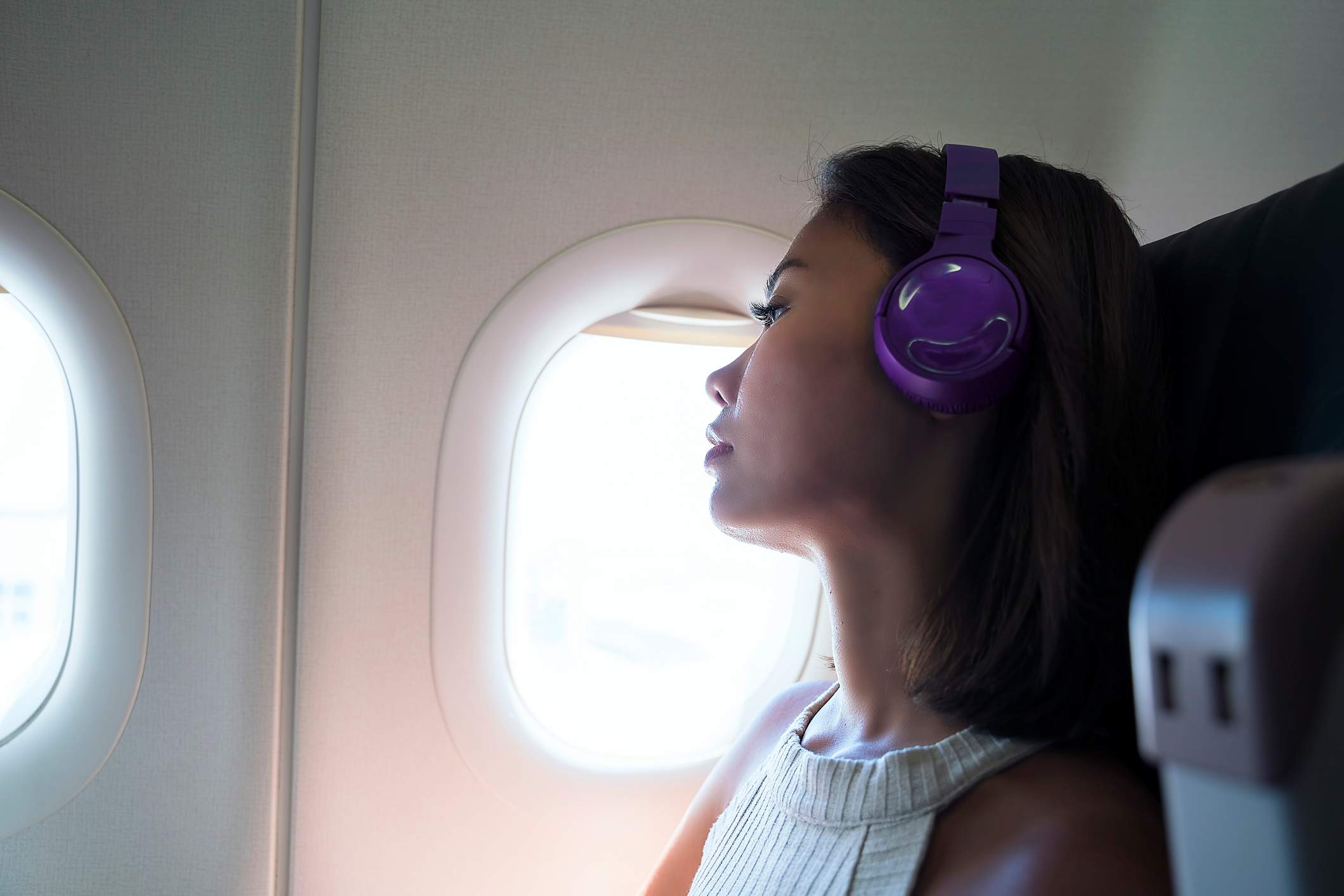
Melatonin production relies on ambient light cues. Exposing children to high-intensity cabin lighting during phases intended for sleep halts endogenous melatonin synthesis. Sleep masks with orbital cavities prevent pressure on the eyelids while blocking ambient light. Acoustic management requires active noise-canceling headphones sized specifically for pediatric ear canals. Passive foam earplugs often fail in pediatric ears due to anatomical sizing mismatches, whereas properly fitted electronic noise-canceling units attenuate low-frequency engine drone below the threshold required to trigger startle reflexes.
Seating selection dictates sleep quality. Bulkhead rows offer spatial volume but eliminate under-seat storage during takeoff and landing, forcing constant retrieval adjustments. Standard rows with window seating provide a structural brace against the fuselage, preventing the classic pediatric head-slump that breaks sleep cycles. For infants under specific weight thresholds, airline-provided bassinets represent a structural advantage, though parents must verify weight limits and structural integrity prior to departure, as turbulence regulations frequently mandate infant removal regardless of sleep state.
Nutritional Logistics and Metabolic Control
In-flight catering for children is optimized for shelf life and caloric density rather than metabolic stability. Processed sugars provided by airlines trigger glycemic spikes followed by rapid crashes, amplifying irritability and disrupting sleep architecture.
Hydration protocols require pre-emptive fluid administration rather than reactive responses to thirst cues. Low cabin humidity accelerates insensible fluid loss through respiration. Water intake must be distributed across the flight duration using specialized spill-proof containers that function against cabin pressure differentials, which can otherwise force liquid past seals through air expansion inside the vessel.
Solid nutrition must rely on high-fat, high-protein matrices that slow gastric emptying and sustain energy levels without glycemic volatility. Whole-food snacks packaged in single-serving opaque containers eliminate decision fatigue and reduce the visual stimulation of multi-item packaging. Liquid restrictions at security checkpoints require parents to utilize medical and infant exemptions effectively; sterile water supplies for formula reconstitution must be secured airside or requested in bulk from cabin crew during initial boarding phases.
Behavioral Sequencing and Cognitive Load Management
Unstructured time in a confined space degrades attention spans and accelerates behavioral friction. Managing pediatric cognition requires a phased deployment of novel stimuli.
The deployment of entertainment technology must follow a diminishing-returns curve. Handheld screens should be withheld during the initial boarding and taxi phases, preserving their novelty value for moments of peak behavioral resistance, such as meal service delays or turbulent air pockets. Audiobooks and tactile manipulation tools—such as silicone pop-toys or low-mess drawing tablets—provide sensory engagement without the neurological fatigue associated with high-refresh-rate displays.
Parental stress transfer represents a critical failure point. Children mirror adult autonomic nervous system states through co-regulation. When an adult exhibits signs of acute stress during boarding delays or crying episodes, the child's physiological arousal escalates in tandem. Maintaining a flat, tactical affect during operational friction points breaks this feedback loop.
The Operational Playbook for Crisis Management
When a pediatric meltdown occurs mid-flight, standard social conditioning encourages frantic appeasement, which often rewards and reinforces the disruptive behavior. The analytical approach requires diagnosing the root cause through a triage hierarchy: physical pain from ear pressure, thermal discomfort, sensory overload, or somatic restlessness.
For barotrauma during descent, active swallowing mechanics must be enforced through continuous feeding or specialized pressure-regulation devices. If sensory overload is the primary vector, immediate extraction to the galley area—with the explicit permission and coordination of the cabin crew—provides a reset in visual and acoustic stimuli.
Execute pre-landing reconfiguration sixty minutes prior to touchdown. Stow all tier one and tier two assets, clear waste from the seating footprint, secure footwear, and re-establish baseline hydration. Treat the final descent not as the end of the journey, but as the final technical maneuver requiring precise execution of pressure equalization and postural stability.