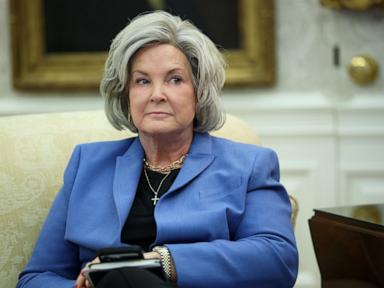
When Dr. Nicole Saphier stepped before the Senate Health, Education, Labor and Pensions Committee, she walked straight into a political and ideological crossfire. As President Donald Trump’s third nominee for U.S. Surgeon General—following a stalled path by wellness entrepreneur Dr. Casey Means—Saphier faced a grueling confirmation hearing designed to test where traditional medical consensus collides with the administration's populist public health agenda.
At the core of the Senate grilling was a fundamental friction point: how a nominee backed by an administration heavily influenced by Health and Human Services Secretary Robert F. Kennedy Jr. would manage federal messaging on childhood immunization. Lawmakers from both sides of the aisle pressed the radiologist and media commentator to clarify her positions on the measles, mumps, and rubella (MMR) vaccine, historical vaccine safety, and the persistence of debunked claims linking immunizations to autism. If you enjoyed this post, you might want to look at: this related article.
The stakes of this confirmation extend far beyond a single bureaucratic appointment. The office of the Surgeon General carries limited formal policymaking authority. Yet, it functions as the nation's most prominent megaphone for public health. For decades, that megaphone was used to project standardized guidance vetted by career scientists at agencies like the Centers for Disease Control and Prevention and the Food and Drug Administration. Placing a media-savvy clinician into this role while the executive branch actively questions established immunization schedules creates an unprecedented institutional tension.
During the committee exchanges, Senator Bill Cassidy, a Louisiana Republican and physician, confronted Saphier directly regarding prior rhetoric from the executive branch targeting the MMR vaccine. Saphier navigated the tightrope carefully, explicitly stating under questioning that she does not believe childhood vaccines cause autism and describing the MMR inoculation as the country's greatest asset for halting measles outbreaks. For another look on this development, see the recent coverage from Everyday Health.
Yet, her responses also laid bare the compromises required to stay viable within a politically polarized ecosystem. When pressed on specific policies, such as universal hepatitis B birth doses, Saphier acknowledged the strong empirical backing supporting current guidelines while acknowledging parental anxieties, drawing sharp critiques from lawmakers who argued that entertaining nuance on settled science invites unnecessary public confusion.
The committee's eventual advancement of her nomination on a tight 12-11 vote underscores the deep divisions over the direction of American healthcare policy. Critics argue that any deviation from unequivocal, unhedged defense of standard immunization protocols compromises herd immunity