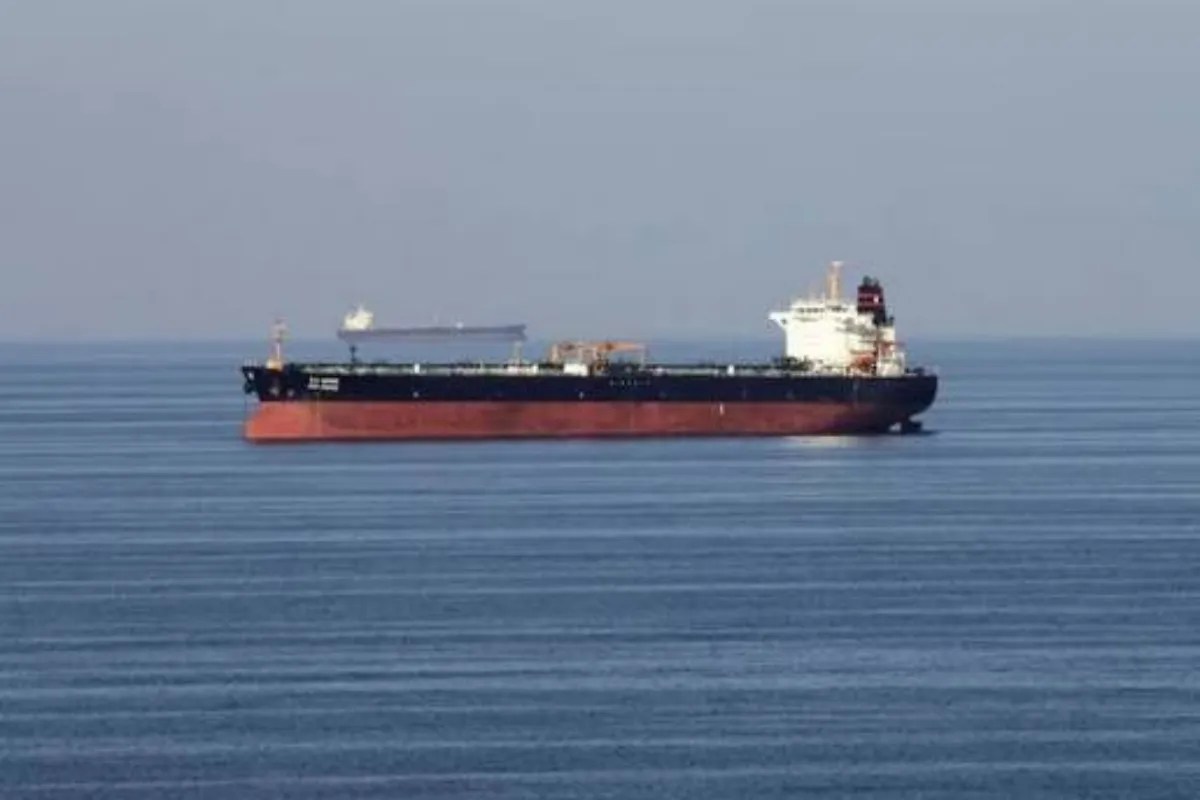
The ballistic missiles that slammed into the Red Sea port of Mocha did not just destroy fishing boats and kill four civilians. They effectively punched clean through the fragile 2022 United Nations-brokered truce, exposing a fractured nation hurtling back toward total war. When Yemen's internationally recognized government announced that six missiles had struck civilian infrastructure and economic installations, it marked a bloody milestone in a rapidly deteriorating security architecture. The localized violence is no longer local. It is the direct shockwave of a wider regional conflagration involving the Iran-aligned Houthi movement, Saudi-backed coalitions, and the broader fallout of the ongoing conflict involving the United States, Israel, and Iran.
For years, international observers clung to the 2022 ceasefire as proof that Yemen's protracted civil war could transition from active battlefield slaughter to protracted diplomatic stalemate. That illusion is now dissolving under the weight of regional realignment. The Houthis have increasingly positioned themselves at the vanguard of the anti-Western and anti-Israeli axis, utilizing their strategic geography along the Bab al-Mandab Strait to project power far beyond Yemen's borders. Yet, this macro-level posturing carries a catastrophic human toll paid almost exclusively by ordinary Yemenis trapped in coastal enclaves like Mocha.
The Anatomy of an Escalation
The strike on Mocha was neither an isolated accident nor a sudden tactical aberration. It followed a steady drumbeat of maritime blockades, drone launches targeting infrastructure in neighboring Saudi Arabia, and retaliatory air strikes by coalition forces. Military analysts tracking the telemetry of the Houthi arsenal note a troubling evolution in both the volume and precision of projectiles being deployed against government-held positions.
The Houthis claimed their target was a military buildup of Saudi-backed forces and allied combatants. Conversely, the Yemeni government and local medical reports confirmed that the ordinance devastated civilian neighborhoods, killed a port security guard, wounded nearly a dozen others, and left multiple sailors missing. This stark divergence in narratives highlights the information warfare accompanying every kinetic exchange on the ground.
Behind the propaganda lies a grim reality. The port city of Mocha serves as a vital economic lifeline for southwestern Yemen. Disrupting its operations chokes off the flow of commercial goods, humanitarian aid, and basic fuel supplies into territories controlled by the internationally recognized administration. By targeting these choke points, the Houthi leadership aims to systematically dismantle the economic viability of rival governance zones while consolidating their own administrative grip over the northern highlands.
The Regional Gravity Well
To understand why Mocha is burning again, one must look toward Tehran, Washington, and Tel Aviv. The Houthi movement has successfully leveraged its geographic position to transform the Red Sea into a global economic theater of war. Their ongoing campaign against commercial shipping and regional adversaries has elevated their status within the so-called Axis of Resistance.
However, this elevation comes with severe domestic liabilities. As the Houthis divert national resources and attention toward external missile and drone campaigns—such as reported drone sorties directed at Saudi Aramco facilities in Najran and Jazan—internal dissent within non-Houthi territories hardens. The civilian population bears the brunt of the counter-strikes. When coalition warplanes respond to Houthi provocations by bombing facilities in places like Hodeidah, the cycle of structural devastation tightens around millions of non-combatants who have endured over a decade of systemic deprivation.
The diplomatic machinery designed to prevent this exact scenario has stalled completely. Peace talks mediated by regional brokers are routinely derailed by fresh military escalations on the western coast. Every time a ballistic missile hits a dockyard or a residential street in Mocha, trust evaporates, making any future political settlement exponentially harder to forge.
The Cost of Indifference
The international community watches Yemen through an intermittent lens, tuning in only when maritime trade through the Suez Canal is threatened or when dramatic strikes make global headlines. This selective attention ignores the slow-motion collapse of basic human security inside the country.
The four dead civilians in Mocha will likely become statistical footnotes in a war report dominated by geopolitical maneuvering. Their deaths represent something far more dangerous than local collateral damage. They are the visible cracks in a dam holding back an all-out renewal of total war. If the international community fails to address the underlying drivers of this renewed hostility, the port of Mocha will not be an exception. It will be the opening chapter of Yemen's next catastrophic phase.
Houthi attack on port kills four eroding truce with Yemen's government
This video provides visual context on the recent military escalation and the strategic significance of the port targeted in the strike.
http://googleusercontent.com/youtube_content/1