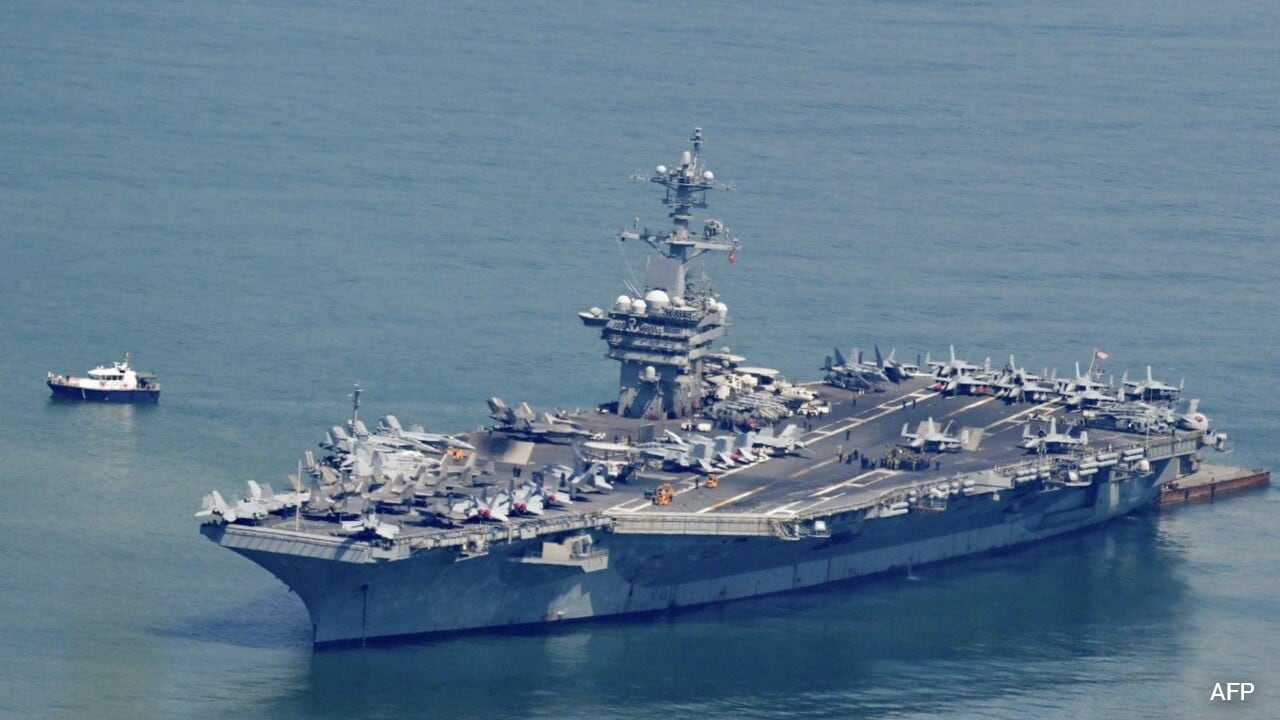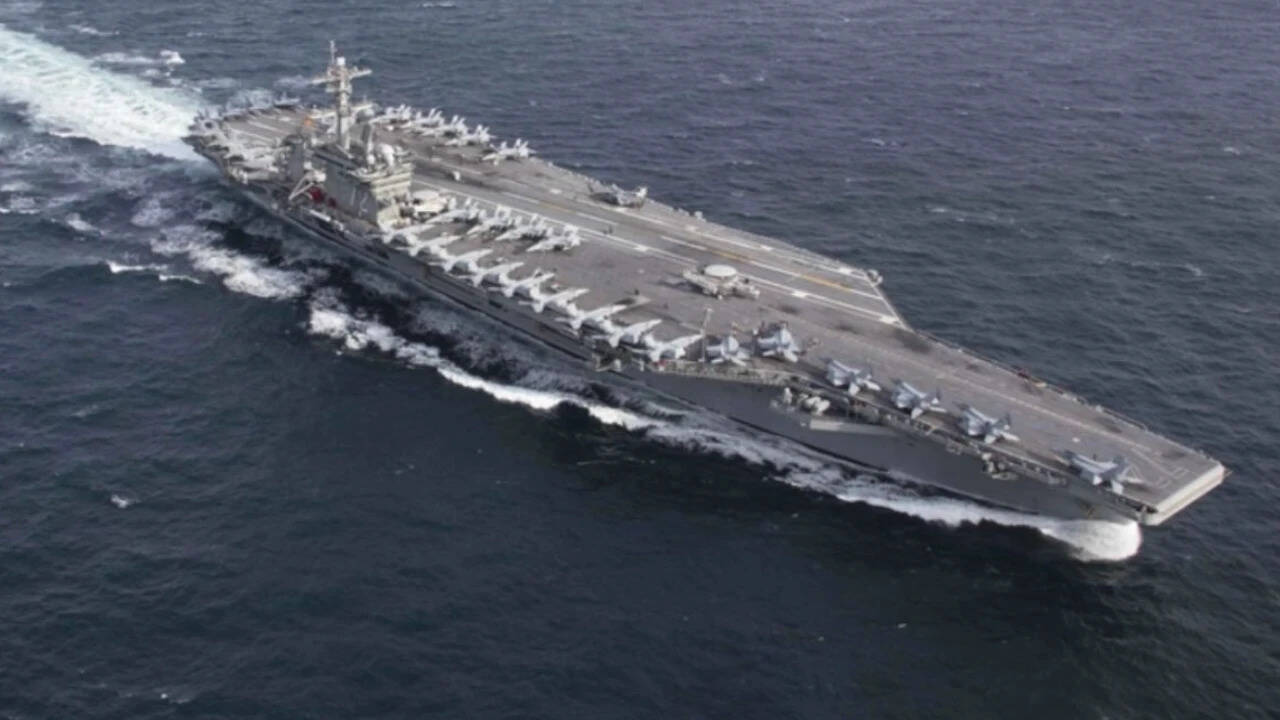
The United States Navy is caught in a structural trap of its own making. When the USS George Washington slips away from the western Pacific to relieve the battle-weary USS Abraham Lincoln in the Middle East, the Pacific theater will temporarily stand without a single American supercarrier.
This movement is more than a routine logistical shuffle. It exposes the brittle reality of a maritime force stretched far beyond its mathematical limits. Decades of expanding commitments have collided with a finite fleet, leaving Washington to rob Peter in Asia to pay Paul in the Persian Gulf. If you found value in this post, you might want to read: this related article.
President Donald Trump’s widening military campaign against Iran has forced hard choices. For months, the Lincoln and its strike group have sustained an open-ended posture supporting regional operations. That endurance has a price. Sailors have crossed the threshold of two hundred and sixty days at sea, enduring severe stress, water quality challenges, and disrupted supply chains.
By pulling the George Washington out of the Pacific to prevent a total crew breakdown on the Lincoln, the Pentagon has created a vacuum in the exact theater it calls its highest long-term priority. For another look on this event, refer to the recent update from Reuters.
The Arithmetic of Overstretch
To understand why a single carrier movement sends shockwaves through foreign ministries, look at the underlying math. The Navy maintains a fleet of nuclear-powered aircraft carriers, but total inventory never equals operational availability.
At any given moment, roughly a third of the force sits in maintenance yards undergoing mid-life refueling or heavy overhauls. Another third trains up in coastal waters or prepares for deployment cycles. That leaves only a fraction ready to sail into contested zones.
When a commander-in-chief demands sustained combat operations in the Middle East, those ships must come from somewhere. The Pacific fleet bears the brunt because it is home to forward-deployed assets like the George Washington, stationed in Japan. Pulling those ships into European or Middle Eastern waters breaks the continuous presence model that has anchored American deterrence in Asia since the Cold War.
Reassuring Allies While Yielding Initiative
Regional partners notice the gaps. Tokyo, Manila, and Canberra watch closely as the visible symbol of American security power steams west toward the Arabian Sea.
While defense officials in Washington insist that specialized units and rotational exercises make up for the absence, allies harbor quiet anxieties. Credibility in maritime deterrence rests on concrete hulls in the water, not promises of rapid reinforcement from across an ocean.
Beijing recognizes the opening. Chinese military planners do not need a vacant ocean to launch an invasion of Taiwan to reap immediate strategic value. The simple absence of an American carrier provides Beijing with operational maneuvering room. Recent months have seen a noticeable uptick in Chinese naval drills, live-fire exercises near contested waters, and cooperative patrols designed to signal regional dominance.
When the US Navy vacates the board, competitors fill the space. They test boundaries, pressure smaller claimant states, and normalize their own presence as the primary arbiter of local stability.
The Human Cost Below Deck
The operational strain goes beyond geopolitics. It reaches deep into the mess decks and engineering spaces where sailors bear the brunt of political fixations.
Deployments stretching past eight or nine months shatter morale. Congressional inquiries and correspondence from worried lawmakers have highlighted recurring issues with basic provisions, broken sanitation systems, and mail delivery breakdowns that leave crews isolated from their families for months.
When ships stay deployed indefinitely to project strength against Iran, equipment degrades faster than maintenance teams can fix it. Pumps fail, electronic warfare systems run hot without proper depot-level overhauls, and the psychological pressure on nineteen-year-old technicians mounts.
A navy is built of steel and microchips, but it runs entirely on human endurance. Pushing crews past their breaking point yields short-term political objectives while hollowing out retention and readiness for the future.
Structural Realities Awaiting Washington
The debate over carrier deployments exposes a deeper institutional paralysis. Administrations of both parties routinely declare the Indo-Pacific the decisive theater of the twenty-first century. Yet every time a crisis flares in Europe or the Middle East, the resources flow away from Asia.
Until the United States decides to either scale back its global commitments or significantly expand its shipbuilding capacity, these zero-sum trade-offs will repeat. Every carrier shifted toward a regional conflict leaves an ally wondering about American reliability and gives a rival a clear path to rewrite the rules of the sea.