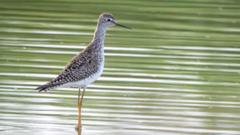
The birding world is hyperventilating over a single American vagrant landing on the shores of Jersey. Local media outlets are treating it like a miraculous ecological milestone. Binocular-wielding crowds are choking coastal paths, celebrating a "historic first" and treating a disoriented, exhausted animal like a celebrity guest star.
They are completely missing the point.
Chasing rare vagrants isn't conservation. It is ecological voyeurism. The sudden appearance of an American bird in the Channel Islands isn't a sign of a thriving ecosystem or a triumph of nature. It is a glaring, flashing red indicator of atmospheric chaos and severe environmental disorientation. By treating these freak occurrences as celebratory spectacles, the mainstream media and casual birdwatchers are distracting the public from the brutal reality of local biodiversity collapse.
We need to stop cheering for lost birds.
The Myth of the "Historic First"
Mainstream reporting frames the arrival of an exotic species as an exciting expansion of local biodiversity. "Look what we found in Jersey!" the headlines scream.
Let's look at the mechanics of vagrancy. A land bird native to North America does not intentionally decide to cross the Atlantic to sample the coastal hospitality of Jersey. It gets caught in severe, high-altitude weather systems—frequently exacerbated by shifting jet streams and intensifying Atlantic storms.
These birds are displaced. They are exhausted, calorie-depleted, and biologically doomed. The biological term for these individuals is "sinks." They have fallen off the edge of their functional map. They will not find mates. They will not establish a breeding population. They will likely die of exhaustion, predation, or lack of appropriate forage within days of their arrival.
Celebrating a vagrant bird is like cheering for a cruise ship passenger who got blown overboard in a hurricane just because they washed up on an interesting beach. It is a tragedy masquerading as a lottery win.
Twitching Culture Is a Net Negative for the Environment
I have watched the birding community spend decades shifting from quiet, localized stewardship to high-speed, carbon-heavy pursuit. The moment an alert hits the rare-bird apps, hundreds of people jump into cars, catch ferries, and book last-minute flights to catch a glimpse of a single, miserable creature.
The irony is staggering. The carbon footprint generated by hundreds of twitchers descending on a fragile coastal habitat to view a victim of climate disruption directly accelerates the underlying crisis.
- Habitat Trampling: Sensitive dune systems and coastal flora are crushed under the boots of eager photographers trying to get a frame-filling shot.
- Wildlife Stress: The target bird, already running on its absolute last reserves of metabolic energy, is constantly flushed, pursued, and stressed by crowds.
- Resource Misdirection: Millions of dollars, pounds, and euros are spent annually on travel, high-end optics, and logistics to chase individual lost birds. Virtually none of that capital finds its way into protecting the mundane, rapidly disappearing local species that actually keep the ecosystem functioning.
We are ignoring the burning house to look at a pretty spark that flew out of the chimney.
The Species That Actually Matter Are Dying in Silence
While the crowds stare through £3,000 spotting scopes at a single American tourist, Jersey’s resident bird populations are quietly sliding toward extinction.
| Species | Local Status | Trend | The Real Problem |
|---|---|---|---|
| Cirl Bunting | Critically Low | Struggling | Loss of traditional agricultural mosaic habitats. |
| Puffin | Vulnerable | Declining | Rising sea temperatures decimating sandeel populations. |
| Chough | Recovering | Fragile | Dependent on highly specific, intensive coastal grazing management. |
Every headline dedicated to a one-off vagrant is space stolen from the collapse of our farmland birds, the devastation of marine ecosystems, and the loss of insect biomass. The general public reads these upbeat stories about "rare visitors" and sub-consciously believes that nature is doing just fine, delivering exciting surprises to our doorsteps.
It is a pacifier for an ecologically illiterate audience.
Dismantling the Premise of the Casual Birder
Go to any online forum discussing the Jersey sighting and you will see variations of the same flawed questions. It is time to address them with a dose of harsh reality.
"Doesn't this sighting prove that our islands can act as a crucial refuge for global wildlife?"
Absolutely not. A refuge implies a functional habitat capable of sustaining a species. A vagrant bird finding a patch of gorse after a 3,000-mile accidental flight is a statistical anomaly, not a sanctuary. If that same bird landed five miles out at sea, it would have drowned unnoticed. Survival for twenty-four hours on a Jersey cliffside doesn't validate local conservation efforts.
"Why can't people just enjoy a rare moment of joy in nature without turning it into a political lecture?"
Because nature is currently experiencing its sixth mass extinction event, and treating it like a theme park is how we got here. Turning a blind eye to the structural causes of animal displacement so you can log a tick on a life list isn't connecting with nature. It's collecting nature. It is consumerism disguised as outdoor appreciation.
Shift Your Capital and Your Attention immediately
If you actually care about birds, stop feeding the rare-bird industrial complex. Stop chasing the anomalies.
Turn your attention to the boring, ordinary, declining species in your own backyard. Spend your weekend restoring a degraded hedgerow, lobbying against coastal development, or funding localized habitat management that supports breeding populations rather than accidental tourists.
The American bird in Jersey isn't a miracle. It's an indictment. Pack away the cameras, leave the poor animal alone, and start fixing the broken ecosystems right in front of your face.