The rain in Beijing doesn’t wash the city clean; it just makes the marble slick.
If you stand outside the Great Hall of the People on a grey afternoon, the scale of the architecture hits you first. It is designed to make individuals feel small. The pillars stretch upward, cold and unyielding, a physical manifestation of a state that thinks in centuries rather than election cycles. Inside these walls, the air smells faintly of loose-leaf tea and heavy carpets. It is quiet. Yet, the decisions made in this silence ripple outward, changing the price of bread in Cairo, the availability of microchips in Munich, and the strategic calculus in Washington.
For decades, the West viewed China as a giant factory. It was a place that assembled our iPhones and stitched our sneakers, a convenient economic engine that would eventually, surely, soften into Western-style liberalism as it grew richer.
We got it completely backward.
Beijing did not adapt to the global order. It forced the global order to adapt to Beijing. Today, the city is no longer just a manufacturing hub; it is the heavy center of gravity around which the rest of the world is forced to orbit. And nowhere is that pull felt more acutely right now than in Moscow.
The Courtship of the Isolated
Consider a hypothetical man named Mikhail. He is fifty-two, lives in a modest apartment on the outskirts of Novosibirsk, and works at a logistics firm that used to move European industrial equipment across the continent. Two years ago, his world shrank. The German contracts vanished. The Italian replacement parts stopped arriving. Mikhail’s company didn't fold, though. Instead, they bought a fleet of trucks from a brand he had never heard of before, manufactured in Changchun, and began hauling goods eastward rather than westward.
Mikhail doesn't read geopolitical white papers. He doesn't need to. He sees the shift every time he looks at his dashboard. His reality is the human face of a massive, systemic pivot.
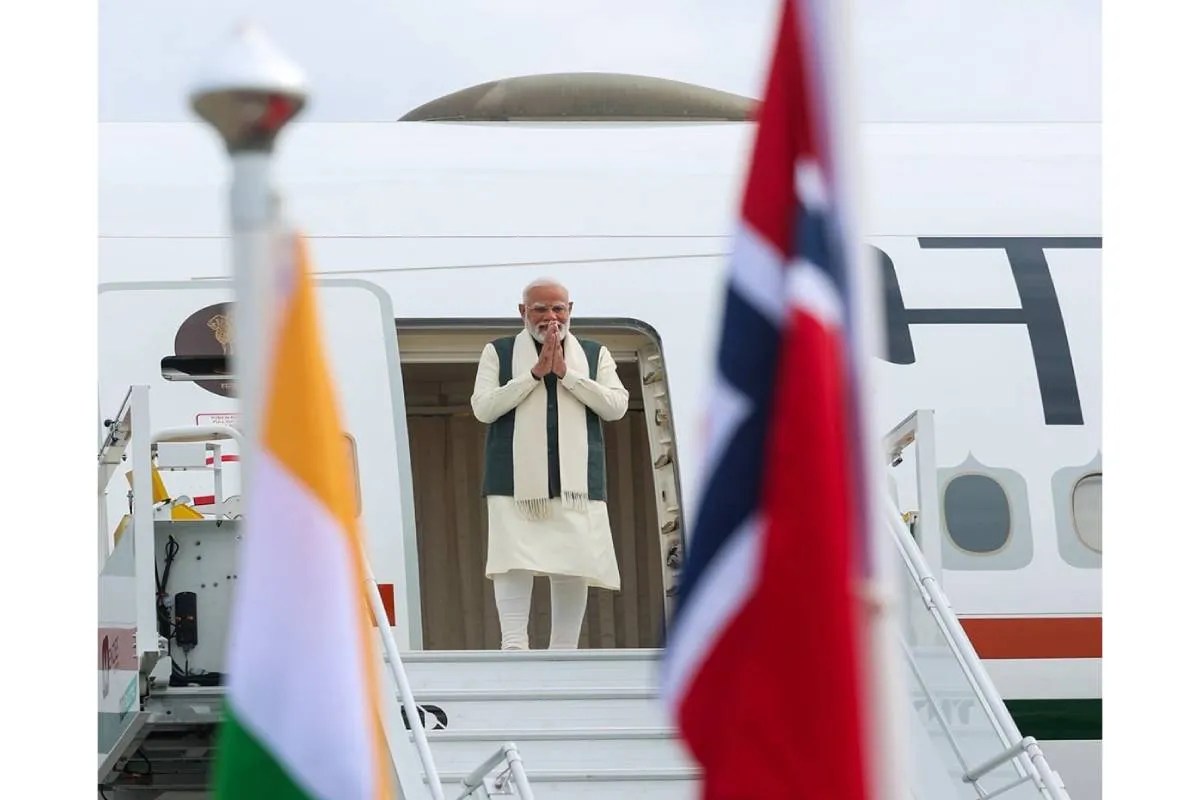
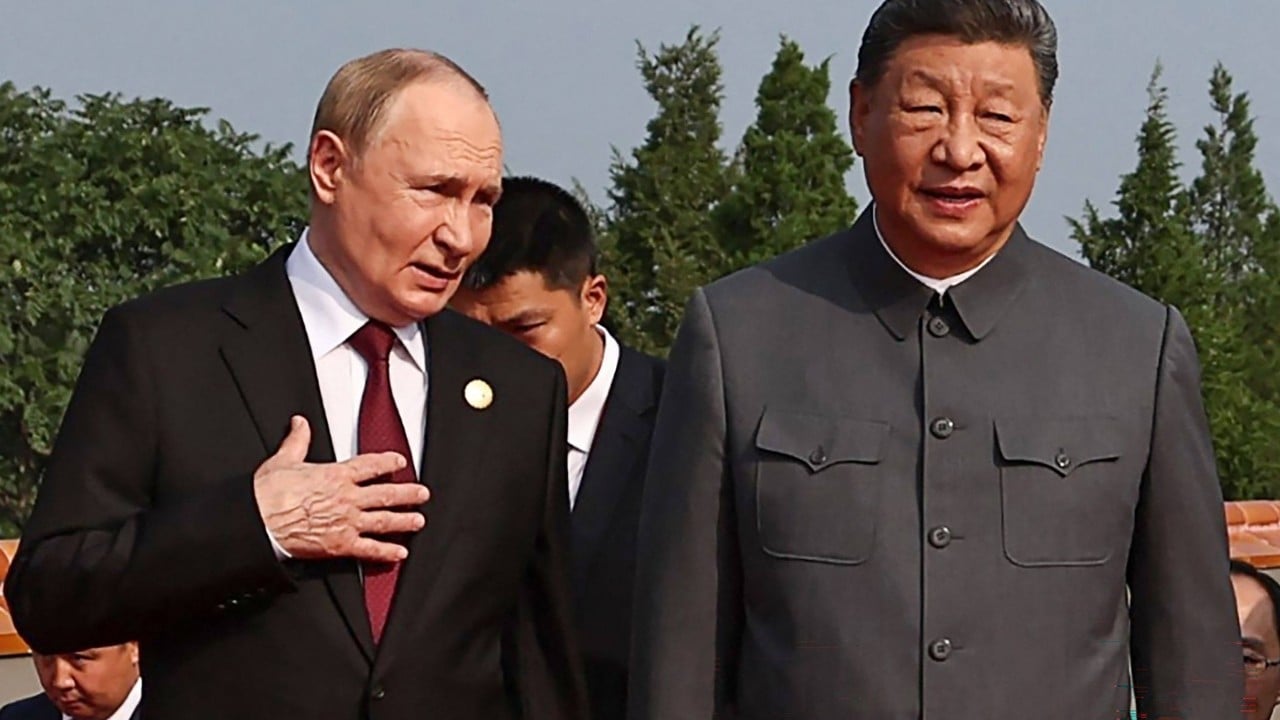
When Vladimir Putin stepped off his plane in Beijing for the latest summit, the cameras captured the usual pageantry. The crisp uniforms. The synchronized handshakes. The forced, diplomatic smiles. But beneath the protocol lay an undeniable undercurrent of necessity. Russia, severed from the Western financial system and bogged down in a grueling war of attrition, did not come to Beijing as an equal partner. It came as a suitor.
The Kremlin’s hopes are pinned tightly to this relationship. It is a survival strategy masquerading as a grand alliance. Russia needs a buyer for its oil, a supplier for its dual-use technology, and a diplomatic shield in the United Nations Security Council. China provides all three, but it does not do so out of charity.
Beijing’s calculus is cold. It is calculated. It is precise.
The Illusion of the Junior Partner
There is a temptation to view this relationship through the lens of the Cold War, a nostalgic longing for a time when the world was split neatly into two opposing camps. That is a dangerous misreading of history. During the mid-twentieth century, Moscow was the ideological senior partner, dictating terms to a younger, poorer Chinese communist state.
The tables have not just turned; the entire room has been remodeled.
China’s economy is roughly ten times the size of Russia’s. While Russia relies heavily on extracting resources from the earth—oil, gas, minerals—China has built a diversified technological powerhouse. It leads the world in electric vehicles, high-speed rail, and solar infrastructure. When Xi Jinping looks across the table at Putin, he does not see a comrade-in-arms leading a global revolution. He sees a buffer against Western encirclement, a source of cheap energy, and a useful distraction for the North Atlantic Treaty Organization.
This creates a profound psychological tension. Russia, a nation with an intense pride and a historical memory of empire, must now accept the role of the junior partner. It must smile through the humiliation of selling its natural resources at a steep discount to Chinese buyers. It must watch as Chinese brands replace European ones in the showrooms of Moscow, knowing that it has no domestic alternatives.
The dependence is asymmetrical. If China cuts off Russia, the Russian economy faces immediate, catastrophic collapse. If Russia cuts off China, Beijing experiences an energy hiccup and searches for alternative suppliers in the Middle East or Africa.
Power is the ability to walk away from the table. Only one man at that summit holds that card.
The View from the Global South
To truly understand why Beijing has become the focal point of modern geopolitics, you have to look beyond the Beijing-Moscow axis. You have to look at the places where the West’s rhetoric about a rules-based international order sounds hollow.
Imagine a government minister in Nairobi or a port authority official in Colombo. For years, they were lectured by Western institutions like the International Monetary Fund about fiscal austerity, democratic reforms, and structural adjustments as prerequisites for loans. Then came China’s Belt and Road Initiative. The Chinese banks arrived with checkbooks, bulldozers, and a simple proposition: we will build your highway, your port, or your telecommunications network, and we won’t ask questions about your internal politics.
It was an offer few could refuse.
This pragmatism has earned Beijing immense capital throughout the Global South. When the United States or Europe demands that African, Latin American, or Southeast Asian nations condemn Russia’s actions or join the regime of sanctions, the response is often a polite, firm refusal. Why should they alienate the power that built their infrastructure for the sake of a European conflict?
The West often misdiagnoses this as ideological alignment with authoritarianism. It isn't. It is survival. It is the recognition that the world’s economic center of gravity has shifted eastward, and ignoring that fact is a luxury that developing nations simply cannot afford.
The Friction of Interdependence
Yet, for all its apparent strength, China’s position is not without its own deep vulnerabilities. The image of an unstoppable, monolithic superpower is an illusion manufactured for public consumption. Behind the facade of confidence lies a profound anxiety.
China’s economic miracle was built on integration with the global market. It requires American consumers to buy its goods and European machinery to run its factories. By tying itself so closely to an aggressive, isolated Russia, Beijing is playing a high-stakes balancing act. It wants to keep Moscow afloat to prevent a pro-Western regime from taking root on its northern border, but it cannot afford to trigger secondary sanctions from the United States and Europe that would wreck its own economy.
The cracks are already showing. Small Chinese banks, terrified of being cut off from the SWIFT international payment system, have begun refusing payments from Russian importers. Shipments of critical components have slowed down, not because of a change in policy from the top, but because of bureaucratic self-preservation at the bottom.
The system is under immense strain. The tension is palpable in the financial districts of Shanghai and Shenzhen, where executives look at the geopolitical horizon with genuine dread. They know that a single miscalculation—a shipment of lethal aid that crosses a Western red line, a sudden escalation in the Taiwan Strait—could trigger a decoupling that would make the 2008 financial crisis look like a minor market correction.
We live in an era of profound entanglement. The idea that we can neatly separate the global economy into friendly and unfriendly camps is a fantasy. We are stuck together in a fragile, interconnected web, where a tremor in one corner threatens to bring down the entire structure.
The Silent Architect
Walk away from the government buildings and head into the residential neighborhoods of Beijing, away from the tourists and the security cameras. You will find small noodle shops where the steam rises from giant pots, filling the air with the scent of star anise and roasted pork.
The people here are not discussing the details of the joint communique issued by Xi and Putin. They are talking about the price of pork, the difficulty their university-graduate children face in finding a job, and the mortgage payments on apartments that have lost value for the first time in a generation.
This domestic reality is the true anchor of Chinese foreign policy. The Communist Party’s legitimacy rests on a simple, unspoken bargain: it delivers economic growth and national pride, and in return, the population accepts its absolute rule. If the growth falters, the bargain fractures.
Every move Beijing makes on the international stage is designed to preserve that internal stability. The embrace of Russia is not a grand ideological crusade; it is an insurance policy. It secures cheap resources to fuel Chinese industry and keeps a volatile neighbor stable, ensuring that the leadership can focus on its most critical challenge: managing the slowdown of its massive economic engine.
The summit in Beijing was not a sign of a new, harmonious world order. It was a demonstration of a world in transition, a messy, dangerous period where old certainties are dissolving and new dependencies are being forged in real-time.
As night falls over the city, the red lights atop the government buildings glow through the smog, casting a long shadow across the square. The visitors will leave, the communiques will be filed away, but the gravity of this place remains, pulling the rest of the world closer, whether it wants to come or not.