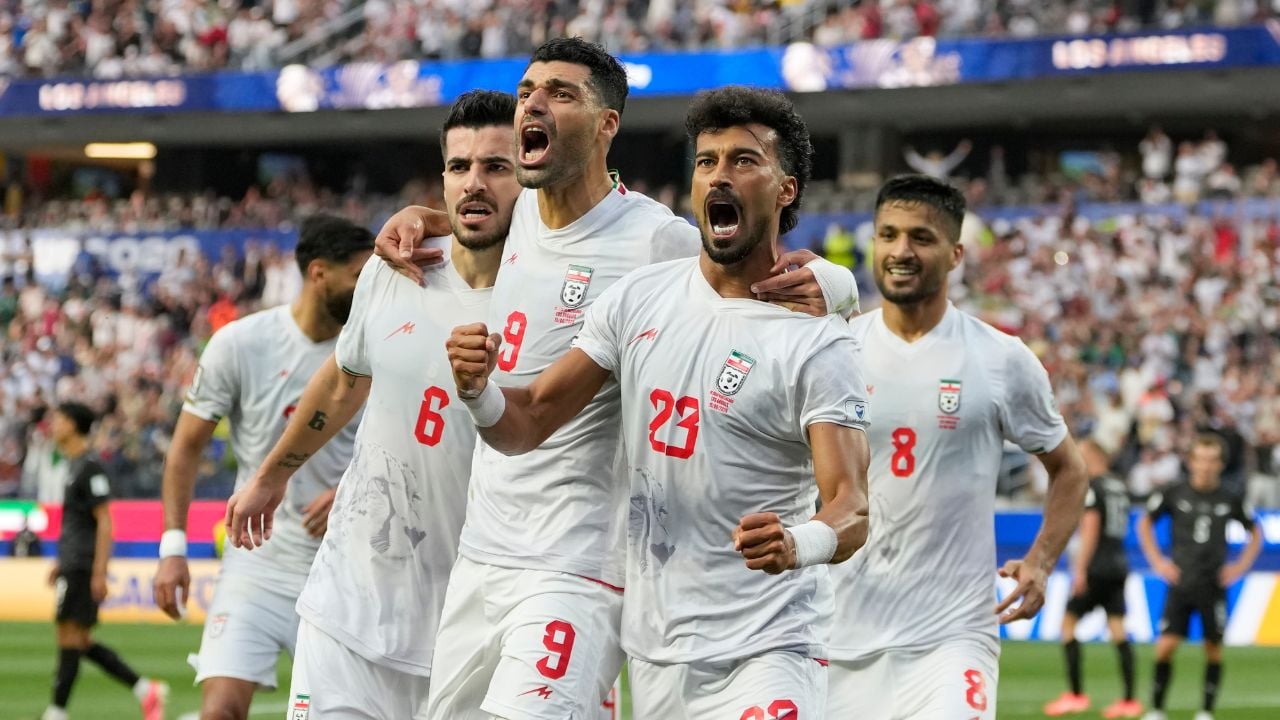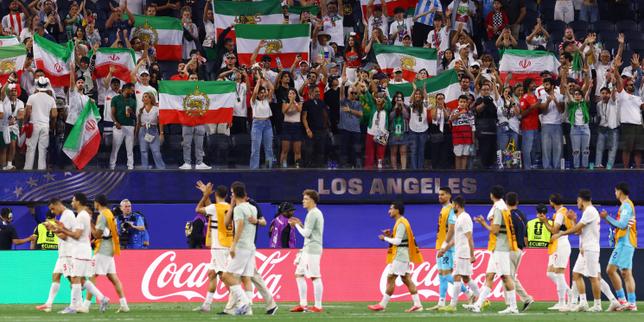
The football pitch is rarely just about sport, but for the Iranian diaspora, it has become a high-stakes geopolitical battleground. During major international tournaments, the stands of the stadium turn into a microcosm of a deeply fractured nation. While surface-level sports reporting often frames the scene in "Tehrangeles"—the massive Iranian community in Los Angeles—as a simple clash between national pride and political protest, the reality is far more complex. The World Cup does not merely reflect the fractures of the Iranian diaspora; it actively weaponizes them, forcing a community torn between cultural loyalty and political resistance into an impossible cultural paradox.
For decades, the Iranian national football team, known affectionately as Team Melli, served as a rare unifying force for millions of Iranians scattered across the globe since the 1979 revolution. Westwood Boulevard in Los Angeles would typically erupt into honking horns, flag-waving, and street celebrations regardless of who was in power in Tehran. That era of easy unity is dead.
Recent geopolitical shifts and domestic uprisings within Iran have fundamentally altered how the diaspora views the team. The pitch is no longer a neutral zone. Every jersey worn, every anthem sung or boycotted, and every banner raised in the stands is now scrutinized as a definitive political statement.
The Illusion of a Uniform Diaspora
Mainstream media outlets frequently paint the Iranian diaspora with a broad brush, portraying it as a monolithic bloc united in its opposition to the Islamic Republic. This narrative collapses under closer inspection. Westwood's political composition is highly stratified, divided by generational divides, economic migration waves, and varying degrees of political radicalism.
The older generation of exiles, many of whom fled immediately after the monarchy fell, often view any representation of the current Iranian state—including the athletic federation—as illegitimate. For this faction, supporting Team Melli under the current flag is tantamount to complicity with the regime. They see the players not as independent athletes, but as soft-power diplomats utilized by Tehran to project a false image of normalcy and international integration.
Conversely, a younger generation of Iranian-Americans and more recent arrivals view the situation through a more nuanced lens. They recognize that the players themselves face immense pressure, balancing their safety and that of their families back home against their desire to represent their people on the world stage. For these fans, cheering for the team is an act of reclaiming national identity from the state that hijacked it. They argue that the players belong to the people of Iran, not to the government.
How the Pitch Became a Propaganda Front
To understand why a football match causes such intense friction in southern California living rooms, one must look at how the Iranian government utilizes international sports. The regime has long recognized the immense public relations value of Team Melli. A victory on the pitch is routinely co-opted by state media to signal domestic stability and national triumph over foreign adversaries.
During recent tournaments, the tension reached a boiling point. Activists inside the stadiums used the global broadcast footprint to smuggle in political messages, holding up signs with the slogan "Woman, Life, Freedom" and wearing shirts bearing the names of executed protesters.
This created an unprecedented tactical dilemma for the players on the field. Refusing to sing the national anthem drew immense praise from the diaspora, but it also invited immediate, severe threats of retaliation from state officials. When the players later chose to sing, or when they met with state officials before departing for tournaments, parts of the diaspora felt betrayed.
This impossible tightrope walk showcases the brutal leverage the state holds over its athletes, turning them into unwilling proxies in a proxy war for public opinion.
The Mechanics of Surveillance in the Stands
The conflict is not confined to the pitch or to the streets of Los Angeles. It extends directly into the stadium seats abroad, where the diaspora frequently collides with state-sponsored elements.
Reports have consistently surfaced of regime operatives being flown into international tournaments to occupy blocks of tickets, wave state-approved flags, and monitor the behavior of ordinary fans. Iranian activists have documented individuals filming the crowds, explicitly targeting those wearing protest gear or chanting anti-regime slogans.
For a diaspora member traveling from California or Europe to attend a match, the stadium ceases to be a place of leisure. It becomes an active surveillance zone where a single photographed gesture can mean arrest, interrogation, or harassment for relatives still living inside Iran. The fear is palpable, and it drastically changes the energy of what should be a celebratory sporting event.
The Consumer Capital of Exile Politics
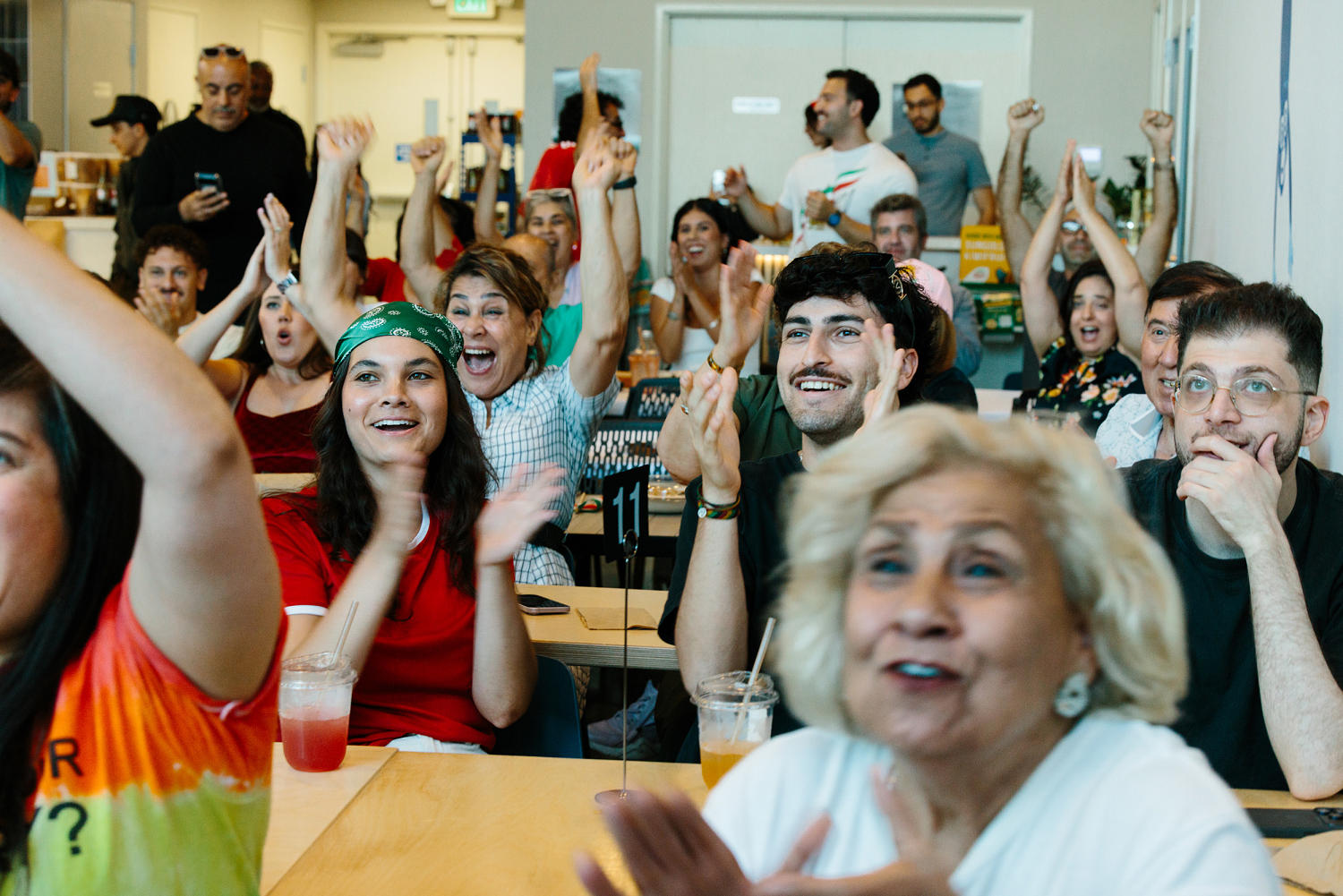
In the safety of Tehrangeles, this geopolitical tension manifests as a fierce cultural commercialization. Sports bars, restaurants, and community centers along the West Coast must carefully navigate the optics of screening matches.
Choosing to show a Team Melli game can invite protests or boycotts from hardline exile groups who demand a total cultural blackout of anything associated with the current Iranian state. Conversely, refusing to show the games alienates a massive segment of the community that seeks a space to gather, grieve, and cheer together.
Some business owners have resorted to creating heavily curated environments. They play pre-revolutionary national anthems over the loudspeakers before kickoff and ban the official flag of the Islamic Republic, allowing only the historical lion and sun flag inside their establishments. It is a commercial compromise that attempts to sanitize the sporting event of its current political reality, creating a simulated version of an Iran that no longer exists on the map.
The Fractured Legacy of Team Melli
The long-term consequence of this hyper-politicization is the erosion of one of the few remaining cultural touchstones that bridged the gap between Iranians inside the country and the millions living abroad. When sport is stripped of its ability to offer even temporary escapism, the isolation of the diaspora deepens.
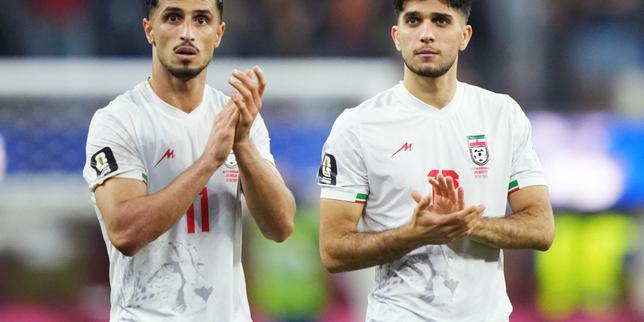
The intense scrutiny placed on the players by the diaspora highlights a profound sense of powerlessness. Unable to directly affect political change from thousands of miles away, exile communities channel their immense frustration, grief, and anger onto eleven men chasing a ball. It is an unfair burden to place on athletes, yet in the absence of other viable targets, the football pitch becomes the default arena for a nation's unresolved trauma.
The divisions witnessed during recent international campaigns are not temporary anomalies that will fade by the next tournament cycle. They represent a permanent shift in the psychology of the Iranian diaspora. The illusion of a unified community watching a game has been shattered, replaced by the stark realization that for Iranians, even joy is a contested territory.
As international football governing bodies continue to insist that sports and politics must remain separate, the reality in the stands and on the streets of Tehrangeles proves that for nations living under the shadow of authoritarianism, such a separation is completely impossible.