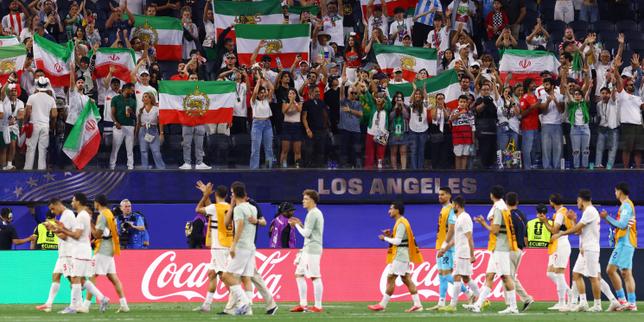
The 2026 World Cup was promised to be a triumph of modern organization, a sprawling spectacle across three North American nations. Instead, Team Iran’s squad became the first to publicly shatter that illusion, with their manager detailing systemic failures in transport, training facilities, and basic accommodation. While soccer federations expected minor friction given the unprecedented geography of this tournament, the reality facing Team Iran points to a deeper crisis. This is not a simple case of a coach venting frustration after a difficult match. It is a symptom of an over-expanded tournament structure where secondary teams are bearing the brunt of logistical incompetence.
Elite athletes require precise environments to maintain peak performance. When a national team faces delayed internal flights, substandard pitches, and erratic scheduling, performance drops. For Iran, these issues have escalated beyond minor annoyances into a coordinated disadvantage that threatens their competitive integrity on the global stage.
The Friction of a Three Nation Tournament
Executing a tournament across Canada, Mexico, and the United States was always going to stretch resources. However, the gap between the treatment of top-tier commercial draws and smaller footballing nations has widened significantly. Team Iran's management has highlighted a pattern of delayed transitions and inadequate training pitches that directly impede recovery cycles.
Soccer at this level is dictated by razor-thin margins. A four-hour delay on a tarmac or a training pitch with uneven turf can ruin days of physical preparation.
While heavyweights like France or the United States enjoy seamless private corridors and premium hubs, squads from the Global South are navigating a different reality. They face commercial terminal bottlenecks and second-tier training complexes. This division undermines FIFA’s narrative of a unified, equitable tournament. The logistical blueprint relied heavily on existing infrastructure, but it failed to account for the sheer strain of moving forty-eight teams simultaneously across vast distances.
The Anatomy of Training Site Failures
The complaints regarding training facilities are not mere elite entitlement. They are rooted in sports science. A top-tier pitch requires specific grass density, moisture control, and soil elasticity to prevent soft-tissue injuries. Team Iran was reportedly assigned facilities that resembled community parks rather than international training grounds.
- Surface Consistency: Uneven turf drastically increases the risk of metatarsal fractures and ankle sprains.
- Security Gaps: Open access fields have allowed unauthorized filming of tactical sessions, compromising sporting strategy.
- Commute Times: Selected hotels are located too far from training grounds, forcing athletes to spend hours on buses rather than recovering.
When a team spends ninety minutes in traffic just to reach a pitch without proper drainage, the preparation framework collapses. The manager's public outcry is a calculated gamble to force FIFA to reallocate premium training zones, but options are running out as the tournament progresses.
Geopolitical Friction Meets Sporting Logistics
It is impossible to separate Team Iran’s sporting challenges from the geopolitical environment. Sanctions and diplomatic strains affect everything from banking to travel visas, creating a bureaucratic friction that other nations simply do not experience.
"Logistics in sports are never neutral. When a federation faces banking restrictions, booking charter flights or securing top-tier accommodation becomes an administrative minefield."
This friction manifests in practical roadblocks. While European federations deploy advanced scouting teams months in advance to lock down elite private facilities, Iran's federation operates under financial constraints that limit their leverage. They are forced to rely entirely on the baseline allocations provided by the host cities. When those baseline allocations fall short, there is no financial safety net to buy their way out of the problem.
The Hidden Cost of an Expanded Field
The root cause of this logistical breakdown lies in the expansion to forty-eight teams. By increasing the tournament's size, FIFA created a massive demand for high-quality, secure facilities that simply do not exist in abundance near every host venue.
Major metropolitan areas can support two or three elite squads simultaneously. They cannot support six or seven without a steep drop-off in quality for the lower-seeded teams. The premier training hubs, luxury hotels, and efficient transit routes naturally go to the nations that generate the highest broadcast revenue and ticket demand. Teams like Iran are relegated to the periphery, surviving on whatever infrastructure remains.
This creates a self-fulfilling prophecy on the pitch. The teams that already face an uphill battle against world-class opponents are further handicapped by systemic fatigue and poor preparation environments. The sporting meritocracy is compromised before the whistle even blows.
Why Fixing the Current Infrastructure is Unlikely
Do not expect a sudden resolution to these logistical failures during the current cycle. The tournament is already in motion, and the infrastructure gridlock is locked in. FIFA cannot instantly create new hybrid-grass pitches or rewrite the commercial flight paths of North America.
Federations are left with few options. They must either adapt their training loads to accommodate the fatigue of travel or continue to use public pressure to shame organizers into minor adjustments. For Team Iran, the strategy is now about survival and damage control. The manager's public complaints are a warning shot to the organizers, a defensive measure to ensure that if the team underperforms, the blame is placed squarely on the shoulders of those who failed to provide a level playing field. The glitter of the World Cup cannot hide the cracks in its foundation when the teams themselves are pointing out where the concrete is crumbling.