The air inside the room smells of old iron and damp concrete. Marco knows every millimeter of the boundary. Four steps forward and his hand touches the aluminum window frame. Two steps to the left and his hip clips the corner of a mini-refrigerator that hums a low, relentless C-sharp into the midnight hours. He is twenty-seven years old. He holds a degree in visual communication, works fifty hours a week for a mid-tier design agency, and lives in a subdivided flat carved out of a crumbling residential building in Mong Kok.
To call it an apartment is an act of linguistic charity. It is a box. A metal cage partitioned by plywood and drywall, where the ghosts of neighboring conversations bleed through the walls with absolute clarity. Marco hears the couple in unit B arguing over grocery bills at eleven at night. He hears the television in unit C humming through dawn. You might also find this related coverage insightful: Why The True Crime Industry Completely Invents The Mastermind Serial Killer Myth.
Space in this city is not measured in meters. It is measured in oxygen.
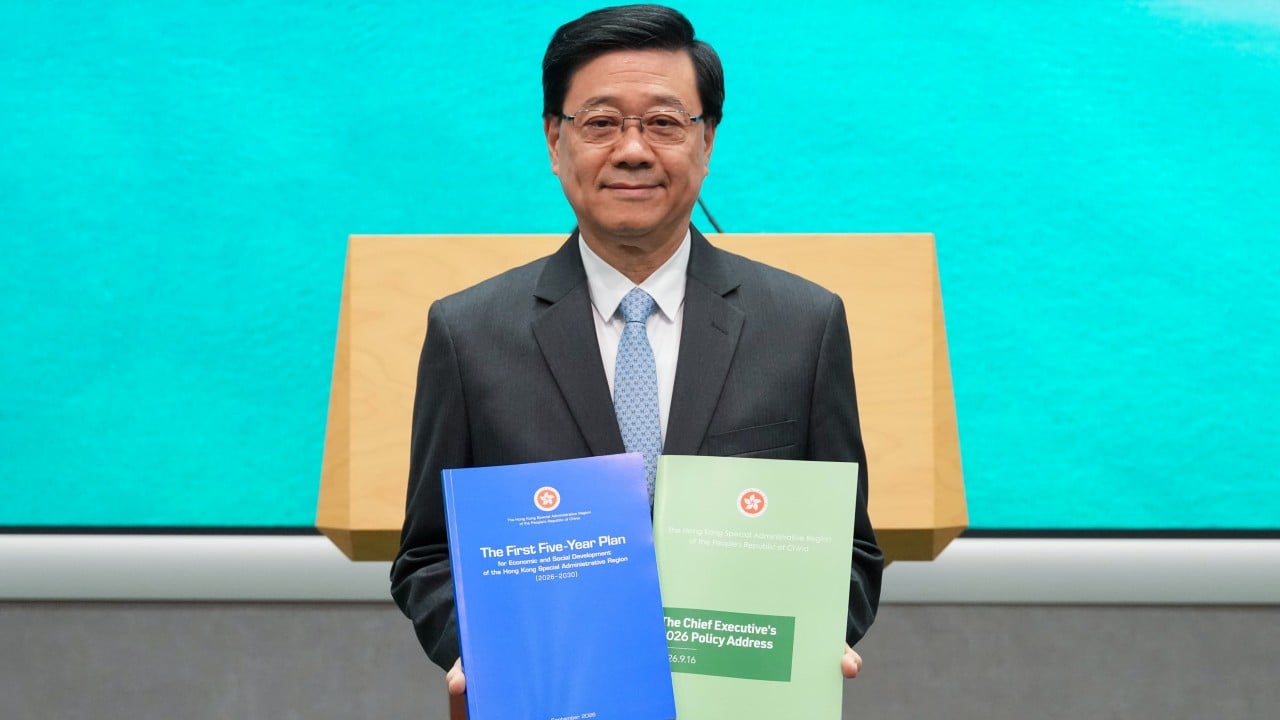
Every autumn, the Chief Executive of Hong Kong stands before the Legislative Council to deliver a policy address. For decades, these speeches were exercises in technocratic choreography. Pages of prose detailing gross domestic product targets, land supply task forces, and infrastructure timelines. Bureaucratic incantations meant to reassure global investors while ordinary citizens navigated an impossible housing market. But paper does not lower rents. Spreadsheets do not cool a fevered room in August. As extensively documented in detailed reports by The New York Times, the implications are significant.
Something shifted.
When the administration unveiled its latest policy directives focusing heavily on youth housing and community mediation, the cynical chorus began instantly. Critics muttered about optics. Skeptics pointed to implementation timelines stretching across distant horizons. Yet beneath the political theater lies an urgent, messy reality that demands a closer look. Because when a generation is priced out of physical existence, the architecture of society begins to fracture.
Consider what happens to a city when the cost of a roof exceeds the lifetime earnings of its youth.
Hong Kong is an anomaly of geography and ambition. Seven million people compressed into a jagged archipelago where steep granite peaks plunge directly into emerald water. Only a fraction of this land is developed. The rest is vertical wall or protected parkland. The result is a real estate market that operates with the merciless gravity of a black hole. Property prices here have historically ranked among the most unaffordable on the planet, turning the fundamental human need for shelter into an elite financial asset class.
For Marco and thousands like him, the traditional milestones of adulthood have become mythological artifacts. Marriage, independence, a living room with a couch that does not double as a bed—these are fairy tales told by parents who bought apartments in the nineteen-eighties for the price of a used sedan.
The government’s youth housing initiatives attempt a recalibration. By converting underutilized land, accelerating the construction of youth hostel blocks, and expanding subsidized leasing schemes, policy seeks to lower the barrier to entry. These are not grand palaces. They are modular, transitional spaces designed with shared communal kitchens and co-working areas. They are built on the radical premise that young adults need more than a concrete tomb; they need community, air, and horizon.
Numbers tell part of the story. Thousands of hostel places promised. Millions of square feet of temporary housing land identified. Subsidy caps adjusted.
People tell the rest.
Imagine a hypothetical resident named Chloe, moving from a windowless partitioned room into one of these newly designated youth units. The first night is quiet. There is no low-frequency hum of a neighbor's refrigerator. There is a window that opens wide enough to let in the salty, diesel-tinged breeze of Victoria Harbour. She sets her laptop on an actual wooden desk rather than her knees. For the first time in her adult life, her shoulders drop two inches.
That drop in the shoulders is the true metric of policy success. It is dignity, rendered in square footage.
Yet housing alone is only half of the equation. When people are packed tightly into urban canyons, friction is inevitable. Every city has its hidden fault lines. They do not run along tectonic plates. They run along property lines, family disputes, neighborhood noise complaints, and generational divides.
When Marco’s mother calls from her cramped public housing estate, the conversation usually ends in a quiet, simmering explosion. She worries about his future. He worries about her health. Neither has the emotional vocabulary to bridge the gap between her working-class sacrifice and his modern, precarious anxiety. Multiply this dynamic by a million households, and you get a society walking on broken glass.
This is where the second pillar of the policy address enters the room: mediation.
For years, disputes over property management, inheritance, neighborhood boundaries, and family caregiving clogged the judicial system. Courts are slow, expensive, and adversarial. They are designed to declare a winner and a loser, leaving behind scorched earth where relationships once stood.
Community mediation initiatives offer a different path. Trained neutrals sit down with disputing parties in quiet rooms, stripping away the legal posturing to find the human interest buried beneath the noise.
Think of an elderly brother and sister fighting over the care arrangements for their aging mother, their arguments weaponized through lawyers and formal letters. Bring them into a mediated room. Strip away the paper. Let them cry across a table. Often, the fight is not about money. It is about a hidden fear of abandonment, a decades-old grievance about who worked harder during the summer of nineteen-ninety-four.
Mediation does not magically erase hardship. But it gives people a language to resolve it without tearing their lives apart in a courtroom. By institutionalizing mediation across community centers and housing estates, the policy introduces a social shock absorber. It recognizes that governance is not just about building concrete walls; it is about repairing human ones.
Critics remain loud. They ask why these measures took so long. They demand to know whether the supply targets are realistic in the face of bureaucratic inertia and construction bottlenecks. These are fair questions. Skepticism is the citizen's armor in a city of high-stakes capitalism.
The skeptics miss the psychological pivot.
For a long time, young people in Hong Kong felt invisible. They felt like economic fuel burned to keep the engine of international finance running, receiving in return only exorbitant rents and closed doors. When an administration explicitly targets youth housing and community conflict resolution, it sends a signal that transcends administration budgets. It says: we see the pressure cooker. We know the seams are splitting.
Quiet.
Listen to the city.
At dawn, the trams begin their metallic screech along Des Voeux Road. Bakers roll steel shutters upward. Students board the MTR with headphones pulled tight over their ears, staring into glowing screens that offer temporary escape from the physical gravity of their surroundings.
Marco wakes up in his Mong Kok box. He stretches his arms, careful not to hit the drywall partition. He makes instant coffee using a kettle perched precariously on a plastic crate. He looks out his small window at the laundry hanging from the bamboo poles of the building opposite.
He knows the road ahead is narrow. He knows a policy address will not instantly transform him into a homeowner or erase the structural inequalities of a global metropolis.
Yet something has changed in the air.
He checks his phone. A notification from a youth housing portal. His application status has moved from pending to active.
He takes a breath.
The window is shut against the morning humidity, but for the first time in five years, the room feels just a fraction larger.