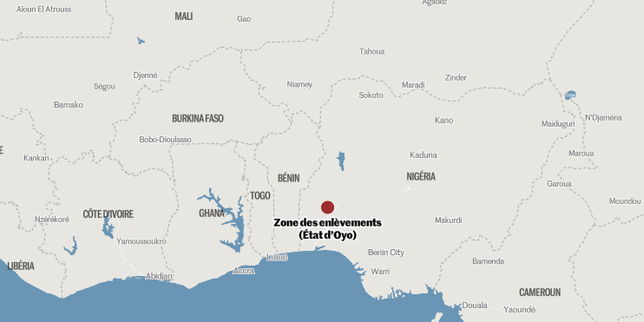
Gunmen recently stormed schools in southern Nigeria to seize 46 people, the majority of them children. This mass abduction marks a terrifying expansion of a kidnapping industry that was once largely confined to the country’s northern corridors. For years, the international community focused on the Sahel and the northern savannahs, assuming the southern states possessed a layer of insulation due to different economic structures and security presence. That insulation has dissolved. The attackers operated with a level of coordination that suggests a total collapse of local intelligence networks and a brazen disregard for the state’s ability to retaliate.
The mechanics of these raids follow a grim, predictable pattern. Attackers arrive in force, often on motorcycles or on foot through dense forest cover, and overwhelm the skeletal security details assigned to educational institutions. They don't just take bodies; they take leverage. By targeting children, these criminal syndicates ensure maximum emotional pressure on the government and immediate international headlines, both of which serve to drive up the eventual ransom price.
The Geographic Shift of the Kidnap Industry
While the world watched the horrors of Chibok and Dapchi in the north, the southern states were quietly brewing their own security crisis. The recent attack in the south is not an isolated flare-up of violence. It is the result of "banditry" migrating toward areas with higher perceived wealth and more accessible targets. This isn't just about ideology. It's a business model.
In the north, years of relentless conflict have depleted the "market." Communities are impoverished, and many schools have simply stayed shut. The southern regions, historically more stable and economically active, now represent a fresh frontier for these groups. The dense forests of the south provide perfect cover for holding camps, making aerial surveillance difficult and ground rescue missions a tactical nightmare. When 46 people disappear into the bush, they aren't just gone; they are hidden within a landscape that favors the insurgent over the infantry.
Why the Security Architecture Crumbled
Nigeria spends billions on defense, yet 46 citizens can be hauled away from a school without a shot being fired in effective defense. The failure is not one of manpower, but of mobility and intent. The Nigerian police and military are frequently tied down in stationary guard duties at government buildings or escorting VIPs, leaving the actual periphery—the schools and rural villages—completely exposed.
There is also the "intelligence gap." In many of these southern communities, there is a deep-seated distrust of federal security forces. When villagers see scouts or suspicious movements days before an attack, they often hesitate to report them. They fear that the information will leak back to the kidnappers, or that the security forces will arrive too late and only bring more trouble. This silence is the air that the kidnappers breathe. Without a functional relationship between the state and the local population, the "early warning systems" the government boasts about are nothing more than empty rhetoric.
The Ransom Economy
Money is the primary driver. While official government policy often dictates a "no ransom" stance, the reality on the ground is far more fluid. Families, desperate to see their children alive, pull together every kobo they have. Frequently, these private payments are facilitated by "middlemen" who take a cut of the transaction.
This creates a self-sustaining cycle. Every successful ransom payment funds the purchase of more motorcycles, more AK-47s, and more high-end telecommunications gear for the kidnappers. The state is essentially being out-competed by a criminal enterprise that has better liquidity and faster decision-making cycles. The 46 people taken in this latest raid represent a massive projected "revenue" for the group responsible, which will almost certainly lead to more raids in the coming months.
Beyond the Banditry Narrative
To label these attackers simply as "bandits" is a dangerous oversimplification. It suggests a lack of sophistication that the evidence contradicts. These are organized paramilitary units. They utilize sophisticated logistics, they understand the timing of security patrols, and they have mastered the art of psychological warfare.
The political dimension cannot be ignored either. In the south, ethnic and regional tensions often color the perception of security failures. When a predominantly northern-led federal security apparatus fails to protect southern school children, it feeds a narrative of abandonment. This political friction prevents the kind of unified national response required to crush these syndicates. Instead of a cohesive strategy, we see a patchwork of local vigilante groups and state-sponsored militias, many of whom are poorly trained and prone to their own abuses.
The School as a Soft Target
Why schools? The answer is as cold as it is logical. Schools are static. They have predictable schedules. They house large numbers of vulnerable people in one place. Unlike a bank or an oil installation, a school rarely has armored gates or armed rapid-response teams.
In many southern districts, schools are built on the outskirts of towns, near the very forests the kidnappers use for transit. There are no perimeter fences. There are no distress alarms connected to local police stations. For an armed group, a school is the path of least resistance. The psychological impact of taking children also ensures that the government cannot simply ignore the event, forcing a negotiation that the kidnappers almost always win.
The Cost of Inaction
The immediate cost is the trauma of 46 families. The long-term cost is the death of education in the region. When schools become targets, parents stop sending their children. We are witnessing the forced de-schooling of large swaths of Nigeria. This creates a "lost generation" of youth who, lacking education and economic prospects, become the next recruitment pool for the very gangs that disrupted their lives.
Economic activity also craters. Farmers are afraid to go to their fields, and traders are afraid to move between markets. The southern states, which are the engine of Nigeria's non-oil economy, cannot function under a persistent threat of abduction. The "security tax" that businesses and individuals now pay—whether in actual ransom or in the cost of private security—is a massive drag on the country's GDP.
Infrastructure of Survival
For those living in the target zones, the state has become a ghost. In the absence of federal protection, communities are turning to "Safe School" initiatives, but these are often underfunded and poorly implemented. True safety requires more than a few strands of barbed wire. It requires a fundamental shift in how the Nigerian state views its responsibility to its citizens.
Security must be decentralized. The current model, where every major decision must go through a central command in Abuja, is too slow for a crisis that moves at the speed of a motorcycle. Localized, well-vetted, and properly equipped community guards who know the terrain are the only force capable of providing a meaningful deterrent. Until the government empowers local defense and fixes the broken intelligence link between the people and the police, these 46 people will be just another statistic in a long, dark ledger.
The survival of the southern education system depends on a total shift in tactical thinking. If the forest remains the sanctuary of the kidnapper, the school will remain the slaughterhouse of Nigerian potential. The government must move from a reactive stance—chasing shadows after the children are gone—to a proactive posture that makes the cost of an attack higher than the potential ransom. That means patrols that don't stick to the main roads and intelligence that doesn't just sit in a file in the capital. It means recognizing that the war for Nigeria’s future is being fought in the classrooms of the south, and right now, the state is losing.