The Mediterranean behaves differently depending on where you stand. From the shores of Tel Aviv, it is a playground of turquoise waves and sun-drenched cafes. For those looking out from the crowded beaches of the Gaza Strip, the water represents something entirely different. It is a boundary. A liquid fence. A horizon that promises connection to the rest of the world but stops abruptly at a designated nautical line monitored by gray naval hulls.
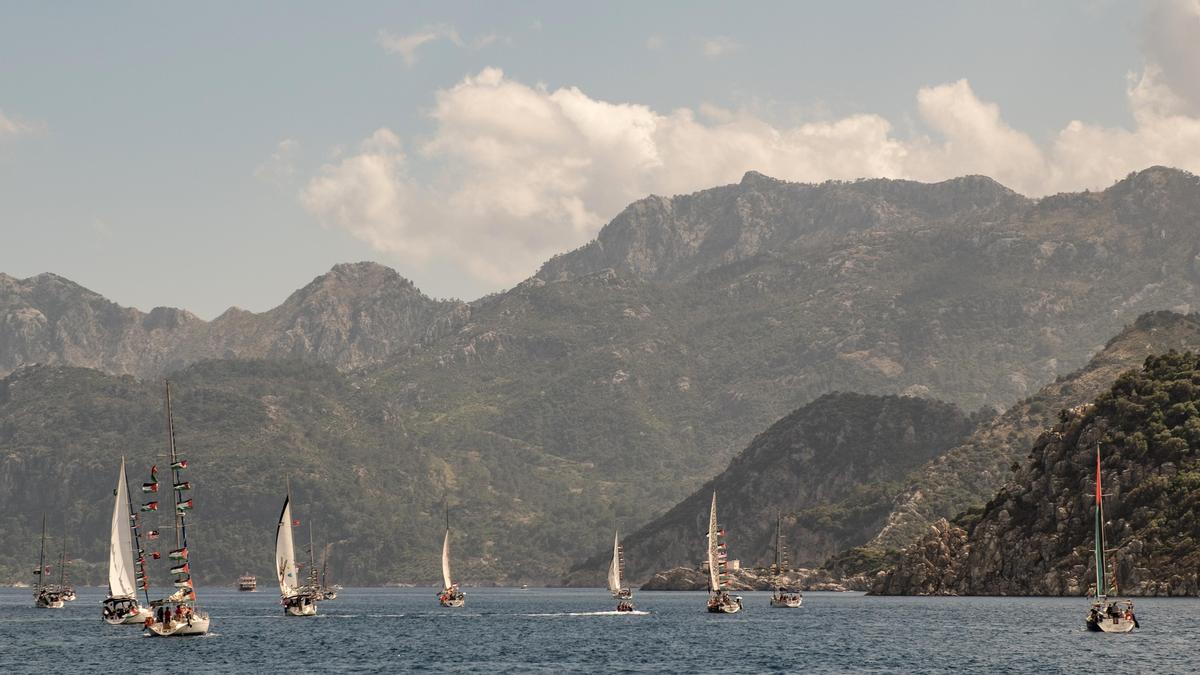
When a flotilla of activist vessels sets sail from European ports, the journey is never just about the cargo in the holds. It is a calculated clash of symbols. On one side are the wooden decks of civilian boats, carrying medical supplies, concrete, and a heavy weight of political defiance. On the other are the highly sophisticated, missile-bearing patrol boats of the Israeli Navy, tasked with enforcing a strict maritime blockade. When these two forces meet in the choppy waters of the eastern Mediterranean, the resulting confrontation captures a decades-long struggle over security, sovereignty, and human survival.
To understand why a few small boats can trigger an international incident, you have to look beneath the surface of the immediate standoff. The headlines usually read like a police blotter. Vessels intercepted. No injuries reported. Passengers detained for questioning. But the mechanics of a naval interception tell a much larger story about the invisible lines that govern the Middle East.
The Anatomy of a Blockade
Imagine a city where the front door is permanently locked, the back door is blocked by a wall, and the window opens up to a view of an ocean you are not allowed to cross. That is the structural reality of the Gaza Strip. Since 2007, following the rise of Hamas to power in the territory, Israel has maintained a comprehensive land, air, and sea blockade.
The legal and military justification from Jerusalem is straightforward and unyielding. Security. Without strict oversight of everything entering the coastal enclave, dual-use materials—concrete that could line attack tunnels, metal pipes that could become rocket fusillades, electronics that could guide weapons—would flow freely into the hands of militants. For the Israeli government, the maritime blockade is not an act of aggression; it is a defensive shield. It is a preventative measure designed to stop the next conflict before it starts.
But flip the telescope. Look at the restriction from the perspective of a fisherman in Gaza City.
Under the blockade regulations, the fishing zone shrinks and expands based on the current political and security temperature. Sometimes it is fifteen nautical miles. Often it is cut to six, or closed entirely. The Mediterranean is rich with sardines and mackerel, but the best catches lie just beyond the reach of the small, sputtering motorboats allowed to operate. When the fishing limits are squeezed, hundreds of families lose their primary source of protein and income. The sea becomes a tease. It is an open highway that leads everywhere, yet ends exactly where the naval patrol boats sit on the horizon.
The Drama of the High Seas
When activist groups organize a flotilla, they are operating on a specific theory of change. They know a few tons of humanitarian aid will not permanently alter the economic reality of two million people. The goal is friction. By sailing directly into a restricted military zone, they force a choice.
The confrontation follows a predictable, tense choreography.
The voyage begins months earlier in ports like Palermo, Copenhagen, or Athens. The passengers are a mix of international politicians, human rights lawyers, aging activists, and journalists. They undergo non-violent resistance training. They pack life jackets. They map out coordinates. As the boats crawl across the open sea, the atmosphere shifts from idealistic optimism to a quiet, anxious waiting.
The transition happens in international waters, miles before the official exclusion zone begins. The radio crackles to life.
An Israeli naval commander issues a standard warning. The vessel is approaching a blocked area. The captain is ordered to alter course, either toward an Israeli port like Ashdod or toward Egypt. The activists refuse. They state their destination is the port of Gaza. They argue the blockade is illegal under international law, citing collective punishment. The naval commander replies that the blockade is a legal security measure recognized by international panels, such as the UN’s Palmer Report, which concluded the naval blockade was both legal and appropriate to prevent weapons smuggling.
Arguments fade as the distance closes.
Then come the warships. Standard civilian vessels look minuscule against the silhouette of a modern corvette. The actual interception is rarely a cinematic battle; it is an exercise in overwhelming logistical force. Israeli naval commandos board the vessels. In most modern iterations, the boarding is quick, involving compliance tactics, zip-ties, and the redirection of the helm. The boats are towed to Ashdod. The cargo is offloaded, screened by security personnel, and, if cleared, sent into Gaza via land crossings. The foreign nationals are processed through immigration and deported.
The physical event ends in a matter of hours. The narrative war lasts for weeks.
The Conflict of Two Truths
The core tragedy of the flotilla phenomenon is that both sides are operating on completely different, irreconcilable tracks of logic. Both believe they possess the moral high ground, and both can point to undeniable facts to support their position.
Consider the Israeli perspective. The memory of the Karine A—a freighter intercepted in 2002 carrying fifty tons of advanced weaponry destined for Palestinian militant groups—is etched deeply into the strategic doctrine of the Israel Defense Forces. To lift the maritime restriction entirely would be, from a military standpoint, an act of negligence. It would open a deep-water pipeline for state-sponsored weaponry from regional adversaries. For a citizen living in the southern Israeli towns of Sderot or Ashkelon, the naval blockade is a vital component of the system that keeps rockets from falling on their children's schools.
Consider the Palestinian perspective. The blockade has contributed to an economic paralysis that the World Bank has repeatedly warned is unsustainable. Unemployment rates hover at staggering heights. Clean drinking water is a luxury because the infrastructure cannot be repaired without specialized parts that are often delayed or barred at the border. The blockade creates a psychological claustrophobia. A generation of young people has grown up in Gaza without ever leaving a piece of land that is forty kilometers long and ten kilometers wide. To them, the international activists on those boats represent a rare sign that the outside world has not completely forgotten their existence.
The two sides do not talk to each other; they talk past each other. One speaks the language of state survival and regional deterrence. The other speaks the language of human rights and personal dignity.
Beyond the Horizon
When the news cycle moves on and the intercepted boats sit quietly in an Israeli harbor, the underlying reality of the coast remains unchanged. The flotillas are a symptom, not the disease. They are periodic flare-ups that remind the world of a status quo that is volatile, fragile, and inherently tragic.
The Mediterranean continues to lap against both shores, indifferent to the political lines drawn across its waters. For the people who live along this coast, the sea remains a symbol of what could be—a source of prosperity, trade, and freedom—and a stark reminder of the walls that still divide them.