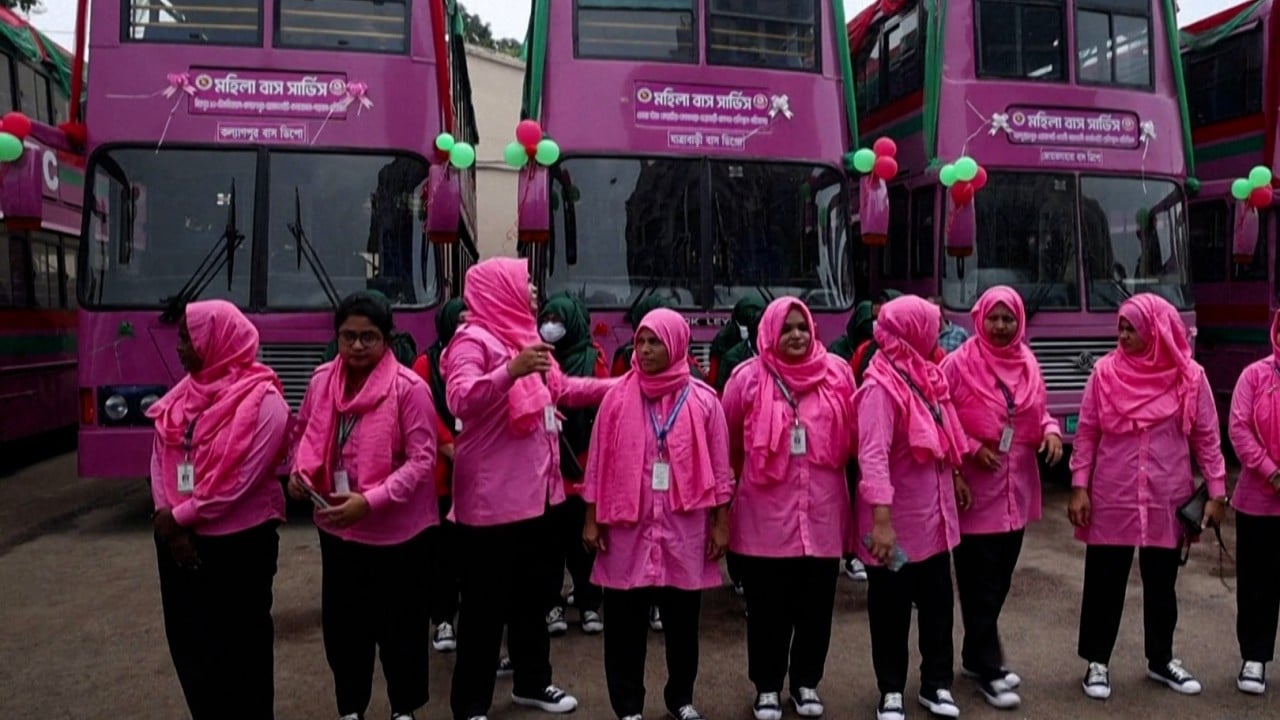
Another ribbon gets cut, another minister beams for the cameras, and another fleet of brightly colored vehicles rolls out onto the chaotic streets of Dhaka. The Bangladesh Road Transport Corporation proudly trotted out its new women-only Pink Bus service, operated entirely by female drivers and conductors, marketed as a grand triumph for commuter safety and female empowerment.
Take a bow, bureaucracy. You have successfully invented a Band-Aid for a severed limb.
The lazy consensus among mainstream urban planners and state officials is simple: if mixed-gender public transport is a hostile environment fraught with harassment, the logical fix is physical segregation. Build a separate fleet, paint them a cheerful pastel hue, assign a token crew of fourteen drivers across a few select routes, and declare that the safety mandate has been fulfilled.
It is a comforting illusion. It is also an absolute structural failure masquerading as progress.
The Arithmetic of Exclusion
Let us look at the raw numbers that the glossy press releases conveniently omit. Dhaka houses over twenty million people, with millions of women navigating educational institutions and workplaces daily. The state-run rollout launched a grand total of ten buses for the entire capital city. Ten.
Imagine a scenario where you are a working professional standing at a crowded stop in Motijheel or Abdullahpur during peak rush hour. You watch scores of regular buses barrel past, jammed beyond capacity, while you wait indefinitely for one of the rare pink vehicles to materialize. Segregation without scale is not protection; it is a waiting tax levied exclusively on female mobility.
When transport authorities restrict women to a minuscule fraction of the overall fleet, they implicitly accept a dark premise: that public spaces belong to male lawlessness, and women must crowd into designated safety cages if they want to move across town without being groped or harassed.
This is not the liberation of public space. It is the tactical surrender of it.
The Myth of the Rolling Safe Space
Proponents argue that staffing these buses with female drivers and conductors creates an unassailable bubble of security. But transport safety does not begin and end at the vehicle door.
As state ministers themselves noted during the launch events, the danger points extend far beyond the cabin. They exist in the unlit, unpoliced abyss of the bus stops, the terrifying dash across anarchic multi-lane highways, and the desolate stretches victims must navigate after stepping off the vehicle. A pink coat of paint on a double-decker chassis does nothing to fix a broken urban infrastructure.
Furthermore, gender-segregated fleets suffer from a chronic operational rot. Past iterations of women-only transport initiatives in South Asian cities routinely follow a predictable lifecycle: high-profile inauguration, initial fanfare, gradual fleet neglect, reduction in frequency, and eventual silent disappearance as vehicles are reallocated to mainstream routes or break down from lack of maintenance.
Relying on specialized micro-solutions allows municipal authorities to bypass the hard, unglamorous work of structural reform. Fixing Dhaka transport requires systemic overhauls: harsh, non-negotiable penalties for harassers on all vehicles, mandatory functional CCTV networks across every single bus company, plainclothes transit police, and well-lit, managed boarding terminals.
As long as the state treats women safety as a niche sub-category requiring segregated charity rather than a baseline standard for every public asset, the harassment continues unabated for the vast majority who cannot squeeze onto the token pink fleet.
Stop celebrating cosmetic partitioning as a victory for equality. True transit safety means a woman can board any bus, anywhere, at any hour, without fearing for her safety. Until the rest of the fleet is forced to meet that standard, the pink bus remains nothing more than a rolling distraction from official incompetence.