Standard reporting on localized curfews treats a quiet night as proof that containment worked, then treats the next round of restrictions as an obvious continuation. That sequence confuses short-term street suppression with structural resolution. When a prime minister extends curfews after a calmer night, the real analytical question is not whether the street went quiet for twelve hours, but what changed in the underlying incentives, policing capacity, and political coalition that produced the unrest in the first place.
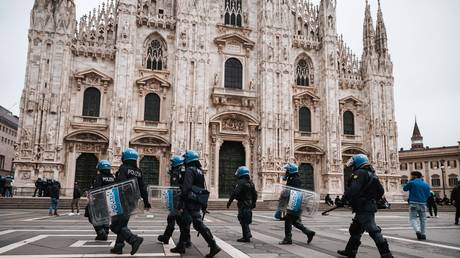
In October 2026, French Prime Minister Sébastien Lecornu pointed to targeted overnight curfews in cities including Paris, Lyon, Bordeaux, Lille, and Nice as a factor behind calmer conditions following severe weekend riots tied to cost-of-living grievances, student walkouts, and broader social frustration. Authorities had already recorded more than 2,500 arrests and dozens of imprisonments while officials acknowledged heavy strain on policing and widespread damage to businesses and public property. Treating a single calmer night as validation of the measure misses how crowd dynamics, decentralized enforcement, and political bargaining interact once unrest begins.
Deconstructing Competitor Logic
Conventional wire-style coverage around curfew extensions usually relies on a simple linear chain: weekend violence occurred, partial curfews were introduced, a quieter night followed, and officials announced further restrictions where needed. That framing is easy to read, yet it leaves three causal gaps unexamined.
The first gap is correlation versus causation. A quieter night after heavy policing, mass arrests, or natural exhaustion following peak weekend mobilization does not prove that curfew rules alone suppressed disorder. Crowd intensity naturally fluctuates across days of the week, shifting between mass demonstrations, localized clashes, and lulls as participants disperse or reassess risk.
The second gap is local discretion versus national signaling. Announcing localized curfews at the national level while leaving exact boundaries and timing to prefects and mayors creates a gap between political theater and operational reality. A broad national message projects firmness to nervous voters and international observers, yet enforcement still depends on local manpower, neighborhood geography, and municipal cooperation.
The third gap is containment versus grievance resolution. Curfews alter movement after dark, but they do not resolve disputes over household purchasing power, school conditions, labor demands, or perceived institutional failure. When grievances remain intact, suppressing one time window or district often shifts pressure to another time, another venue, or a scheduled protest date.
Known Facts Versus Working Hypotheses
Separating verified reporting from analytical interpretation keeps the assessment grounded when full post-incident audits are still incomplete.
Known facts from the reporting include the sequence of violent weekend demonstrations, subsequent partial and targeted curfews in major French cities, public statements by Prime Minister Sébastien Lecornu linking targeted curfews to calmer overnight conditions, ongoing consultation with prefects and mayors on where to apply new measures, over 2,500 people taken into custody with dozens jailed, and political pushback across parties, unions, and business groups.
Educated hypotheses include the view that extending curfews after a calm night serves partly as a preventive buffer ahead of renewed demonstrations and partly as a signal of executive control after police resources were stretched thin. Another working hypothesis is that narrow spatial and temporal curfews reduce opportunistic nighttime looting more effectively than they deter organized daytime or weekend protest marches. Exact causal attribution remains tentative without precinct-level incident logs, arrest distributions by hour, and displacement tracking across neighboring districts.
The Four Mechanics Of Curfew Containment
To evaluate whether a curfew strategy stabilizes a city or merely postpones friction, examine four operational mechanics rather than relying on nightly calm alone.
- Deterrence Thresholds: A curfew changes behavior only when two conditions hold simultaneously: residents know the rule clearly, and they expect a credible chance of being stopped or cited. If enforcement is patchy or concentrated on a few avenues, curfew zones can become predictable flashpoints rather than quiet perimeters.
- Spatial And Temporal Displacement: Restricting movement in specific neighborhoods or evening hours pushes activity elsewhere. Crowds may gather earlier in the afternoon, shift toward transit hubs or commercial corridors outside the perimeter, or regroup on days when curfews are lifted.
- Force Allocation Trade-Offs: Enforcing curfews consumes patrol hours, perimeter checkpoints, and command bandwidth. Every officer assigned to check late-night movement is a resource that cannot simultaneously guard sensitive public buildings, conduct investigations, or rest after high-stress shifts.
- Legitimacy Friction: Curfews treat broad swaths of residents—including commuters, workers, students, and uninvolved neighbors—as subject to restriction because of the actions of rioters. When ordinary residents view the measure as disproportionate or arbitrary, public irritation can erode support for authorities even if street clashes temporarily subside.
Why Nightly Calm Can Be Deceptive
In public order management, a quiet night after severe unrest often reflects tactical decompression rather than a permanent return to baseline stability. After intense clashes, mass arrests, and heavy media coverage, participants and onlookers alike often pull back to gauge legal consequences, reorganize communication, or wait for a larger collective date.
Policymakers face a classic timing trap right at that inflection point. Lifting restrictions immediately after one quiet night risks looking reckless if violence flares up again; extending them indefinitely risks exhausting police forces and turning a temporary measure into a permanent political grievance. That tension explains why leaders favor selective, conditional extensions calibrated to local assessments.
At the same time, officials must contend with political spillover. When unrest follows economic strain and institutional criticism, opposition figures, business associations, and labor groups interpret the crisis through competing lenses—some emphasizing state authority and border or order narratives, others pointing to living costs, public services, or perceived governance failures. A quiet night rarely settles that debate; it merely gives actors room to maneuver for the next round of negotiations or protests.
Measuring What Actually Works
Because "a night of calm" is an imprecise metric, crisis managers need operational indicators that separate genuine de-escalation from temporary quiet.
- Incident Density By Hour: Compare emergency calls, property damage, and clashes inside curfewed zones against adjacent non-curfewed areas across pre-curfew, active-curfew, and post-curfew hours.
- Arrest And Custody Composition: Track whether enforcement is intercepting repeat offenders and active instigators or sweeping up bystanders and late-shift workers, since overbroad stops inflame resentment.
- Critical Infrastructure Continuity: Monitor whether public transit, hospitals, emergency services, and essential supply deliveries operate smoothly without unintended bottlenecks caused by checkpoints.
- Rest And Readiness Cycles: Audit police overtime, fatigue, and reserve availability so leadership knows whether current deployment levels are sustainable over weeks rather than days.
Practical Execution For Crisis Leaders
When extending localized curfews after an initial lull, decision-makers can reduce operational blind spots by pairing restriction orders with tight execution discipline.
- Define Narrow, Defensible Perimeters: Anchor curfews to specific high-risk blocks, commercial strips, or transit nodes where visibility and patrol coverage are strong, rather than drawing sprawling lines that cannot be policed evenly.
- Publish Clear Exemptions Up Front: Specify rules for shift workers, medical needs, residents returning home, and essential deliveries before enforcement begins, reducing street-level disputes and confusion.
- Align Prefects, Mayors, And Police Commands: Synchronize curfew hours with local intelligence and municipal services so nighttime restrictions support daytime de-escalation and cleanup rather than working at cross-purposes.
- Set Explicit Sunset And Review Criteria: Tie each curfew window to measurable incident thresholds and scheduled review points so the measure remains a targeted tool instead of drifting into open-ended control.
Strategic Recommendation
Treat a single quiet night after curfews as a breathing window, not a verdict, and use that window to pair targeted, time-bounded perimeter control with rapid economic and institutional de-escalation. Curfews buy hours of breathing room on the street; durable stability requires addressing the material pressures and policing strain that turned demonstrations into riots in the first place.