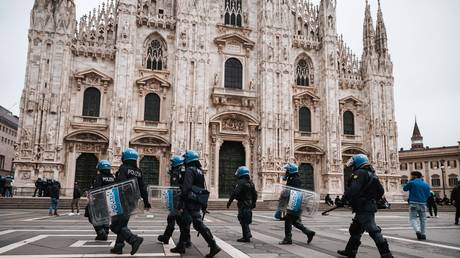
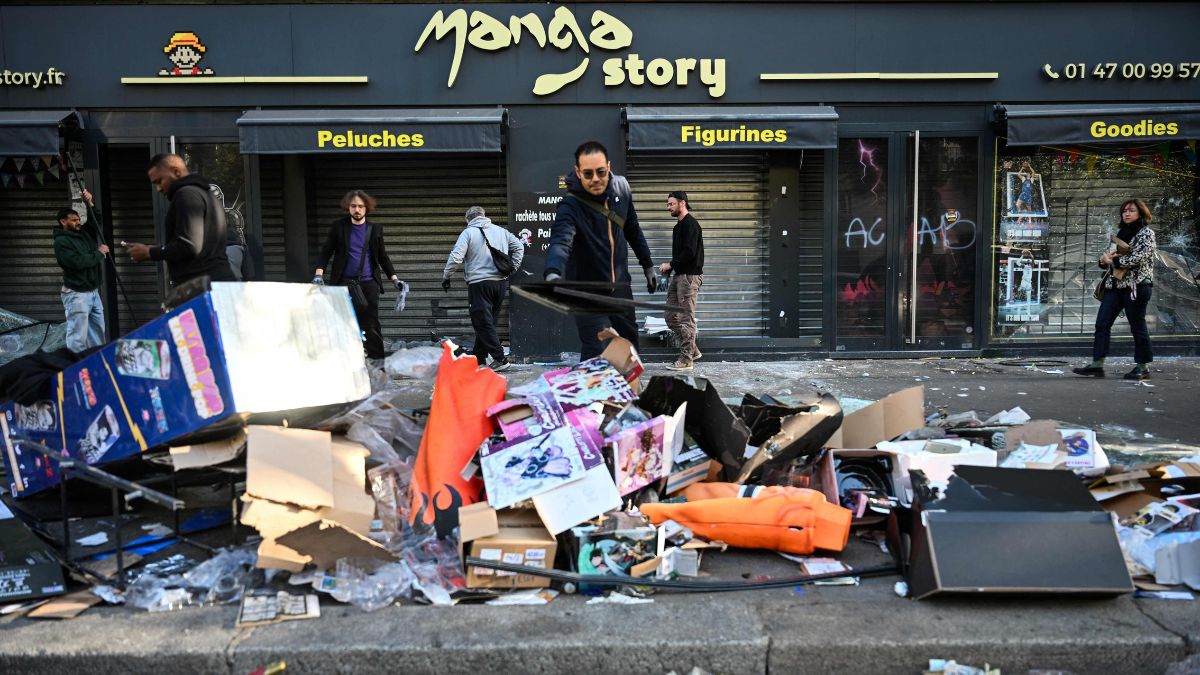
The France protests tearing through cities from Paris to Nantes are not a one-off temper tantrum over school timetables or transit costs. They are the street-level verdict on a centrist consensus that ran out of cash, credibility, and room to maneuver. Across Europe, voters and young demonstrators are deserting the middle because technocratic managers keep asking citizens to accept lower living standards while pretending the old postwar bargain still holds. France happens to sit right on the fault line where fiscal arithmetic meets raw street politics.
Anyone who has covered European political cycles for twenty years recognizes the pattern, yet this round feels sharper and harder to contain. Governments in Brussels, Berlin, Rome, and Paris spent years lecturing electorates on fiscal discipline, green transitions, and institutional patience. Now households face steep living costs, housing strain, and stagnant real wages while states carry heavy debt burdens. When the center offers restraint and the extremes offer certainty, the center loses ground. For an alternative view, see: this related article.
How School Blockades Became a National Reckoning
What began as frustration over underfunded classrooms, unfilled teaching posts, and cramped facilities quickly collided with a much older French reflex. High school students and teachers who walked out in the autumn of 2026 were protesting concrete day-to-day shortages, not abstract constitutional theory. A teenager staring at an overcrowded room or a grueling schedule with uncertain career prospects does not care about European Commission budget rules.
Yet those local grievances rapidly merged into broader demonstrations against living costs, police clashes, and property damage. In France, the street has long served as a parallel parliament whenever elected institutions look deadlocked. When parliament is split into rival blocs and governments rise and fall in months rather than years, citizens stop waiting for legislative compromise. Related coverage on this trend has been published by TIME.
Still, street anger alone does not explain why the center is buckling. Plenty of European countries have seen loud protests without watching their political middle hollow out overnight. The deeper driver is fiscal exhaustion. For decades, French and broader European centrists smoothed over social friction by spending money on subsidies, public services, and safety nets. That cushion is thinner now. Public debt near 119 percent of GDP, persistent deficits, and rising borrowing costs leave French policymakers boxed in. Spend more to calm the streets, and bond markets push back. Cut spending to appease creditors, and the streets flare up again.
A political center that promises stability without delivering affordability eventually looks less like a steady hand and more like a caretaker of decline.
What Other Commentators Miss About the Anti-Center Wave
Most coverage frames the France protests as a straightforward march toward the far right, pointing to polling gains for figures like Marine Le Pen and the broader surge of hard-right parties elsewhere in Europe. That reading is half-true and dangerously lazy. Hard-right movements have undeniably capitalized on anxieties around immigration, security, and cultural identity. In several European countries, right-wing insurgents have turned frustration with establishment parties into durable vote shares.
Look closer at France, though, and you see a split revolt rather than a single ideological tide. Young protesters and urban voters are also drawn to populist-left factions that blame corporate power, inequality, and austerity-minded orthodoxy for squeezing working families. A high schooler blockading a campus in a Paris suburb is rarely marching under a nationalist banner. Often, they are angry at a system that feels rigid, bureaucratic, and indifferent to their future.
Consider a hypothetical example to see how centrist messaging misfires. Suppose a mid-career logistics worker in a provincial French town watches grocery prices and local property costs climb while her regional hospital struggles with staffing. A centrist minister appears on television to explain multi-year deficit targets, algorithmic misinformation, and gradual reforms due years down the road. Even if every single statistic the minister cites is accurate, the worker hears one message: your pain is a line item, not an emergency. Populists on both ends of the spectrum speak in plain, visceral language—assigning blame immediately and promising a clean break.
There is also an overlooked factor that complicates the "extremes always win" narrative: voter exhaustion. Many French and European citizens dislike the centrist establishment without loving the alternatives. Riots, burned property, and shopfront damage alienate moderate-minded families and small business owners who just want order and predictability. When protesters clash with riot police or businesses face higher insurance bills after unrest, sympathy for the demonstration can curdle fast. The far right benefits when voters crave law and order, yet it also faces ceiling limits whenever voters worry about economic shock or institutional turmoil.
| Pressure Point | Centrist Vulnerability | Populist & Anti-System Appeal | Practical Reality Check |
|---|---|---|---|
| Public Debt & Budgets | Constrained by deficits and borrowing costs | Can promise relief without showing the math | Someone eventually pays the interest bill |
| Living Costs & Housing | Slow, incremental policy tools | Direct blame and sweeping pledges | Quick fixes often trigger price or market distortions |
| Youth & Education | Tied to legacy systems and slow reforms | Validates generational anger immediately | Promises need funding and classroom execution |
| Public Order & Security | Caught between rights, policing, and unrest | Hardline rhetoric on law or systemic justice | Heavy crackdowns without fixes only delay flare-ups |
Europe’s Contagion Effect Is Structural, Not Contagious
Whenever unrest erupts in France, pundits treat the country like a virus spreading across borders to Italy, Belgium, Britain, or Germany. That metaphor gets the mechanics backward. French riots do not force Italian or Belgian citizens into the streets. Rather, countries across Europe are hitting variations of the same structural wall at roughly the same time.
For roughly three decades after the Cold War, European centrism rested on four pillars: cheap energy and stable trade, manageable public debt, predictable demographic and welfare expectations, and broad faith that integration meant rising prosperity. Over the past decade—and especially since energy shocks, inflation, geopolitical conflict, and rapid technological disruption collided—those pillars have cracked.
Why Technocracy Struggles in High-Friction Times
Centrist politics in modern Europe became heavily technocratic. Policy decisions were increasingly framed as expert optimization problems—adjusting fiscal rules, regulatory frameworks, or administrative procedures—rather than value-laden choices about who bears costs and who gets protection.
Technocracy works well when budgets are growing and trade-offs are mild. It struggles badly when voters feel squeezed on rent, groceries, security, and public services all at once. Telling an anxious public to trust the process sounds hollow when the process produces gridlock, repeated cabinet reshuffles, and delayed relief.
The Trap of Defensive Centrism
Faced with rising challengers on both flanks, many centrist parties adopt a defensive posture. They warn voters about existential threats from the extremes while offering cautious compromises that excite almost nobody. Fear can occasionally hold a coalition together in a runoff, as French voters have shown in past elections. Fear rarely builds durable enthusiasm or solves structural deficits.
Even when governments offer concessions—such as tweaks to university admissions portals or targeted aid—protesters and skeptics often view them as too little, too late. Credibility, once eroded by years of unmet expectations, takes far longer to rebuild than a single policy announcement.
What Comes After the Centrist Squeeze
Calling the end of centrism across Europe is easy; predicting what replaces it is much harder. Europe is not a single electorate, and French political drama does not dictate outcomes everywhere from Warsaw to Madrid. In some capitals, mainstream parties still govern through pragmatic coalitions by adapting on border control, industrial policy, or social spending. In others, insurgent parties are moving from permanent opposition into serious contention for executive power.
What is clear is that the era of effortless centrist dominance is over. Any mainstream leader who wants to reverse the slide has to stop treating voter anger as a communication error or a social media illusion. You cannot lecture people out of feeling poorer, crowded out of housing, or shut out of decision-making.
Real renewal requires hard choices that neither street slogans nor spreadsheet orthodoxy easily admit. It means fixing basic public services—schools, clinics, transit—while being honest about what the state can afford and where waste sits. It means addressing legitimate concerns about security and cost of living without surrendering democratic norms or scapegoating vulnerable groups.
The France protests have already delivered their warning in tear gas, blocked avenues, and rattled bond markets. European centrists will either rebuild a governing bargain rooted in tangible results and candid trade-offs, or keep watching voters hand the steering wheel to people who promise to burn the old map.