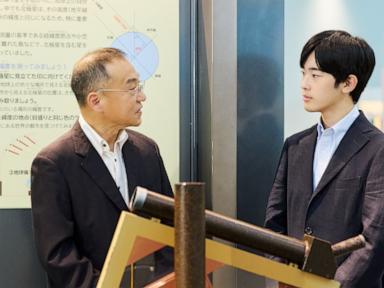
Prince Hisahito turns 20 years old today, marking a quiet milestone for the world's oldest continuous hereditary monarchy. Yet behind the muted celebrations at the Imperial Palace in Tokyo, Japan's government has doubled down on an increasingly precarious stance by reinforcing male-only succession rules. As second in line to the Chrysanthemum Throne, the young prince stands at the center of an institutional bottleneck. The 1947 Imperial House Law, coupled with recent legislative adjustments, continues to bar female royals like his popular cousin Princess Aiko from reigning, creating a demographic ticking clock for an institution frozen in amber.
For decades, observers outside Japan have viewed the succession debate through a lens of modern gender equality versus traditional values. That framing misses the structural mechanics driving the crisis. This is not merely an ideological friction point. It is a mathematical impossibility masquerading as heritage.
The Anatomy of a Shrinking Dynasty
To understand why the twenty-year mark of Prince Hisahito's life induces quiet panic among political insiders, one must look at the raw census data of the imperial household itself. The institution has dwindled to sixteen members, nearly all of them aging or female. Under current statutory frameworks, female members lose their royal status the moment they marry a commoner.
This rule has systematically hollowed out the bench. Princess Aiko, daughter of Emperor Naruhito, commands immense public affection and respect. Polls consistently show that a vast majority of the Japanese public favors altering the law to allow a reigning empress. Politicians, however, remain tethered to conservative factions that view patrilineal continuity as non-negotiable.
To bypass the obvious solution of allowing female succession, the government implemented revisions to the Imperial House Law. These changes lift historical bans to permit the adoption of male offspring from distant, disestablished branch families that lost their imperial status following the Second World War. Bringing men from collateral branches back into the fold is designed to artificially inflate the male heir pool without modernizing the core principle of agnatic succession.
It is an administrative workaround. It is also an extraordinary gamble with public goodwill.
Historical Myth versus Operational Reality
Conservatives frequently lean on the argument of an unbroken, two-thousand-year male lineage. Serious historians offer a more complicated picture. Japan has seen eight empresses throughout its recorded dynastic history, including figures who held absolute power during periods of intense geopolitical transition.
Furthermore, the historical survival of the patriline relied heavily on practices modern traditionalists prefer to ignore. For centuries, emperors and crown princes maintained concubines. This institutionalized polygyny heavily mitigated the risk of biological bottlenecks. Once concubinage was abolished under Western-influenced legal reforms in the late nineteenth century—culminating in the Meiji-era restrictions—the biological margin for error shrank dramatically.
By locking the system into a strict nuclear monogamous model while simultaneously restricting succession exclusively to male-line males, the state created an internal contradiction. The math simply fails. Prince Hisahito and his father, Crown Prince Akishino, are now virtually the sole viable younger males bearing direct responsibility for continuing the dynasty.
The Burden on the Heir
Stepping into this environment places an unprecedented psychological toll on a university student. Hisahito, who spends his days studying biology at the University of Tsukuba and researching entomology—particularly dragonflies—now bears the weight of an empire's survival on his shoulders alone.
When he eventually marries, the pressure directed at him and his future spouse to produce a male heir will be absolute. Observers of the Japanese court remember the severe toll exacted on Empress Masako and Crown Princess Kiko, both of whom suffered extended stress-related illnesses under the suffocating expectations of the palace ecosystem. By insulating the succession rules from reform, the state guarantees that future generations of royal spouses will inherit the exact same clinical anxieties.
Public frustration continues to simmer beneath the surface. While everyday citizens express sympathy for the young royals, immediate economic pressures—ranging from inflation to wage stagnation—routinely push constitutional reform down the list of national priorities. Ceremonies conclude, the pageantry fades, and the media cycle moves forward.
Yet the underlying structural trap remains completely unchanged. Japan's government has chosen to patch a crumbling foundation with procedural technicalities rather than structural adaptation. As Prince Hisahito enters his twenties, he represents both the preservation of an ancient lineage and the living symbol of an unsustainable status quo.