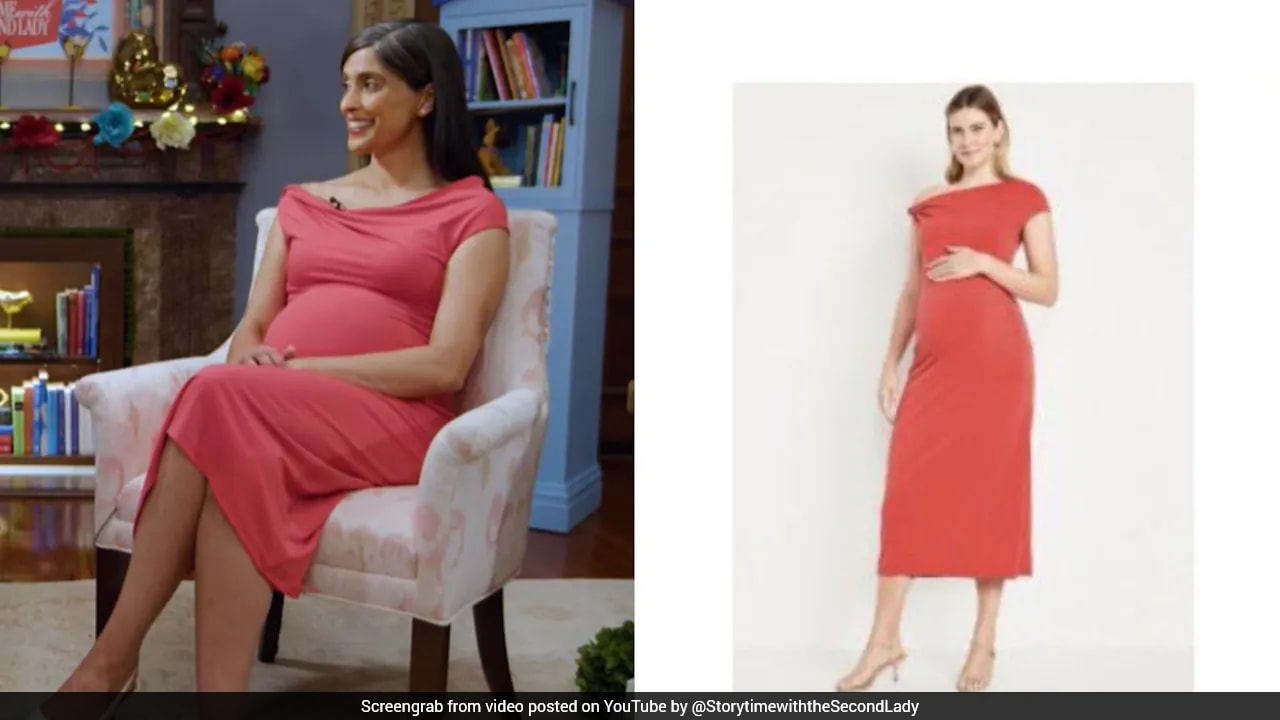
Usha Vance recently made headlines by wearing an eight-dollar maternity dress, a choice that serves as a deliberate masterclass in populist political staging rather than a mere thrifty accident. By showcasing a cheap, off-the-rack garment, the Second Lady executed a precise public relations maneuver designed to disarm critics of the administration's elite backgrounds and explicitly align the Vance family image with working-class voters. This was not a failure of style budget. It was an intentional deploy of fashion as political currency.
The choice of clothing on the national political stage has never been trivial. When public figures step in front of cameras, every stitch of fabric undergoes rigorous calculation by advisors who know that an outfit speaks louder than a policy brief. The eight-dollar price tag functions as a shield against accusations of being out of touch, creating an immediate, visceral contrast with traditional Washington elites who routinely spend thousands on custom tailoring.
The Strategy Behind Bargain Dressing
Political spouses face an impossible double standard. They must look immaculate, yet if they spend too much, they are branded as decadent Marie Antoinettes hoarding luxury at the taxpayer's ideological expense. If they look unkempt, they face ridicule for failing to respect the gravity of their office.
By opting for a dress that costs less than a fast-food meal, the narrative shifts entirely. The public conversation stops focusing on design credentials and starts focusing on relatability. It tells the viewer that despite a corporate law background and Ivy League degrees, the wearer still understands the financial anxieties of everyday citizens who browse bargain bins.
This brand of fashion populism targets a specific demographic. It appeals directly to the voter who feels abandoned by a coastal elite obsessed with luxury labels and high-end aesthetics. The message is blunt: we are just like you, and we refuse to waste money on overpriced vanity.
The Counter Argument and Hidden Supply Chains
While the immediate optics of an eight-dollar dress project humility, the economic reality behind such a garment reveals a deeper contradiction. It is impossible to manufacture, ship, and sell a new dress for eight dollars without relying on a system of extreme human and environmental exploitation.
Fast fashion operations rely on razor-thin margins and massive volume. The factories producing these garments frequently operate in regions with minimal labor protections, paying workers sub-living wages to maintain low consumer pricing. For a political platform that frequently champions the return of domestic manufacturing and the protection of worker rights, celebrating an item built on globalized, ultra-cheap labor presents a stark ideological mismatch. Critics quickly pointed out that a true commitment to working-class values would mean supporting ethically made, American-manufactured garments, which inherently cost significantly more than eight dollars.
Historical Precedents of Aesthetic Populism
This tactic is far from original. American political history is filled with leaders who used their wardrobe to rewrite their socioeconomic narratives.
- Jimmy Carter famously wore a casual cardigan during his televised fireside chats to signal energy conservation and personal humility during an economic crisis.
- Sarah Palin faced intense scrutiny when the Republican National Committee spent over one hundred and fifty thousand dollars on her campaign wardrobe, a revelation that severely damaged her self-proclaimed hockey-mom persona.
- Michelle Obama frequently balanced high fashion with accessible items from retail chains like J.Crew, creating an image that was both aspirational and accessible to the average voter.
The difference now is the extremity of the price floor. Dropping down to single digits moves past everyday retail choices and into the territory of performance art. It forces the media to repeat the exact dollar amount, ensuring the financial metric dominates the headline.
The Media Trap
By publicizing the cost of the garment, the Vance communications team successfully set a trap for mainstream media outlets. Editors and commentators who criticized the dress as unbefitting of the office immediately looked snobbish, reinforcing the populist narrative that traditional institutions hold nothing but contempt for low-cost, working-class realities.
Conversely, praising the dress meant validating a product of the global fast-fashion pipeline. This calculated ambiguity leaves opponents with no clean avenue for critique. It shifts the battlefield from substantive policy discussions to an argument over retail habits, a space where the populist narrative almost always wins.
The true test of this aesthetic choice rests on whether voters view it as genuine empathy or calculated theater. When the cameras turn off and the campaign cycle ends, an eight-dollar dress remains a temporary costume in a much larger, multi-million-dollar political machine designed to secure power.