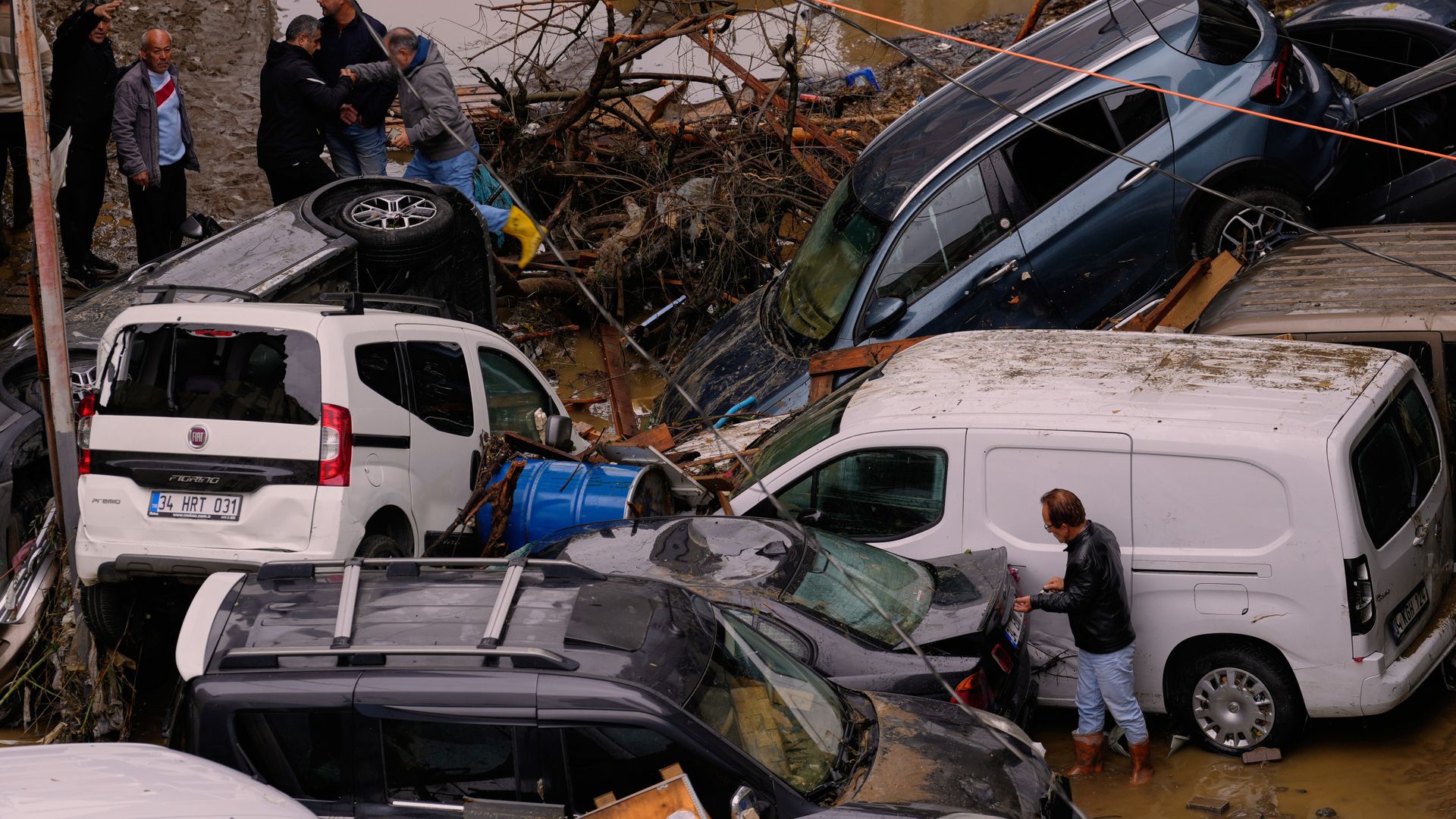
Four people died in Istanbul during the October 2026 deluges that officials and meteorologists described as the worst flooding in the city in over 80 years, with records reaching back to 1942. Rain fell at a rate that overwhelmed drainage channels and turned low-lying streets into fast-moving waterways in a matter of hours. Yet blaming the sky alone lets off the hook decades of concrete expansion, narrowed stream beds, and zoning decisions that put homes and businesses directly in the path of predictable runoff.
A basic headline stops at the body count and the 80-year milestone. After covering disasters across multiple continents for thirty years, I have learned that an "80-year storm" almost always exposes an everyday engineering failure. When a storm hits a city of roughly 16 million residents, the lethal variable is rarely just how much water falls. It is where that water has nowhere left to go.
Why an 80-Year Flood Was Built on the Ground
Meteorologists measured extraordinary totals over a 48-hour stretch in mid-October 2026. Certain northern districts recorded over 200 millimeters of rain, with Beykoz topping roughly 274 millimeters in some tallies and AKOM reporting 277.1 millimeters—more than four times Istanbul's typical October average of 66.3 millimeters. In plain terms, parts of the city absorbed months of normal autumn rain in two days.
Water does not care about municipal borders or building permits. It follows gravity down hillsides and into natural stream valleys. In Istanbul, drainage basins around creeks such as Alibey in Arnavutköy, Kağıthane, and Ayazağa in Sarıyer have carried runoff for millennia. Over the past several decades, rapid urbanization paved over permeable soil with asphalt, roofs, and high-rises, shrinking the buffer zone that once absorbed sudden downpours.
Water policy specialists have warned for years that turning floodplains and narrow stream corridors into buildable lots invites catastrophe. Even a dry-looking creek bed can turn into a roaring channel when intense rain hits an entire catchment at once. When culverts and channelized streams hit capacity, excess water spills across roads, basements, and ground-floor shops.
Consider a hypothetical example to see how quickly a drainage bottleneck turns dangerous. Suppose a neighborhood sits along a culverted stream channel designed decades ago for smaller upstream runoff. When 200 millimeters of rain falls across steep hills above it, water rushes into the pipe faster than the intake can swallow it, backing up across pavement and into ground-level garages before emergency crews can even clear debris.
Zoning Politics and the Concrete Trap
Blaming extreme weather is convenient because nobody can subpoena a cloud. Zoning amendments and weak enforcement are far harder to confront. When cities expand rapidly under heavy economic and demographic pressure, short-term land value routinely beats long-term hydrological safety.
Istanbul faces compounding pressures. Earthquakes dominate national catastrophe planning, yet frequent rain events can inflict heavy damage across neighborhoods and industrial zones. Meanwhile, authorities have had to juggle competing climate headaches—shifting between severe drought concerns in recent years and sudden, violent downpours.
| Risk Factor | How It Worsens Flood Damage | What It Means for Residents |
|---|---|---|
| Impervious surfaces | Concrete and asphalt block soil absorption and speed up surface runoff. | Streets flood faster even during sharp bursts of rain. |
| Constricted stream corridors | Narrowed channels and builds near creeks limit overflow room. | Adjacent homes, shops, and roads face rapid inundation. |
| Voluntary flood insurance | Property coverage lags behind earthquake policies, leaving a protection gap. | Many households and small firms absorb repair costs out of pocket. |
| Aging drainage capacity | Storm systems built for older conditions struggle with multi-day extremes. | Transit slows, flights face delays, and utility hazards rise. |
Insurance data from the October 2026 event underscores the financial blind spot. Reports cited roughly 10 billion Turkish lira in estimated economic losses across Istanbul, while early claims notified to insurers by October 20 reached around 4.5 billion lira across property, industrial, and motor policies. Unlike compulsory earthquake insurance under DASK, flood coverage in Türkiye remains largely voluntary, and fire and property insurance penetration in Istanbul has trailed motor coverage by a wide margin.
What the Official Numbers Do Not Capture
A fatality count of four in Istanbul—with a broader regional toll of nine across Istanbul and neighboring Kocaeli cited in flood risk reporting—captures only the sharpest edge of the disaster. One of the victims in Istanbul was a teenager who died from electrocution, showing how floodwater turns everyday urban wiring into a lethal trap. Thousands of homes, businesses, and vehicles suffered damage, hundreds of people needed rescue or evacuation, and flights at Istanbul Airport were diverted or canceled.
There is also a fair counter-argument worth weighing before pointing a finger solely at city hall. No drainage network on earth can be built cheaply or effortlessly to swallow 80-year rainfall spikes without any surface ponding. Ripping out occupied buildings or widening every urban creek carries steep social, legal, and financial costs, and historical loss figures are notoriously tricky to compare across decades of inflation, currency shifts, and changing property values.
Still, acknowledging those trade-offs does not excuse building in obvious water paths. Hard engineering alone—bigger pipes and concrete walls—has limits when rain arrives faster than infrastructure can drain it. Preserving remaining forests and northern watersheds, restoring room along natural basins where feasible, and tightening enforcement on flood-prone zones are practical necessities rather than luxury green slogans.
Real reform starts by publishing transparent flood-zone maps tied to current rainfall data and halting new construction in high-risk stream corridors before the next big storm arrives.
Heavy rain triggers flash floods in Istanbul
This video provides visual coverage of the severe rainfall and flash flooding in Istanbul, helping illustrate the immediate street-level impact behind the 80-year flood headlines.