Arizona escalated the fight over Colorado River cuts in October 2026 by moving to intervene in Nevada's federal lawsuit against the U.S. government's post-2026 reservoir operating plan. After seven basin states missed years of negotiation deadlines to replace the expiring 2007 operating guidelines, federal officials rolled out a framework that places steep reductions on the Lower Basin while leaving Upper Basin delivery obligations contested. Arizona's legal intervention—soon joined by a separate push from the Central Arizona Project—turns a simmering interstate stalemate into a high-stakes courtroom battle over water math, legal priority, and desert survival.
Anyone who has watched western water politics long enough knows the pattern. When snowpack shrinks and reservoirs drop, politicians promise cooperation right up until the moment a spreadsheet assigns pain. For decades, the Colorado River ran on optimistic assumptions baked into the 1922 Colorado River Compact, a treaty drafted during a wetter hydrological stretch that divided water between the Upper Basin (Colorado, New Mexico, Utah, and Wyoming) and the Lower Basin (Arizona, California, and Nevada). Now that the river delivers far less than negotiators imagined, paper rights collide with physical reality.
How the Federal Plan Targets the Lower Basin
Federal guidelines unveiled in August 2026 set the stage for sharp reductions starting in 2027, with the lawsuit framing rules that govern operations through 2036. Under the near-term numbers cited in court filings for 2027 and 2028, combined Lower Basin cuts reach 1.25 million acre-feet annually, and Arizona absorbs roughly 60 percent of that hit. Arizona faces 760,000 acre-feet in annual reductions, compared with 440,000 acre-feet for California and 50,000 acre-feet for Nevada, while state officials warn that long-term Lower Basin reductions could climb as high as 3 million acre-feet a year.
Those numbers explain why Phoenix water managers and state leaders treated the federal blueprint as an existential threat rather than a routine regulatory update. An acre-foot equals enough water to cover one acre a foot deep—roughly the annual use of a couple of typical households—so losing hundreds of thousands of acre-feet hits municipal supplies, farms, and tribal allocations all at once. State officials argue the federal plan treats Lower Basin reductions as the default shock absorber while shielding upstream states from equivalent cuts.
A legal dispute over reservoir rules cannot conjure extra snow in the Rockies, yet it determines which communities absorb the first wave of scarcity.
Junior Priority and the Canal Squeeze
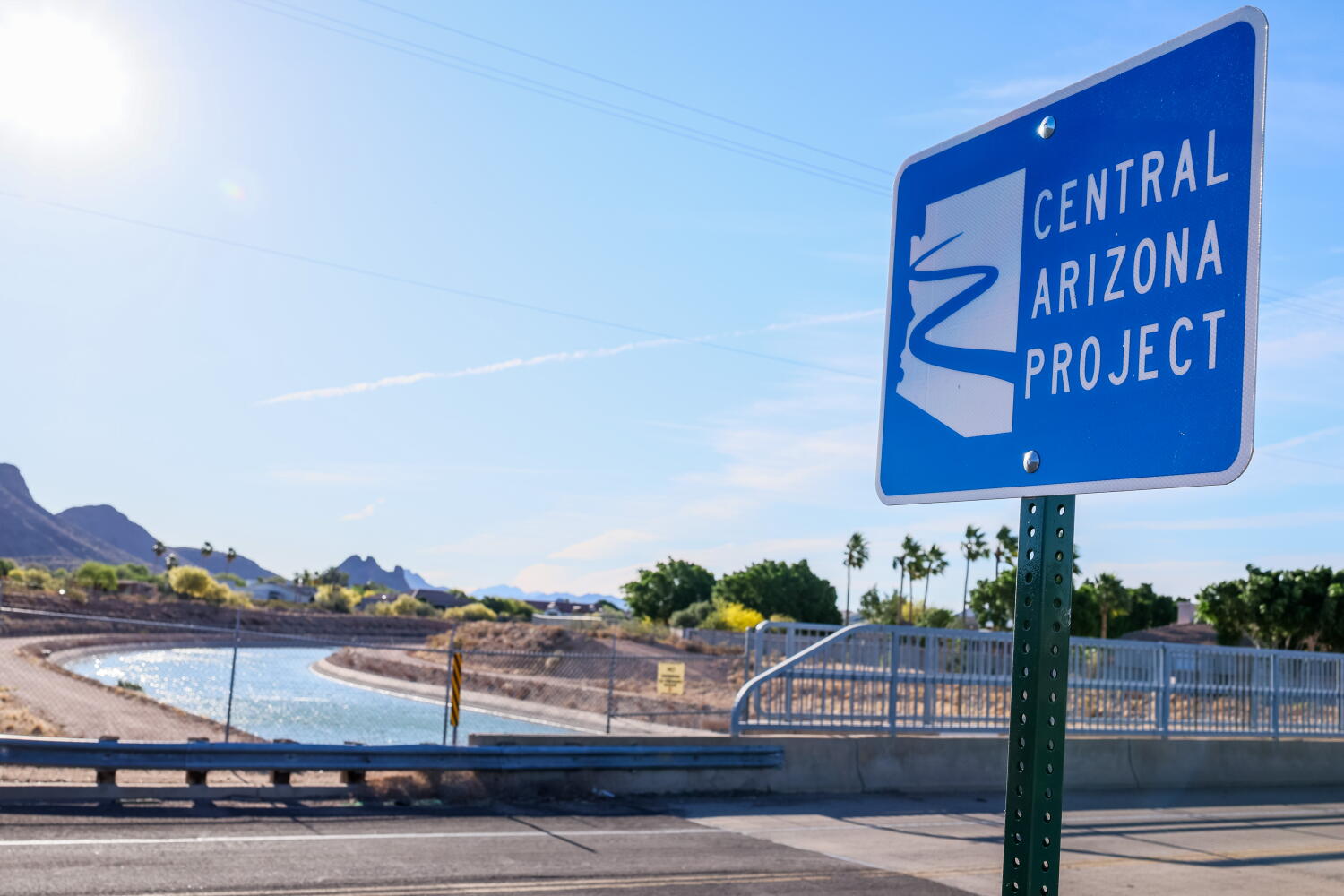
Inside Arizona, the sharpest alarm centers on the Central Arizona Project, the massive aqueduct system that pumps Colorado River water hundreds of miles inland to central and southern Arizona. CAP serves more than 50 municipal and industrial water users along with 11 tribal communities. Because CAP holds a junior priority within Arizona's Colorado River allocation, deep system shortfalls threaten to starve its canal deliveries first.
Federal officials and state water managers clash over how priority works across the entire basin. Interior Secretary Doug Burgum has pointed to Arizona's junior water rights position, whereas CAP General Manager Brenda Berman forcefully rejected the claim that CAP is junior to the Upper Basin. Arizona Department of Water Resources Director Tom Buschatzke warned that proposed cuts could effectively dry up CAP. Whether the court views priority through internal state pecking orders or compact-wide obligations will shape how harshly central Arizona feels every dry year.
The Lee Ferry Math Behind the Lawsuit
At the heart of Arizona's intervention is a century-old benchmark at Lee Ferry, the dividing line between the Upper and Lower Basins. Under the 1922 Compact, Upper Basin states must not cause flows past Lee Ferry to be depleted below 75 million acre-feet over any consecutive 10-year period. Arizona argues that obligations tied to the U.S. water treaty with Mexico raise the practical 10-year floor to 82.5 million acre-feet.
Court filings point to federal projections suggesting flows past Lee Ferry could land around 80.4 million acre-feet over a 10-year stretch under average conditions and drop to 73.9 million acre-feet in critically dry years. Both numbers fall short of the 82.5 million acre-feet benchmark Arizona contends federal law requires. That gap is the fulcrum of the litigation: Arizona maintains that federal managers cannot write operating rules that let upstream deliveries slip below legal thresholds while forcing massive cuts downstream.
Lake Powell Releases and Upstream Pushback
Reservoir management at Lake Powell sits right in the crosshairs of this math. Historically, federal guidelines generally treated 8.23 million acre-feet as a baseline annual release from Lake Powell when conditions permitted, whereas the newer framework prioritizes protecting Lake Powell's elevation—targeting a minimum near 3,510 feet initially and aiming to stay above 3,500 feet. Under critically dry conditions, annual releases from Lake Powell could drop to 6 million acre-feet, and in extreme scenarios as low as 5 million acre-feet.
Holding more water behind Glen Canyon Dam helps keep upstream hydropower turbines and regional pools from hitting dead pool, yet smaller releases mean less water reaches Lake Mead downstream. Lower Basin states see that trade-off as tilting the deck against them. Upstream leaders see things differently, arguing that Lower Basin states have historically overused their shares and warning that lawsuits stall practical compromise.
| Basin Group | States Involved | Core Argument in the 2026 Dispute |
|---|---|---|
| Lower Basin Intervenors | Arizona, Nevada (with Arizona intervening; CAP also moving to join) | Federal rules place disproportionate cuts on Lower Basin users and under-enforce Upper Basin delivery obligations. |
| Upper Basin Critics | Colorado, New Mexico, Utah, Wyoming | Lower Basin states have exceeded legal allowances over time, and litigation inflames conflict without adding water. |
| Federal Regulators | U.S. Department of the Interior / Bureau of Reclamation | Operating rules provide necessary flexibility at critically low reservoir levels after states missed negotiation deadlines. |
Gray Areas Nobody Can Litigate Away
Even if a federal judge sides with Arizona on procedural or statutory points, court orders do not refill depleted reservoirs. Climate-driven aridification has steadily shrunk natural river flows compared with the early twentieth century, leaving every legal formula chasing a moving target. A hypothetical example illustrates the trap: suppose a court orders stricter downstream delivery accounting, yet snowpack in the headwaters remains thin; paper entitlements still collide with physical inflows.
Arizona's strategy also carries an inherent tension. Governor Katie Hobbs has paired the October 16 legal intervention with continued talks alongside California and Nevada on a separate near-term conservation deal for 2027 and 2028. Suing the federal government while trying to negotiate voluntary conservation agreements with neighbors is a delicate balancing act, especially when upstream lawmakers already view courtroom moves as hostile.
For water utilities, cities, and agricultural districts across the Southwest, waiting on a multi-year court docket is not a water supply plan. Municipal conservation, groundwater management, and local efficiency upgrades remain essential regardless of how the federal bench rules on post-2026 reservoir operations.
Colorado River Compact Minimum Delivery Obligation
This video explains the 1922 Colorado River Compact's minimum delivery rules at Lee Ferry, giving helpful context on the legal obligations central to Arizona's lawsuit.