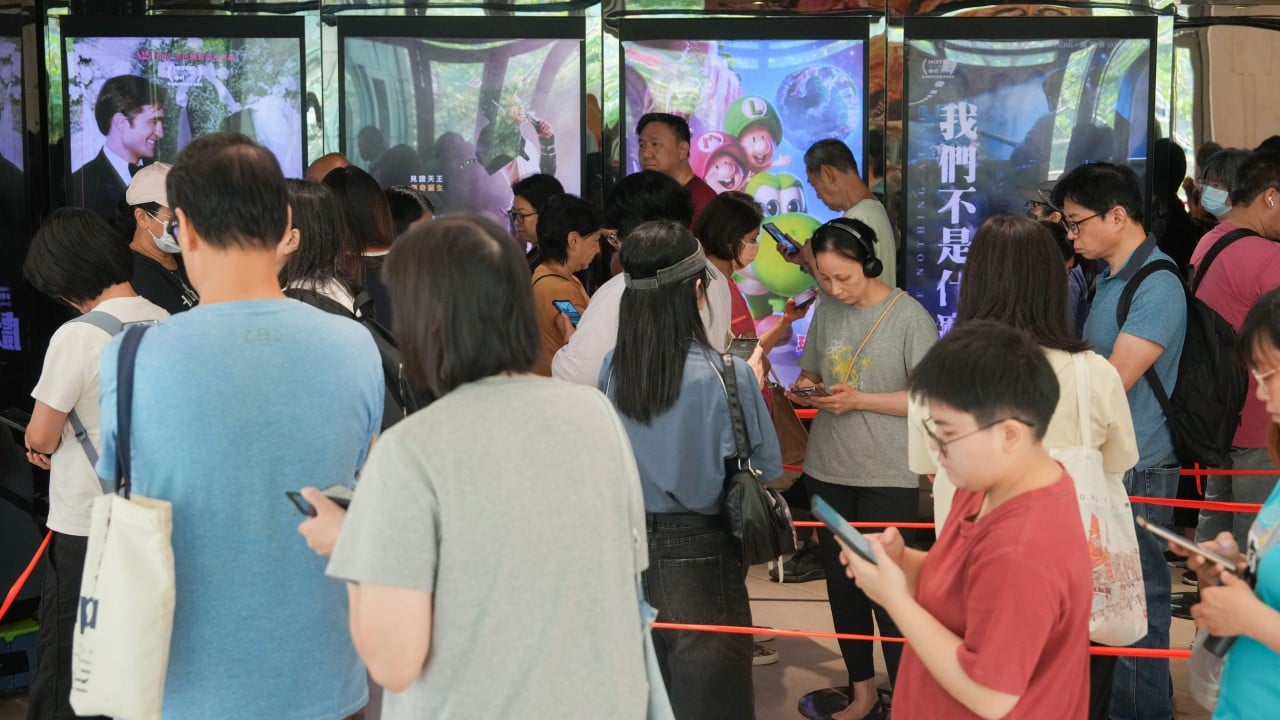
The sight of thousands of Hongkongers queuing in the sweltering heat for a HK$30 movie ticket is not the sign of a cinematic renaissance. It is a distress signal. While local headlines trumpet the "overwhelming success" of Cinema Day, the reality on the ground reveals a film industry on life support, propped up by a government-subsidized gimmick that masks a deeper, more systemic rot in the city’s cultural economy.
On the surface, the math is simple. For a single day, ticket prices across more than 60 commercial theaters are slashed to a flat rate of HK$30, a fraction of the usual HK$100 to HK$130 price tag. The result is predictable: websites crash, queues snake around shopping malls, and every seat from the front row to the VIP lounge is sold out. But once the lights dim and the popcorn is swept away, the industry is left facing the same existential crisis it had the day before. If you liked this post, you should look at: this related article.
The Subsidized Illusion of Success
Cinema Day is organized by the Hong Kong Theatres Association and funded by the Film Development Fund. It is designed to "rekindle the habit" of going to the movies. However, habit-forming requires consistency, not a once-a-year fire sale. When you train a consumer base to wait for a 75 percent discount, you aren’t building loyalty; you are devaluing the product.
The local film industry is currently trapped in a pincer movement. On one side, the rise of streaming giants has made the "theatrical window"—the time a movie stays exclusively in theaters—feel like an inconvenience rather than an event. On the other, the skyrocketing cost of living in Hong Kong means that a night out at the movies for a family of four can easily top HK$600 once snacks and transport are factored in. The HK$30 ticket is a temporary anesthetic for a permanent wound. For another angle on this story, check out the latest update from Entertainment Weekly.
Where the Money Actually Goes
We need to look at the distribution of these subsidized tickets to understand who truly benefits. During the most recent event, the biggest draws weren’t the gritty, independent local films that need the most support. Instead, the crowds flocked to Hollywood tentpoles and big-budget animations.
The government is essentially using taxpayer money to subsidize the marketing budgets of multi-billion dollar foreign studios. While a few local productions see a bump in numbers, the lion's share of the foot traffic goes to films that would have succeeded regardless. This creates a "crowding out" effect where the very films the Film Development Fund is supposed to protect are buried under the sheer volume of blockbusters.
The Ghost of the Golden Age
Veteran industry insiders often speak of the 1980s and 90s, when Hong Kong was the "Hollywood of the East." In those days, theaters were packed without the need for government intervention. The difference wasn't just the price; it was the cultural relevance.
The current decline is often blamed on "content fatigue," but that is a lazy diagnosis. The truth is that the Hong Kong cinema experience has become sterile. The city’s theaters are increasingly tucked away in the upper reaches of luxury malls, accessible only after navigating a labyrinth of high-end boutiques. The grit, the accessibility, and the community aspect of the old standalone theaters have been replaced by a homogenized corporate experience that feels disconnected from the streets.
The Streaming Paradox
It is easy to blame Netflix or Disney+ for the empty seats, but that ignores the fact that theatrical markets in other regions are finding ways to pivot. In Hong Kong, the pivot has been slow and unimaginative. Most local exhibitors have focused on "premium" offerings—laser projectors, Dolby Atmos sound, and reclining seats.
These technical upgrades are impressive, but they ignore a fundamental psychological shift in the audience. People don't stay home because their TV is better than a cinema screen; they stay home because the cinema has stopped feeling like a "must-attend" social venue. When the government steps in to lower prices, they are admitting that the experience itself is no longer worth the market rate.
A Broken Business Model
The economics of Hong Kong exhibition are governed by the city's notorious real estate market. Rent is the single largest overhead for any theater operator. When a mall owner looks at the square footage occupied by a cinema, they compare the yield to what a luxury brand or a high-end restaurant could provide.
This puts theater chains in a desperate position. They have to maximize every square inch. This leads to:
- Short theatrical runs: If a film doesn't perform in its first three days, it is pulled to make room for a surer bet.
- Inflated concession prices: The "popcorn tax" is the only way many theaters stay in the black, as they keep a higher percentage of food sales than ticket sales.
- Risk aversion: Small, experimental films are relegated to the "graveyard shifts" of 10:00 AM or 11:30 PM.
The HK$30 Cinema Day does nothing to address these structural pressures. It is a one-day reprieve for the operators that fails to change the underlying math of their lease agreements.
The Northward Migration
Another factor rarely discussed in the context of declining cinema attendance is the "Northbound" trend. Every weekend, hundreds of thousands of Hongkongers cross the border into Shenzhen for shopping and entertainment. Cinema tickets in mainland China are consistently priced at a level that makes Hong Kong’s "sale prices" look like a rip-off.
The theaters in Shenzhen are often newer, with larger screens and more diverse food options, all at a fraction of the price. Why would a resident of New Territories East pay HK$120 for a movie in Sha Tin when they can take the MTR to Futian and watch the same film in a state-of-the-art IMAX theater for roughly HK$45?
The Content Gap
Beyond the price and the venues, there is the issue of the films themselves. The Hong Kong film industry is currently split between massive, Mainland-funded co-productions and hyper-local, low-budget dramas.
The co-productions often feel diluted, trying to satisfy both the local audience and the strict requirements of the Mainland market. They lose that "Hong Kong flavor" that once defined the city’s output. Meanwhile, the smaller local films, while often excellent, struggle to find an audience that isn't already predisposed to supporting the local arts.
Marketing to the Youth
The demographic data for Cinema Day is telling. While families make up a significant portion of the morning crowds, the evening slots are dominated by the elderly and middle-aged. The youth—the demographic that should be the future of the industry—are increasingly absent.
For a generation raised on TikTok and YouTube, the idea of sitting still for two hours is a hard sell. But more importantly, the marketing of Hong Kong cinema hasn't caught up. It still relies on traditional celebrity endorsements and physical posters in MTR stations. There is a lack of digital-first engagement that creates a sense of "fomo" (fear of missing out) around a film’s release.
Beyond the Ticket Price
If the government is serious about saving Hong Kong cinema, it needs to stop writing checks for one-day events and start looking at the long-term infrastructure.
A more effective use of the Film Development Fund would be to subsidize long-term rent for independent theaters or to provide tax breaks for developers who include cinema spaces in their buildings. We need more diverse venues, not just more discounted seats in the same corporate multiplexes.
The Curation Model
We also need to look at the "Curated Cinema" model that has seen success in cities like London and New York. This involves theaters acting more like museums or galleries—carefully selecting films, hosting Q&A sessions with directors, and creating a community around the theater.
In Hong Kong, the Broadway Cinematheque in Yau Ma Tei is one of the few examples of this working. It survives because it offers something you cannot get on a tablet at home: a curated identity. Expanding this model across the city would do more for the industry than ten "Cinema Days" combined.
The Danger of the Quick Fix
The danger of Cinema Day is that it provides a false sense of security for policymakers. They see the crowds and the "sold out" signs and check the "cultural support" box for the year. But these crowds are ephemeral. They are there for the bargain, not the art.
The true health of an industry is measured by what people are willing to pay when there isn't a sale. Right now, that number is dangerously low. If the only way to get people into a theater is to charge them the price of a bowl of noodles, then the industry is already in a state of managed decline.
The focus must shift from filling seats for 24 hours to building a sustainable ecosystem. This means challenging the landlord-tenant power dynamic, diversifying the types of films being made, and making the cinema a place of cultural friction once again.
Stop celebrating the queues. Start questioning why they only appear once a year. The survival of Hong Kong’s cinematic legacy depends on it.