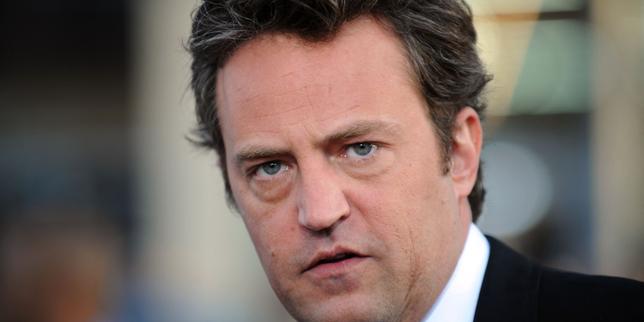
The house in Pacific Palisades looked out over the Pacific Ocean, a view that cost millions and bought exactly zero peace of mind. Inside, the quiet was heavy. It was the kind of silence that settles in when the applause stops, the cameras shut down, and a person is left entirely alone with the echo of their own thoughts. For decades, the world looked at that face and saw a friend. They saw quick-witted comfort. They saw a man who could diffuse the heaviest room with a sarcastic tilt of his head.
But behind the automated gates, the reality was stripped of laugh tracks.
When we read about celebrity downfalls, we tend to view them through a glass screen, cold and distant. We look at the headlines about court sentences and lethal doses as if they are scripts from a dark crime drama. They are not. They are the messy, tragic remains of human vulnerability meeting absolute desperation. The recent sentencing of Kenneth Iwamasa, the personal assistant who regularly injected Matthew Perry with lethal amounts of ketamine, is not just a piece of legal housekeeping. It is a window into a hidden ecosystem of dependency, isolation, and the terrifying blurred lines of loyalty.
The Assistant in the Shadows
To understand how a life ends in a hot tub on a crisp October afternoon, you have to look at the daily routine. A personal assistant to a major star is rarely just an employee. They become a shadow. They schedule the dentist appointments, they filter the phone calls, they drive the car, and, in the darkest hours, they become the gatekeepers of their employer’s demons.
Kenneth Iwamasa was not a medical professional. He had no license to dispense controlled substances, no training in anesthesiology, and no legal authority to handle the powerful anesthetic that would eventually claim Perry’s life. Yet, he became the primary administrator of the drug. Consider the sheer weight of that dynamic. On one side, you have a globally recognized icon battling a relentless, agonizing disease—addiction. On the other, an assistant whose entire livelihood and identity are wrapped up in saying "yes" to a man who desperately needed to hear "no."
The court handed down a three-year prison sentence to Iwamasa. In the eyes of the law, a boundary was drawn. But justice in a courtroom cannot retroactively fix the profound failure of duty that happened in that house. The facts laid bare during the trial revealed a frantic, chaotic scramble for drugs in the weeks leading up to Perry’s death. This was not medical care. It was a slow-motion catastrophe funded by wealth and enabled by compliance.
The Chemistry of Disconnection
Ketamine is a remarkable, terrifying substance. In a controlled hospital setting, it is a crucial tool for doctors—an anesthetic that keeps patients from feeling pain. In recent years, it has found a new, legitimate frontier in mental health, offered in heavily monitored clinics as a breakthrough treatment for treatment-resistant depression and severe anxiety.
Imagine your brain as a hyperactive highway system, where every negative thought is a tractor-trailer roaring down the fast lane. Ketamine, when used correctly, acts like a temporary roadblock. It forces the traffic to stop, giving the brain a rare, quiet moment to rebuild its broken paths. For someone who has spent a lifetime running from the ghosts of fame, insecurity, and trauma, that quiet moment feels like water in a desert.
But outside the clinic walls, the roadblock becomes a landslide.
Without a doctor monitoring the heart rate, without a professional measuring the oxygen levels in the blood, the drug ceases to be a therapy. It becomes a weapon. On the day he died, Perry was injected multiple times. The final dose was administered while he was sitting in his backyard jacuzzi. The drug did exactly what it was designed to do: it detached his conscious mind from his physical body. When the sedation took hold, there was no one there to pull him out. The very substance meant to quiet the noise in his head silenced everything else permanently.
The Cost of the Yes-Man Culture
Wealth creates a strange, artificial weather system around a person. It can buy the finest medical minds in the world, but it can also buy a terrifying level of access to isolation. When a regular person struggles with addiction, the barriers to obtaining highly regulated medical anesthetics are immense. There are pharmacies, prescriptions, insurance blocks, and suspicious family members.
For a celebrity in the depths of despair, those barriers melt away if the right amount of money is moving through the right channels.
The investigation exposed an underground pipeline of opportunistic doctors and dealers who saw the actor not as a human being in agony, but as a walking ATM. They traded vials of ketamine like contraband in a schoolyard, marking up prices by thousands of percent because they knew he would pay anything for relief. In this environment, the personal assistant becomes the crucial link. If the assistant chooses to protect the person, the pipeline breaks. If the assistant chooses to maintain access and please the boss, the pipeline flows directly into the living room.
Iwamasa’s defense argued that he was acting under the direction of his employer, trapped in a cycle of wanting to help a man who was suffering. But true help does not arrive at the end of an illicit syringe. It requires the immense courage to walk away, to blow the whistle, or to face the anger of the person you are trying to save.
The Empty Chair
It is easy to focus on the sensational details of the trial—the text messages discussing prices, the secret hand-offs in parking lots, the precise minutes between injections. But the real tragedy sits in the silence that followed.
We live in a culture that consumes celebrity lives like fuel, demanding constant entertainment while ignoring the crumbling foundations beneath the glamour. Matthew Perry spent his final years being remarkably open about his struggles. He wrote a book detailing his survival, hoping to serve as a beacon for others drowning in the same dark water. He wanted his legacy to be about helping people beat addiction, not about the show that made him a household name.
The three-year sentence given to his assistant is a legal conclusion, a closing of a specific chapter in a federal courthouse. Yet, it leaves the larger, systemic questions wide open. How many other quiet living rooms are hosting the exact same dangerous dance right now? How many assistants are currently measuring out dosages they don't understand, driven by a toxic mix of loyalty, fear, and financial dependence?
The sun still sets over the Pacific Palisades, casting long shadows across the empty patios and quiet pools of the hills. The trial is over, the cell door has clicked shut, and the public will eventually move on to the next headline. What remains is a stark, haunting reminder that all the money, fame, and adoration in the world cannot insulate a soul from pain—and that sometimes, the people paid to keep the monsters away are the ones letting them through the back door.