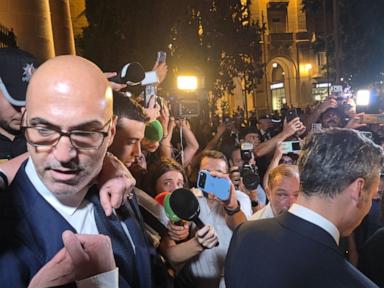
A Maltese jury has officially acquitted prominent tycoon Yorgen Fenech of masterminding the 2017 car bomb assassination of investigative journalist Daphne Caruana Galizia. By an eight-to-one majority vote, the panel cleared Fenech of complicity and criminal association, bringing a chaotic two-month trial to a stunning close and leaving a gaping wound in the pursuit of accountability across the European Union.
Nearly nine years after a remote-controlled explosive device tore through Caruana Galizia's vehicle near her Bidnija home, the judicial system has failed to secure a conviction against the man prosecutors accused of bankrolling her execution. While lower-level operatives, including the bombmakers and hitmen, are already serving lengthy prison sentences, the architect behind the silence remains legally unpunished. This verdict is not merely a courtroom defeat. It represents the logical endpoint of a compromised state machinery that allowed institutional decay to fester for decades.
Anatomy of an Impunity Machine
To understand how Fenech walked free, one must examine the toxic overlap of political power and corporate wealth on the Mediterranean island. Caruana Galizia operated as a solitary reporting powerhouse, often described as a one-woman WikiLeaks. Through her blog, Running Commentary, she exposed systemic graft, money laundering networks, and secretive offshore entities tied directly to high-ranking government officials, including then-Prime Minister Joseph Muscat's inner circle.
When she was eliminated in October 2017, the shockwaves destabilized the government, eventually forcing Muscat to resign under intense public pressure. Yet, removing a premier did little to purge the structural rot. An independent public inquiry published in 2021 delivered a damning indictment of the state itself. The panel of judges concluded that Malta bore direct responsibility for creating an atmosphere of impunity that effectively signed the journalist's death warrant.
The trial itself exposed deep procedural fractures. Fenech’s defense relied heavily on deflecting blame toward former chief of staff Keith Schembri, painting the businessman as an accidental messenger rather than a cold-blooded coordinator. Testimony from self-confessed middleman Melvin Theuma—who secured a presidential pardon to turn state's witness—was fiercely contested by defense attorneys who labeled his account a fabrication. Ultimately, the jury bought enough of the defense's shadow-casting to reject the prosecution's central narrative.
The Cost of Institutional Failure
The fallout from the courtroom extends far beyond Valletta. International press freedom watchdogs and European lawmakers have repeatedly warned that Malta remains a hazardous jurisdiction for investigative reporting. When the ultimate masterminds behind the assassination of a prominent EU journalist evade justice, the message sent to corrupt elites is unambiguous. Violence works, and institutions will ultimately protect their own.
For the Caruana Galizia family, the verdict is a devastating blow. In a scathing public statement released immediately following the decision, relatives pointed out that the institutional failures enabling the murder remain entirely unaddressed. The state machinery that weaponized administrative indifference against a lone reporter has successfully shielded the corporate interests that feared her pen. True structural reform requires dismantling the patronage networks connecting boardrooms to parliamentary offices. Until those foundations are torn down, the shadow of the Bidnija bombing will continue to hang over every judicial proceeding on the island. Justice has not been served, and the architects of corruption remain protected by the very system designed to police them


