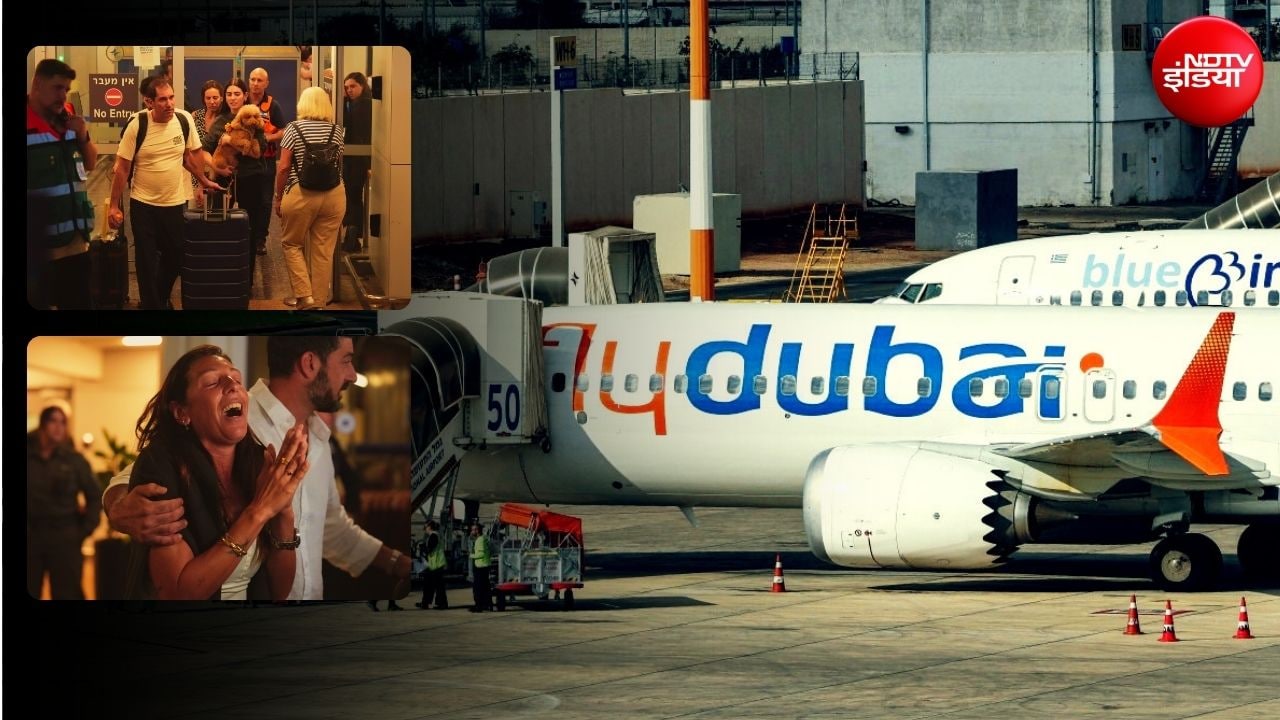
The coffee in the Ben Gurion departures terminal always tastes slightly of cardboard and anticipation. It is 4:00 AM on a Tuesday, and the air smells of cheap jet fuel and damp coats. For decades, the departure boards here offered a predictable geography. You could fly west to the cobblestones of Prague or the gray drizzle of London. You could fly east toward the ancient dust of Bangkok. But the invisible walls of the Middle East stood tall, unyielding, and absolute. You could not fly south to the gleaming towers of the Emirates. The map simply did not allow it.
Then, the sky cracked open.
Consider what happens when a border that has defined your entire worldview simply dissolves. It does not happen with a grand explosion or a cinematic parade. It happens on a quiet autumn morning when a digital screen updates its flight statuses. Flight 311. Tel Aviv to Dubai. Three hours and forty minutes. Less time than it takes to drive from Haifa to Eilat on a holiday weekend.
To understand how the United Arab Emirates became the most unexpected sanctuary for Israeli travelers, you have to look past the glossy Instagram feeds of influencers posing beside the Burj Khalifa. You have to look at the psychological architecture of a people who spent seventy years peering at a map of their region as a sea of closed doors.
Avner stood at the baggage carousel in Terminal 3 of Dubai International Airport, clutching a small leather passport holder that felt heavier than usual. He was forty-two, a software engineer from Rehovot who had never set foot outside of Europe or North America. His parents had taught him a simple geopolitical truth: the desert to the south was an abstraction, a blank space on the mental map marked by hostility and distance.
When the diplomatic agreements known as the Abraham Accords were signed in late 2020, Avner watched them on television with a mixture of cynicism and guarded wonder. Politicians shook hands under the glare of chandelier light. Ink dried on parchment. But politics on a screen rarely feel real until your luggage starts spinning on a belt four thousand kilometers away.
"First time?"
The voice belonged to a young Emirati customs officer named Tariq, whose pristine white kandura contrasted sharply against the bustling chrome-and-glass terminal. Tariq’s smile was polite, routine, yet carried an undercurrent of genuine curiosity.
"First time," Avner replied, his Hebrew accent clipping the English vowels.
Tariq stamped the passport. The mechanical thud was quiet, almost mundane, but it echoed like a starting pistol. In that single second, decades of mental static cleared. Avner walked out of the sliding glass doors and into a blast of humid Gulf air, stepping into a reality that his grandfather would have deemed science fiction.
The numbers behind this transformation are staggering, yet they fail to capture the visceral texture of the change. Before 2020, zero direct commercial flights connected Israel and the UAE. Within months of the agreement, airlines were running dozens of weekly routes. Hundreds of thousands of Israeli tourists poured through the terminals, transforming Dubai and Abu Dhabi from exotic transit lounges into primary weekend getaways. Kosher restaurants materialized in the shadow of skyscrapers. Hebrew signage appeared in luxury malls.
Yet, numbers are cold things. They are accountants' tools. The real story lives in the interstitial spaces between the statistics—in the quiet hotel lobbies, the shared cups of mint tea, and the sudden, disorienting realization of commonality in an uncommon land.
Take Maya, a Tel Aviv-based interior designer who booked a flight to Dubai on a whim during a particularly bleak winter slump. She expected a city of sterile opulence, a playground of gold-plated sports cars and towering glass needles built by transient labor. What she found instead was a mirror.
"We think we are so different because our languages sound like cousins who haven't spoken in centuries," Maya told me over a plate of grilled prawns at a beachside café in Jumeirah. "Hebrew and Arabic share roots, but we spent so long building fences that we forgot we were harvesting from the same orchard. Then you come here, and you see young people working late on laptops, worrying about real estate prices, arguing over the best place to get iced coffee, listening to the same global pop beats. The geopolitical enmity felt heavy back home. Here, it felt like an obsolete software update."
This is the paradox of the new tourism. The UAE did not simply become a destination because of new flight paths or luxury hotels. It became a destination because it offered Israelis something they desperately craved: a neutral canvas.
For the Israeli traveler, vacationing in Europe often comes with a subtle, persistent background hum of tension—a defensive posture worn like an invisible coat. In the Emirates, shielded by a government that made coexistence a matter of state policy and commercial survival, that armor could finally be laid down. Here was a Muslim-majority nation where Hebrew was spoken openly in hotel lobbies, where kippahs were visible on the streets without a second glance, and where security was so pervasive and absolute that anxieties melted into the desert heat.
Behind this cultural pivot lies a masterclass in economic pragmatism. The Emirati leadership recognized years ago that oil was a finite horizon. They built an oasis of commerce, stability, and tourism designed to attract the world's capital and creativity. When the diplomatic ice broke, Israel's high-tech sector, medical innovation, and eager consumer base fit into Dubai’s grand economic puzzle like a missing gear.
Tourists brought money, yes. But they also brought curiosity.
Consider the traditional spice souk in Deira, where narrow alleys hum with the scent of cardamom, saffron, and frankincense. A few years ago, an Israeli traveler wandering these stalls would have kept their passport tucked deep inside their jacket, their tongue silent. Today, haggling over the price of saffron has become an intercultural sport.
"Where you from?" an Emirati merchant named Ahmed asked a group of young tourists from Jerusalem last spring, leaning over sacks of dried hibiscus flowers.
"Jerusalem," one of them answered, holding his breath for a split second.
Ahmed didn't flinch. Instead, he grinned, pulled out a small plastic cup, and poured dark, cardamom-infused gahwa. "Ah, the holy city. My brother went there last year for business. Welcome. Try this spice. It keeps the desert cool."
It is easy to romanticize these moments, to paint them as a utopian postcard where centuries of conflict vanish over a cup of coffee. That would be a lie. Human history does not erase itself so easily. The old fears do not die overnight; they linger in the shadows, whispered in family group chats, tested by political headlines that flash across television screens with destabilizing frequency.
Diplomacy is forged in air-conditioned boardrooms by men in suits, but peace—fragile, messy, human peace—is tested in the streets, in the markets, and at baggage carousels.
When Avner returned to Ben Gurion Airport a week after his trip, the cardboard-scented terminal felt different. The departure board still listed the same cities, but the eye caught something new, something that had fundamentally rewritten the horizon. The south was no longer a blank space of hostility. It was a place where he had shared a falafel wrap with an Emirati businessman while arguing over whose grandmother made better mint tea.
The map had changed. More importantly, the mind had expanded.
The planes continue to land on the tarmac beneath the blazing Gulf sun, hour after hour, carrying passengers across a sea that was once uncrossable. Every flight is a vote against permanent division, a quiet defiance of the old laws of gravity that said neighbors must remain strangers.
The door is open now. And the view from the other side is breathtaking.