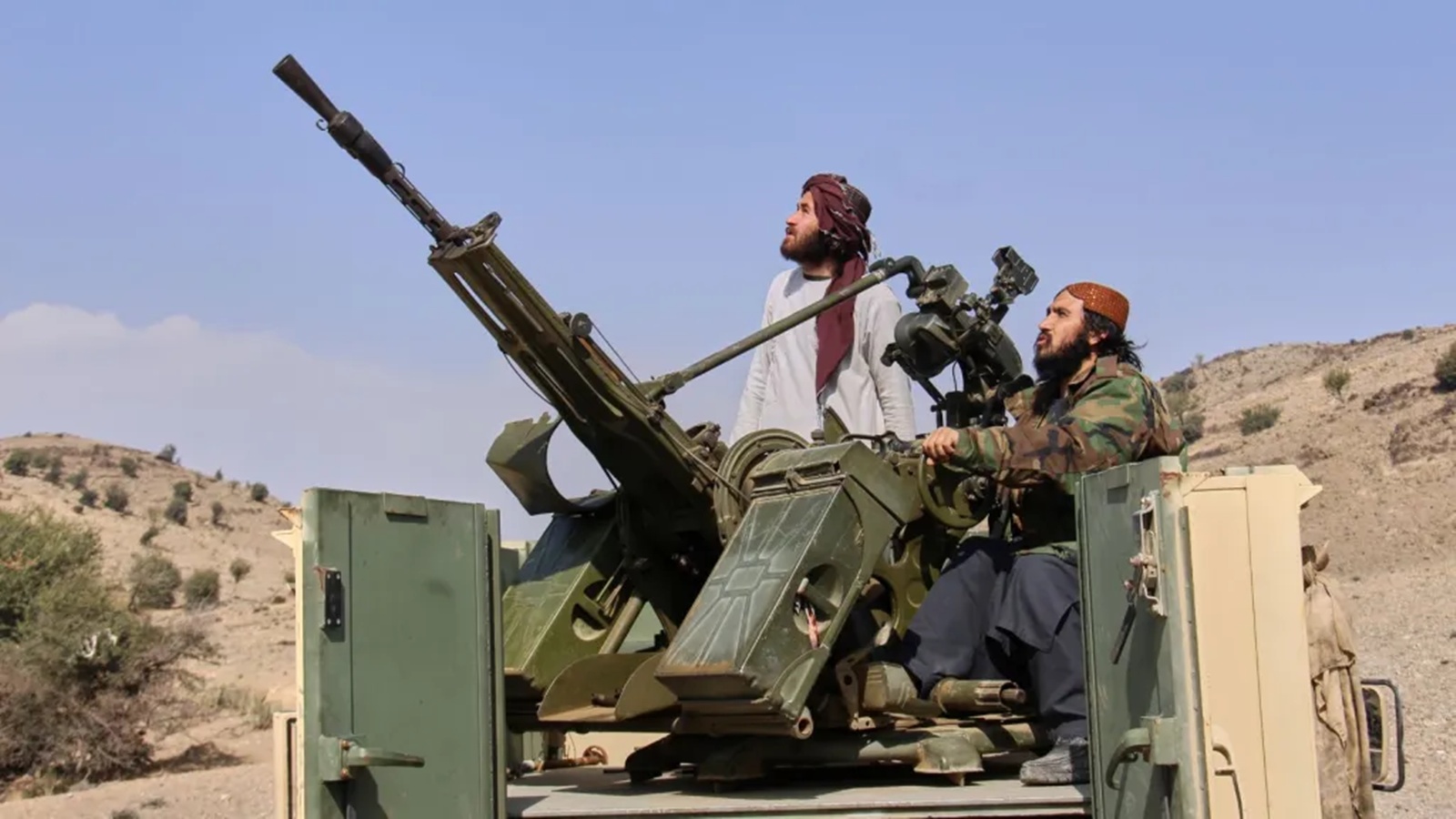
Every desk-bound strategist in Washington, London, and Islamabad wants you to believe that the recent spike in casualties along the Durand Line is a territorial dispute. They feed you stories about border posts, artillery exchanges, and smuggling routes. They treat the deaths of thirty fighters and the capture of thirty-two more as a tragic routine of erratic neighbors failing to get along.
It is a convenient lie.
If you think this is about a line on a map drawn by a British bureaucrat in 1893, you are missing the entire architecture of the current South Asian security collapse. I have watched diplomats spin this fiction for decades while real estate changed hands and state policies quietly devoured each other. The Durand Line is not the cause of this war. It is the symptom of a much darker, structural failure: Islamabad built a monster in the mountains, fed it for twenty years, and is now genuinely shocked that the monster wants to eat its creator.
Let us dismantle the lazy consensus.
The Geography of Institutional Amnesia
The standard narrative tells you that the Afghan Taliban and the Pakistani military are ideological brothers who fell out over border fencing. This is historically illiterate.
The Pakistani military establishment, specifically Inter-Services Intelligence, spent billions of dollars and three decades executing a doctrine of strategic depth. The core thesis was simple: cultivate radical Islamist proxies in the tribal belts to keep Kabul weak, friendly, and compliant, thereby neutralizing Indian influence on Pakistan's western flank. They trained them. They funded them. They patched up their wounded in military hospitals in Rawalpindi and Peshawar.
Then came August 2021. Kabul fell. The Taliban walked into the presidential palace.
The architects of Islamabad popped champagne. They thought they had installed a subsidiary management team in Afghanistan. They forgot a basic rule of geopolitics: ideological extremism does not care about national borders or bureaucratic gratitude.
When the Afghan Taliban took power, they did not become Islamabad's obedient junior partner. They became hyper-nationalists wearing the robes of religious radicalism. And the first thing a triumphant, hyper-nationalist regime on your border does is stop respecting your artificial lines.
The thirty dead fighters and thirty-two captured troops did not die over a fence post in Kunar or Paktia. They died because the Pakistani state expects the Afghan Taliban to wage war against the Tehrik-i-Taliban Pakistan, known commonly as the TTP, while the Afghan Taliban view the TTP as ideological comrades-in-arms who sheltered them during their darkest years in exile. You cannot outsource your internal security to religious zealots and expect them to turn on their own brothers just because an intelligence colonel in Islamabad snaps his fingers.
The Myth of the Controlled Border
Let us talk about the data that the analysts ignore. Pakistan spent over half a billion dollars fencing nearly ninety percent of the 2,600-kilometer border. They installed biometric systems, watchtowers, and floodlights.
And it is failing miserably. Why? Because a fence cannot stop a logistical network backed by ideological sympathy and tribal kinship.
The border regions are populated by Pashtun tribes whose ancestral lands were sliced in half by the Durand Line long before anyone reading this was born. To a Pashtun in Waziristan or Nangarhar, the border is a colonial fiction. When Pakistani border posts try to enforce sovereignty, they are striking against a demographic reality that refuses to be partitioned.
When analysts look at the latest casualties and ask why Afghanistan and Pakistan are fighting again, they frame it as an inter-state war. It is not. It is an internal civil war that spilled across an imaginary line. The TTP uses Afghan soil as a rear-guard base because the Afghan Taliban owe them a debt of blood and ideology. Pakistan responds with artillery and airstrikes. The local population gets caught in the crossfire, radicalizing the next generation of insurgents faster than the Pakistani military can bomb them.
I have sat in closed-door security briefings where generals speak about sealing the border as if it were a software deployment. It is not. It is a bleeding artery through which weapons, drugs, and ideology flow with absolute impunity. Every time Islamabad tries to choke off the traffic, the tourniquet causes necrosis on their own side of the line.
Why the Pakistani Military is Trapped in Its Own Trap
The conventional wisdom in Western policy circles is that Pakistan just needs more counter-terrorism funding, better intelligence-sharing protocols, and stronger diplomatic engagement with Kabul.
This is dangerous nonsense.
More funding will not fix a strategy that was fundamentally flawed at its inception. The Pakistani military cannot crush the TTP through cross-border raids without alienating the Afghan Taliban entirely. But if they do nothing, the TTP continues to stage bloody attacks inside Pakistan, killing soldiers and police officers on a weekly basis.
They are caught in a classic recursive loop of their own making. For decades, the narrative inside Pakistan was that terrorism was an external export, something inflicted upon them by India and Afghanistan. Admitting that the TTP is a homegrown insurgency rooted in the failure of state integration in the tribal areas would require an institutional confession that the generals in Rawalpindi are simply incapable of making.
So they manufacture border crises. They amplify every skirmish into a national security emergency to rally domestic populations around the flag and justify a bloated defense budget while the domestic economy spirals into hyperinflation and sovereign default.
The Uncomfortable Truth About Kabul's Calculus
On the other side of the line, the Afghan Taliban are playing a ruthlessly pragmatic game wrapped in theological rhetoric.
They know Pakistan is economically crippled, politically fractured, and diplomatically isolated. They know that Islamabad cannot afford a full-scale conventional war in the mountains. So, the Taliban leadership in Kandahar and Kabul treats Pakistani demands with quiet contempt.
When Pakistani officials demand the extradition of TTP commanders, the Taliban smile, nod, and do absolutely nothing. They understand leverage. They survived twenty years of the world's most powerful military coalition; they are hardly going to tremble at the threats of a brigade commander from Peshawar.
To the Afghan Taliban, hosting the TTP is a matter of ideological consistency and insurance. If they betray the TTP today, who protects them tomorrow when internal factionalism tears their own movement apart? They are not going to sacrifice their ideological vanguard to appease an intelligence agency that spent two decades double-dealing behind their backs.
Stop Asking the Wrong Questions
If you are still asking why Afghanistan and Pakistan are fighting again, you are assuming they ever stopped. You are assuming there was a baseline of peace to begin with.
There was no peace. There was only a temporary alignment of convenience that shattered the moment the Americans left and the Taliban took the keys to Kabul.
The casualties on the border are not an aberration. They are the baseline operating cost of a regional policy built on deception, proxy warfare, and the delusion that you can control religious extremism by feeding it in your backyard.
Until Islamabad finds the courage to purge its strategic doctrine of the belief that it can manage proxy armies without burning its own house down, those casualty numbers will keep climbing. The border posts will keep trading artillery fire. And the diplomats will keep writing white papers about fences that cannot stop a movement whose time has already come and gone.
Stop looking at the map. Look at the balance sheet of bad decisions.