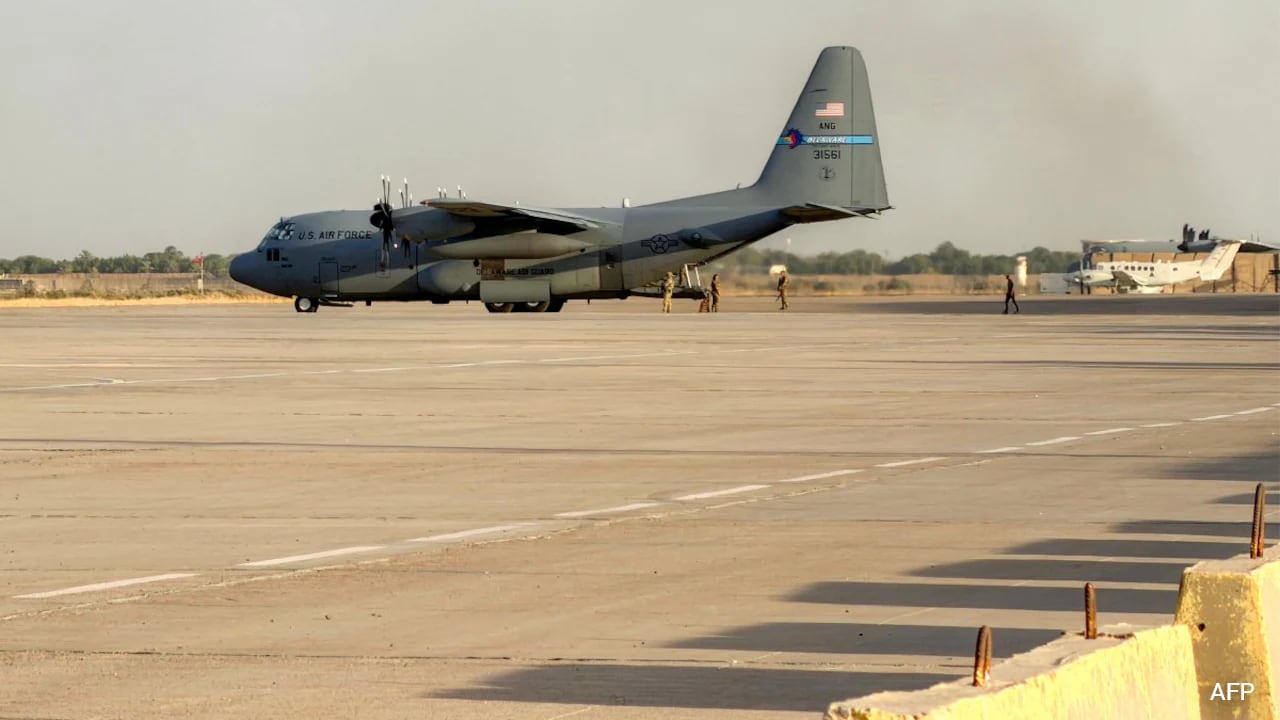
Twelve years after returning to a country unraveling under the pressure of extremist expansion, the American military footprint in Iraq is shrinking toward a quiet termination. Operation Inherent Resolve, the multi-national coalition formed to roll back the territorial caliphate of the Islamic State, is drawing down its presence, shifting the strategic architecture from direct combat support to bilateral security cooperation. Washington and Baghdad reached a formal consensus outlining a phased departure schedule that removes major combat elements by late 2026, leaving behind an Iraqi state forced to carry the full weight of its own security architecture.
The official communiques emphasize a mature partnership and a sovereign transition. Behind closed doors in the Green Zone and regional command centers, the reality is far more complex. This is not a victory parade. It is a managed retreat driven by strategic fatigue, shifting geopolitical priorities in Washington, and an Iraqi political establishment eager to reassert absolute control while simultaneously terrified of the security vacuum left in the wake of Western air cover and intelligence assets.
To understand why this exit matters, one must look past the press releases and examine the structural vulnerabilities of the Iraqi security forces, the shadow war fought daily by regional proxies, and the quiet redirection of American power toward great power competition elsewhere on the globe.
The Illusion of Complete Sovereignty
For over a decade, the coalition functioned as the structural glue holding together a fractured state apparatus. When Iraqi divisions collapsed across the northern plains in the summer of 2014, the American-led intervention provided the critical enablers that stopped the advance toward Baghdad: precision air power, real-time intelligence, logistical sustainment, and specialized training.
Today, Iraqi leadership insists the state is fully capable of managing internal security threats independently. On paper, the numbers support the argument. The Iraqi army, counter-terrorism service, and federal police have grown in size, tactical competence, and operational experience. They fought street-by-street in Mosul, Tal Afar, and the western deserts, absorbing heavy casualties to reclaim national territory.
Yet tactical competence does not equal strategic independence. Modern militaries rely heavily on a complex ecosystem of maintenance contracts, software licenses, secure communications networks, and contractor-supported aviation logistics. When coalition maintenance crews pack up and depart, sophisticated hardware fleets degrade rapidly. A fleet of advanced multi-role aircraft or armored vehicles becomes little more than expensive scrap metal within months without specialized parts and engineering support.
Baghdad's insistence on reclaiming full sovereignty collides directly with this technological dependency. The withdrawal forces a difficult choice: accept a diminished operational readiness rate across critical combat arms, or quietly contract private security and technical firms to fill the gap left by departing uniformed personnel. Sovereignty, in the modern defense era, is expensive and difficult to maintain in isolation.
The Shadow of Regional Proxy Politics
The departure of coalition forces does not mean Iraq exists in a geopolitical vacuum. Quite the contrary. The country remains the central arena for a protracted tug-of-war between regional power centers, most notably Washington and Tehran.
Throughout the campaign against the Islamic State, the Popular Mobilization Forces emerged as a powerful counterweight and auxiliary to the official security forces. Many constituent militias within this umbrella organization maintain deep ideological, financial, and operational ties to Iran's Islamic Revolutionary Guard Corps. While some factions were successfully integrated into the formal military command structure under the Prime Minister's office, others operate with considerable autonomy, launching rocket and drone attacks against remaining coalition outposts and testing the boundaries of state authority.
By removing the American presence as a physical buffer and common adversary, the exit of coalition forces shifts internal Iraqi political dynamics into sharp relief. Prime Minister Mohammed Shia' al-Sudani navigates an extraordinarily narrow path. He must satisfy the demands of Shiite political parties and armed factions that view any foreign military presence as an intolerable violation of sovereignty, while simultaneously maintaining enough international financial stability and security cooperation to prevent the country from slipping back into economic chaos or renewed insurgency.
The Islamic State has evolved from a quasi-state holding territory the size of Great Britain into a persistent, decentralized insurgency operating in the rugged terrain of the Anbar deserts, the Hamrin mountains, and the disputed internal boundaries between federal Iraq and the Kurdistan Regional Government. These underground cells rely on extortion, kidnappings, and hit-and-run tactics. They do not need to hold cities to bleed the state; they only need to exploit the governance gaps that inevitably widen when central authority is stretched thin. Without coalition intelligence-sharing, targeting coordination, and surveillance drones, tracking these mobile networks becomes exponentially harder for local commanders.
The Strategic Pivot Eastward
Washington's decision to wind down the Iraq mission is ultimately less about Baghdad and more about Beijing and Moscow. The Pentagon's long-term defense strategy has undergone a radical realignment over the past five years, shifting away from counter-insurgency and nation-building in the Middle East and toward great power competition in the Indo-Pacific and European theater.
Maintaining thousands of troops, logistics hubs, and airbases across Iraq and Syria consumes finite resources, drains operational readiness, and exposes personnel to persistent low-level drone and rocket attacks from regional militias. The political cost of a single catastrophic mass-casualty incident always outweighs any marginal strategic benefit of maintaining an enduring footprint in a secondary theater.
This is the hard truth of modern American foreign policy: the Middle East is no longer the center of gravity for Washington's long-term strategic planners. The pivot is real, systemic, and irreversible in the medium term. When crises erupt in the Indo-Pacific or Eastern Europe, the assets tied down in the CENTCOM area of responsibility are viewed by defense planners as misplaced capital.
Consequently, the future of American engagement in Iraq will look entirely different from its past. It will be characterized by diplomatic representation, economic agreements, intelligence-sharing frameworks negotiated on a case-by-case basis, and perhaps periodic over-the-horizon counter-terrorism strikes. The era of garrisoning large numbers of troops in fortified compounds across the Mesopotamian plain is definitively over.
What Remains When the Dust Settles
As the final convoys roll south toward the Kuwaiti border, carrying heavy equipment and departing service members, the true test of Iraq's resilience begins. The departure removes a convenient political lightning rod for internal opponents of the regime, stripping away the narrative that the country's domestic political dysfunction is solely the fault of foreign occupiers.
Yet it also removes the safety net.
Iraqi political leaders can no longer blame external actors for institutional corruption, economic stagnation, or security lapses. The responsibility for securing the borders, managing ethnic and sectarian tensions, integrating armed factions into a unified national command, and rebuilding shattered infrastructure rests entirely on local shoulders.
The twelve-year intervention was marked by immense costs, shifting justifications, tactical triumphs, and strategic miscalculations. It prevented the complete collapse of the Iraqi state in its darkest hour, yet it failed to produce a stable, self-sustaining democratic model immune to external manipulation. As the coalition closes its chapter in Iraq's modern history, the country is left standing alone in a volatile neighborhood, facing old demons with fewer shields and a narrower margin for error.