Vladimir Putin’s August 13, 2026 landing at the Yasny fish-processing complex on Iturup Island is widely categorized by diplomatic observers as a standard territorial provocation. This assessment misreads the timeline and the underlying economic variables. The visit is a calibrated stress test of Japanese energy elasticity, executed during a period of acute vulnerability for Tokyo.
The prevailing narrative focuses on the breakdown of historical peace treaty negotiations. To understand the actual geopolitical mechanics at play, the situation must be deconstructed across three operational vectors: the collapse of Japanese energy alternatives following the early 2026 Strait of Hormuz closure, the mathematical realities of the Sakhalin-2 liquefied natural gas (LNG) supply, and the consolidation of a unified Sino-Russian security theater in the Pacific.
The Unified Theater Doctrine
The structural foundation of this event is the shifting security architecture of the Western Pacific. The dispute over the four southernmost islands—Iturup, Kunashir, Shikotan, and the Habomai islets—has existed since Soviet forces occupied them in the final days of 1945. Under former Prime Minister Shinzo Abe, Tokyo engaged in 27 high-level meetings based on the 1956 declaration, which originally proposed the return of two islands upon the signing of a formal peace treaty.
Russia's 2022 invasion of Ukraine permanently froze these diplomatic channels. By August 2026, Japan’s strategic posture had fundamentally altered. Prime Minister Sanae Takaichi’s government published a Defense White Paper explicitly categorizing Russia as a principal security threat. Moscow’s response has been to integrate its Pacific fleet operations with Chinese and North Korean assets.
This represents a shift from isolated territorial defense to a Unified Theater Doctrine. Tokyo can no longer model a localized conflict over the Northern Territories. Any military or diplomatic escalation regarding the islands immediately intersects with Chinese naval operations in the East China Sea and North Korean munitions supply lines. The Kuril chain provides Moscow with a critical geographic asset. It enables sea denial capabilities that protect the Okhotsk Sea bastion, where Russian ballistic missile submarines operate, while simultaneously controlling the maritime choke points essential for access to the wider Pacific.
The Cost Function of Retaliation
Evaluating Japan's capacity to respond requires quantifying the economic variables. The standard diplomatic playbook suggests severe economic sanctions. The mathematical reality of global energy markets dictates otherwise.
The calculus of Japanese retaliation can be modeled through a formal vulnerability function:
$$V_j = f(S_d, A_c) \times M_e$$
Where $V_j$ represents Japanese strategic vulnerability, $S_d$ is the supply deficit caused by external shocks, $A_c$ is the cost of alternative acquisition, and $M_e$ represents domestic political exposure during winter peak-load months.
The critical variable $S_d$ reached extreme levels in February 2026. The US-Israel air campaign against Iran effectively sealed the Strait of Hormuz. Prior to this closure, Japan relied on the Gulf for approximately 90% of its crude oil and 11% of its LNG. The sudden stranding of thousands of mariners and the spike of Brent crude to $126 per barrel destroyed Tokyo’s energy buffer.
The Sakhalin-2 Bottleneck
This global supply shock isolated Sakhalin-2 as a load-bearing pillar of the Japanese power grid. The LNG project, located directly across the strait from the disputed islands, supplied Japan with roughly 3.6 to 3.9 million tonnes in the previous year. This constitutes approximately 9% of Japan’s total LNG imports.
The mechanisms sustaining this trade are highly specific and legally fragile. Imports are permitted strictly through a US Treasury sanctions waiver, which also protects the Gazprombank clearing operations required to finance the transactions. Washington and Tokyo recently negotiated an extension of this waiver to December 18, 2026. This extension explicitly carved out maritime transport, financial clearing, and joint-operations funding amidst the Hormuz crisis.
The timing of the August 13 visit maps perfectly onto this vulnerability window. Moscow is operating on the knowledge that the Takaichi administration formally notified Washington in late 2025 that a complete ban on Russian LNG would cause systemic grid failure. The presence of the Sakhalin regional governor alongside the Russian president during the visit was an operational signal. It structurally linked the administration of the disputed islands with the administration of the energy supply Tokyo cannot survive without.
The Mechanics of the Symbolic Protest
When Prime Minister Takaichi declared the visit totally unacceptable and the Foreign Ministry announced it was weighing an additional sanctions package, the operational constraints were already fixed. The primary constraint is the impossibility of weaponizing the LNG trade.
Historical precedent provides the blueprint for the expected outcome. In 2010, then-President Dmitry Medvedev visited Kunashir, establishing the template for a high-level Russian presence on the islands. Japan’s response involved diplomatic protests and localized friction without severing baseline economic contact.
The current environment is characterized by a war economy, requiring a slightly elevated response, but the mechanism remains identical. To satisfy domestic political requirements without triggering a retaliatory disruption of Sakhalin-2, Tokyo must employ asymmetric, non-lethal diplomatic tools.
The components of this restricted response include:
- Summoning the Russian ambassador (executed August 14 via Nikolay Nozdrev).
- Implementing targeted asset freezes on specific regional administrators present during the visit.
- Restricting travel for mid-level Russian officials involved in Far East economic development.
- Rhetorical escalation in international forums, aligning with the Ukrainian parliament's 2022 recognition of Japanese sovereignty over the territories.
None of these mechanisms threaten the physical flow of hydrocarbons. This guarantees the continuation of the energy supply while satisfying the requirement for a visible diplomatic reaction.
Geopolitical Realignments and the Shadow Fleet
Beyond the bilateral energy trap, the island visit serves a secondary function in maritime logistics. Western nations are currently engaged in a pressure campaign targeting Moscow’s shadow fleet—the network of aging, underinsured tankers transporting Russian crude outside the G7 price cap mechanism.
Japan’s geographical positioning makes it a critical potential enforcer of maritime transit rules in the Pacific. By escalating tension in the Northern Territories, Moscow applies preemptive friction. The shadow fleet relies on obscure corporate structures and flags of convenience. If Japan were to utilize its coast guard to rigorously inspect these vessels under environmental pretexts, it would severely constrain Russia's Pacific revenue stream. The implicit threat is that any aggressive Japanese interdiction of shadow fleet vessels transiting near Japanese waters will be met with immediate militarization of the Kuril dispute. It forces Tokyo to allocate diplomatic and military bandwidth to territorial defense rather than sanctions enforcement.
The Tactical Realities of the Northern Territories
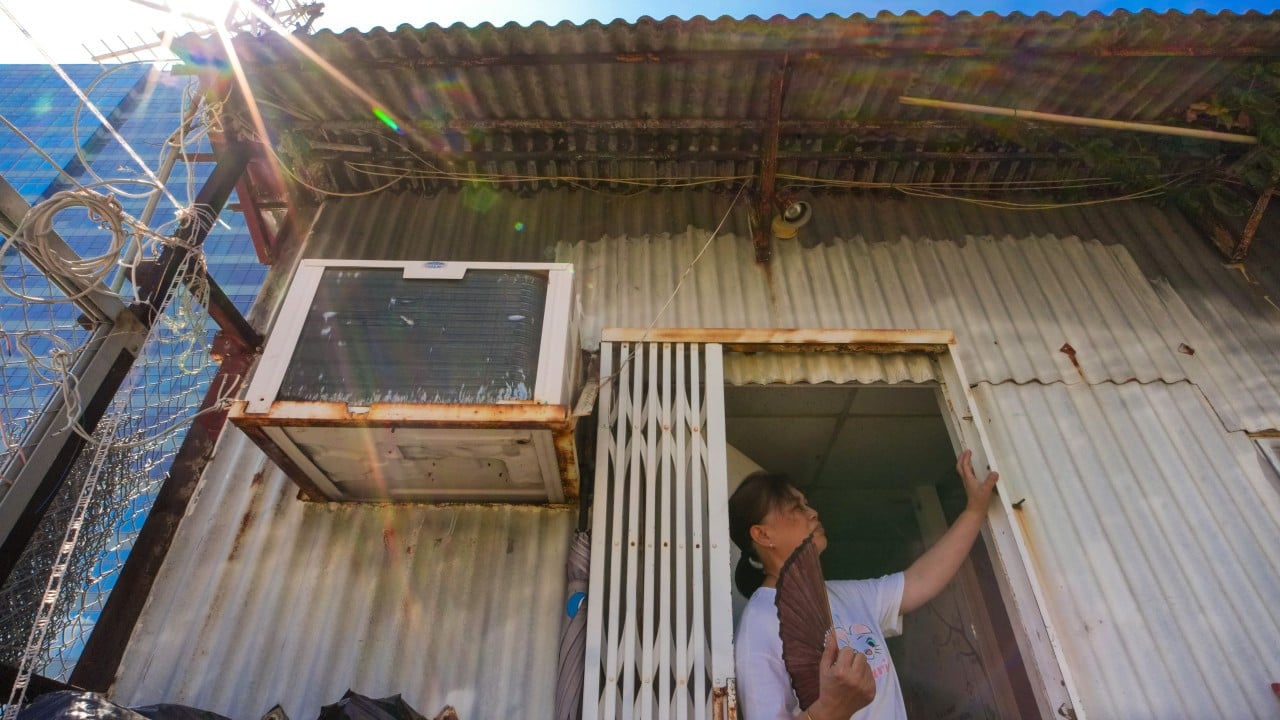
The physical characteristics of the islands dictate their utility. Iturup is the largest of the four. It possesses deep-water approaches and sufficient landmass to host significant air defense and coastal missile batteries. The installation of Bastion and Bal missile systems in recent years has transformed the islands from a historical grievance into an active area-denial zone.
Japanese defense planners must now calculate the range and intercept probabilities of these systems against Hokkaido-based assets. The Defense White Paper’s elevation of the threat level reflects the transition of the islands from a diplomatic issue to a direct tactical variable in the defense of the home islands. The continued expansion of these facilities, ostensibly for regional economic development such as the Yasny fish-processing complex, provides dual-use infrastructure capable of supporting sustained military deployments.
The immediate vulnerability window for Tokyo extends through the expiration of the US Treasury waiver in December 2026. During this period, Japan operates under a condition of zero strategic elasticity. The loss of Gulf supplies has stripped the system of redundancy.
The strategic response requires accepting the short-term political damage of the August 13 visit to guarantee winter energy security. Any deviation from this pragmatic acceptance risks catastrophic grid failure and subsequent political collapse for the current administration. Tokyo must separate the territorial dispute from the energy requirement. The immediate directive is to execute a purely symbolic sanction package targeting regional administrators to isolate the domestic fallout. Simultaneously, the primary operational focus must shift entirely to the structural replacement of the Sakhalin-2 volume before the December 18 waiver expiration. This requires accelerated procurement of floating storage and regasification units (FSRUs) and the aggressive securing of spot-market LNG cargoes from the Australian and North American basins, regardless of the premium pricing. Only when the mathematical dependency on the Okhotsk Sea supply is severed can Japan return to a credible deterrent posture regarding the Northern Territories.