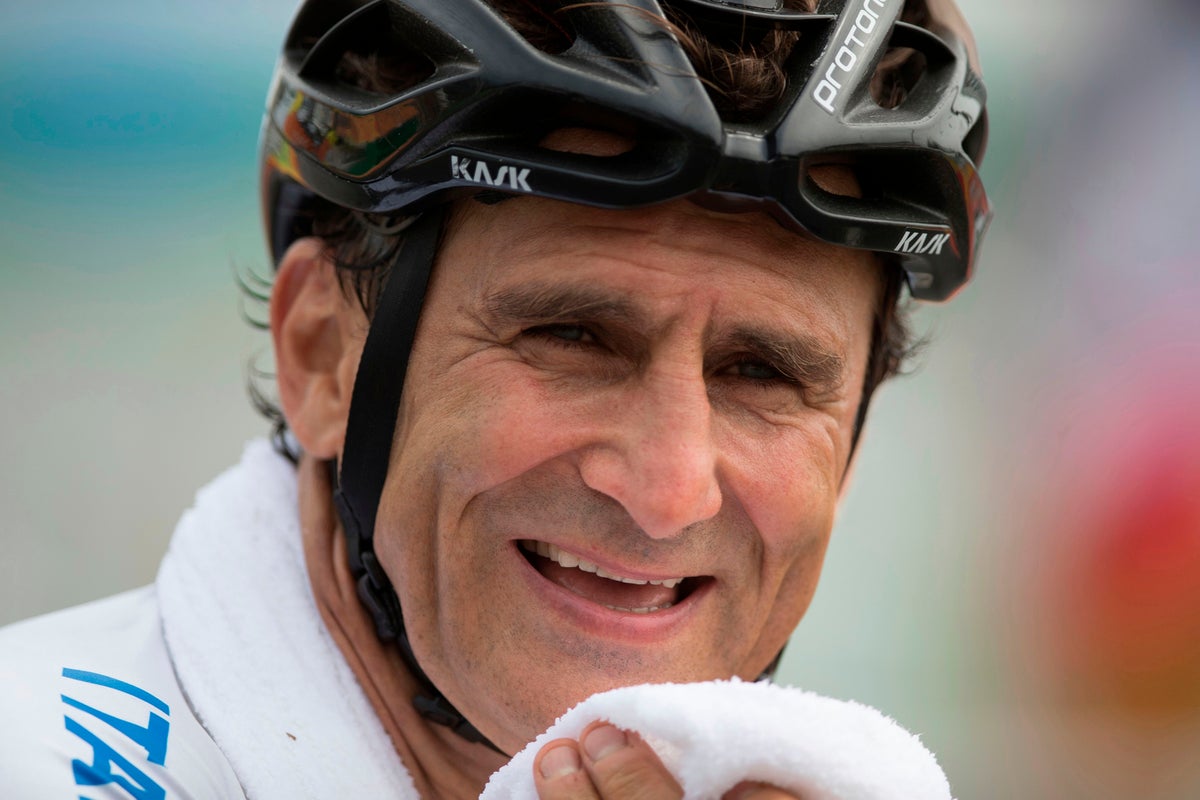
Alex Zanardi didn't just drive cars. He dared the universe to stop him. Most people remember the horrific crash in Germany that took his legs, but that's the wrong place to start his story. If you want to understand why the racing world is mourning a man who survived the unsurvivable twice, you have to look at what he did when the engines went quiet. He wasn't a victim of circumstance. He was a master of reinvention.
News of his passing at 59 hits hard because Zanardi felt immortal. He spent decades spitting in the face of logic. When doctors told him he shouldn't be alive after losing nearly 75 percent of his blood on a track in 2001, he didn't just live. He went back to racing. When most retired athletes would've settled into a comfortable life of commentary and golf, he picked up a handcycle and started winning Olympic gold medals. He proved that the body is just hardware and the spirit is the only software that actually matters. You might also find this connected article insightful: The Cruel Illusion of the Lamine Yamal Myth and Why Spain is Repeating a Historic Mistake.
The Day the World Stopped for Alex
September 15, 2001. The Lausitzring in Germany. Zanardi was leading the race. He was a two-time CART champion, a man who had conquered North American open-wheel racing with an aggressive, joyful style that fans loved. Then, a spin coming out of the pits put him sideways on the track. Alex Tagliani had nowhere to go. The impact split Zanardi’s car in half. It basically disintegrated.
I’ve watched that footage. It’s stomach-turning. The nose of the car was gone, and so were Zanardi’s legs. Most people die from that kind of trauma in minutes. His heart stopped seven times. A chaplain even gave him the last rites on the way to the hospital. But Zanardi had other plans. He woke up, looked at his wife, Daniela, and basically decided that being a double amputee was just a new engineering challenge to solve. As extensively documented in detailed articles by Yahoo Sports, the results are significant.
He didn't want pity. He hated the idea of being "inspirational" in a cheesy, Hallmark-card kind of way. He just wanted to go fast. He designed his own prosthetic legs because the off-the-shelf versions weren't good enough for a man who used to pull 4G in a corner. He wanted to feel the pedals. He wanted to feel the vibration of the road. That’s the grit people miss when they talk about him. It wasn't about "staying positive." It was about refusing to let his physical reality dictate his potential.
Turning Tragedy Into Gold
By 2003, he was back in a racing car. Think about that. Less than two years after nearly bleeding to death, he was competing in the European Touring Car Championship. He had the car fitted with hand controls. He didn't just show up for the cameras. He won races. He beat able-bodied drivers who had all their limbs. He proved that the brain of a champion doesn't care about the legs.
Then came the handcycling.
A lot of guys in his position would've called it a career. Instead, he looked at a handcycle and saw a new machine to master. He applied the same obsessive technical focus he used in Formula 1 to his training. He studied aerodynamics. He obsessed over gear ratios. In 2012, at the London Paralympics, he won two gold medals. He did it again in Rio in 2016. The image of him holding his handcycle over his head with one arm, a massive grin on his face, is probably the most iconic sports photo of the 21st century.
It wasn't just about the medals. It was about the fact that he was 50 years old and still outworking kids half his age. He took a sport that many viewed as a "charity" event and turned it into a display of elite, high-performance athleticism. He gave the Paralympics a level of "cool" and visibility it had never seen before. He made you forget he was missing legs. You just saw a winner.
The Final Fight and the Legacy of the Donut
Zanardi was famous for the "donut." After winning a race, he’d spin his car in circles, leaving clouds of tire smoke on the asphalt. It was his signature. It was flamboyant. It was loud. It was exactly who he was.
In 2020, tragedy struck again. During a handcycling race in Italy, he lost control and collided with a truck. The head injuries were massive. He spent years in and out of hospitals, fighting through surgeries and neurological recovery. The world held its breath. If anyone could come back from a crushed skull and multiple brain surgeries, it was Alex. He’d done the impossible before. Why not again?
His death marks the end of a long, painful battle. But don't let the tragedy of his final years overshadow the fire of his middle ones. He lived more in 59 years than most people would in five lifetimes. He showed us that "disability" is a label used by people who lack imagination.
Lessons From a Life Without Limits
If you're sitting around waiting for the "perfect time" to start something, or if you're letting a setback define your future, you’re doing it wrong. Zanardi’s life is a blueprint for how to handle a bad hand.
- Adapt or die. He didn't complain that the world wasn't built for him. He rebuilt his world.
- Ignore the "experts." Doctors said he’d die. He lived. They said he wouldn't walk. He raced.
- Keep the joy. Even when things were at their worst, he kept that mischievous, Italian spark.
Take a page from the Zanardi playbook. Stop looking at what you lost. Start looking at what you can still do with what’s left. He didn't want your tears; he wanted you to get off your butt and do something difficult. Go find your own version of a gold medal today. Whether it’s a career change you’ve been scared of or a physical goal you think is out of reach, just move. Speed was his life, but resilience was his soul. Rest in peace, Alex. You finally earned the break.