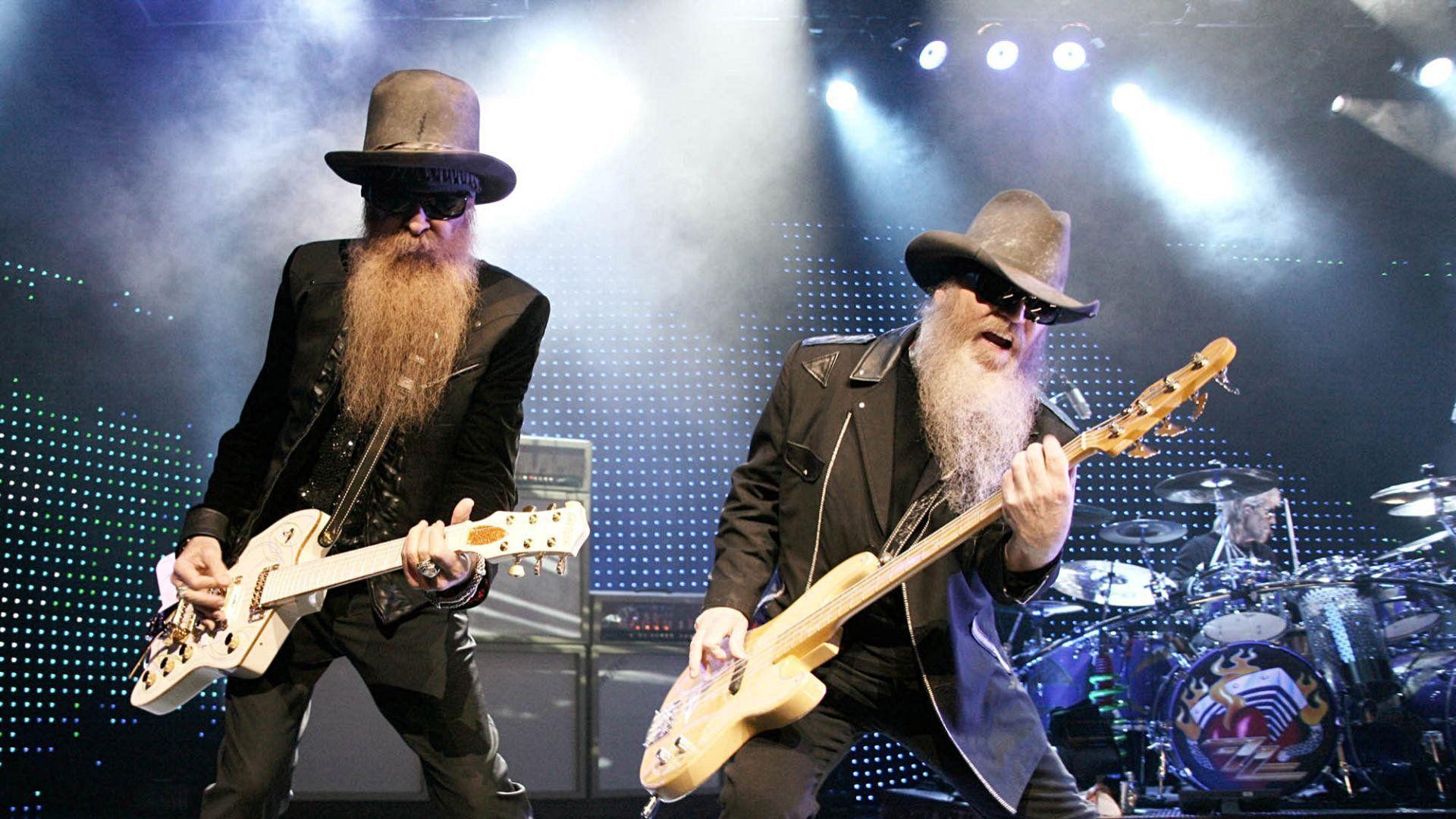
In 1983, a sleek, cherry-red 1933 Ford 3-window coupe roared onto television screens, changing the trajectory of a Texas blues trio forever. Honestly, if you weren’t there, it’s hard to describe how weird it was. You had these three guys with chest-length beards—who looked like they’d just crawled out of a humid Houston garage—suddenly becoming the coolest icons on a channel dominated by neon-clad pop stars and British New Wavers. ZZ Top video music didn't just sell records; it created a mythology that arguably saved the band from becoming a 70s relic.
Most people think the beards and the cars were always there. Not true. Before the "Eliminator" era, ZZ Top was just "that little ol' band from Texas." They played gritty blues. They wore hats, sure, but the beards? Those didn't even show up until a long hiatus in the late 70s. When they finally emerged, they had a new look and a new sound—a strange, infectious blend of dirty guitar riffs and digital drum machines.
The Tim Newman Trilogy: Cars, Girls, and Cosmic Justice
The band didn't just record songs; they built a cinematic universe. They hired director Tim Newman, who understood that the band shouldn't be the "stars" in the traditional sense. Instead, Billy Gibbons, Dusty Hill, and Frank Beard acted as Greek choruses. They were these mysterious, omniscient hitchhikers who appeared out of thin air to fix people's lives.
Take "Gimme All Your Lovin'." It’s basically the blueprint.
A bored gas station attendant is going nowhere. Suddenly, the Eliminator coupe pulls up. Three gorgeous women (the "ZZ Girls") take him on a high-speed adventure, and the band just... lingers in the background, spinning their guitars and tossing him the keys to his new life. It was aspirational, funny, and slightly surreal.
Then came "Sharp Dressed Man." This one flipped the script. It was a reverse Cinderella story. A valet who gets treated like dirt by the high-society types finds his confidence through a sleek suit and a ride in that red Ford. It’s simple storytelling, but it worked because it felt like cosmic justice.
Why the "Legs" Video Won Everything
By the time "Legs" hit the airwaves in 1984, ZZ Top was inescapable. This video was the peak of their visual powers. It featured a shy shoe store clerk getting bullied, only for the Eliminator girls to show up and give her a total makeover.
- The Spinning Guitars: This was the first time the world saw the white sheepskin-covered spinning guitars.
- The Vibe: It won the MTV Video Music Award for Best Group Video because it felt like a short film, not a commercial.
- The Debt: Interestingly, Billy Gibbons reportedly spent about $250,000 building the Eliminator car. By featuring it so heavily in the videos, he was able to write it off as a business expense. Smart move, Billy.
Behind the Scenes: The "Click Track" Controversy
While the videos were all about fun and "cheap sunglasses," the music itself was a point of massive tension. To make ZZ Top video music work for the MTV generation, the band had to change how they recorded.
Billy Gibbons and engineer Linden Hudson spent hours analyzing the tempo of hit songs. They realized that 120 beats per minute was the "sweet spot" for the dance floor and the radio. This led to a heavy reliance on sequencers and drum machines.
Purists hated it. They called it "heresy." They missed the loose, swinging blues of Tres Hombres. But the results were undeniable. Eliminator went Diamond, selling over 10 million copies in the US alone. The band wasn't just playing the blues anymore; they were playing the system.
The Afterburner and Beyond
If Eliminator was the launchpad, Afterburner was the orbit. The videos got even weirder. In "TV Dinners," you have alien life forms and claymation-style visuals. In "Rough Boy," the Eliminator car becomes a literal spaceship docking with a space station.
It was a far cry from the Texas barrooms where they started. But that was the genius of it. They adapted without losing their soul. Even when surrounded by synthesizers and green screens, Billy's guitar tone remained unmistakably "pearly gates" (his famous 1959 Gibson Les Paul).
What Most People Get Wrong About the ZZ Girls
There’s a common misconception that the women in the videos were just "eye candy." While they certainly fit the 80s aesthetic, their role was more like guardian angels. They were the ones driving the car. They were the ones with the power.
The original trio—Jeana Tomasino, Danièle Arnaud, and Kymberly Herrin—became as famous as the band members. They represented a sort of rock-and-roll empowerment. They didn't need the guys to save them; they were the ones doing the saving.
Actionable Insights for the Modern Fan
If you're looking to dive back into the visual history of the band, don't just stick to the hits.
- Watch the 2019 Documentary: ZZ Top: That Little Ol' Band from Texas gives the real, unvarnished story behind the transition from blues to videos.
- Compare the Audio: Listen to the original 1983 vinyl mix of Eliminator versus the later "remixed" versions. The original has a much rawer, more "machine-like" quality that fits the video aesthetic better.
- Visit the Car: The actual Eliminator coupe is housed at the Rock & Roll Hall of Fame in Cleveland. If you're ever in Ohio, it's worth seeing the chrome and the "ZZ" graphics in person.
ZZ Top proved that you don't have to be a pretty boy to win at MTV. You just need a great car, a signature move, and the willingness to turn the blues into something the whole world can dance to. They took the 1930s hot rod culture and the 1950s blues and smashed them into the 1980s future. It shouldn't have worked, but it did. Basically, they outsmarted everyone.